
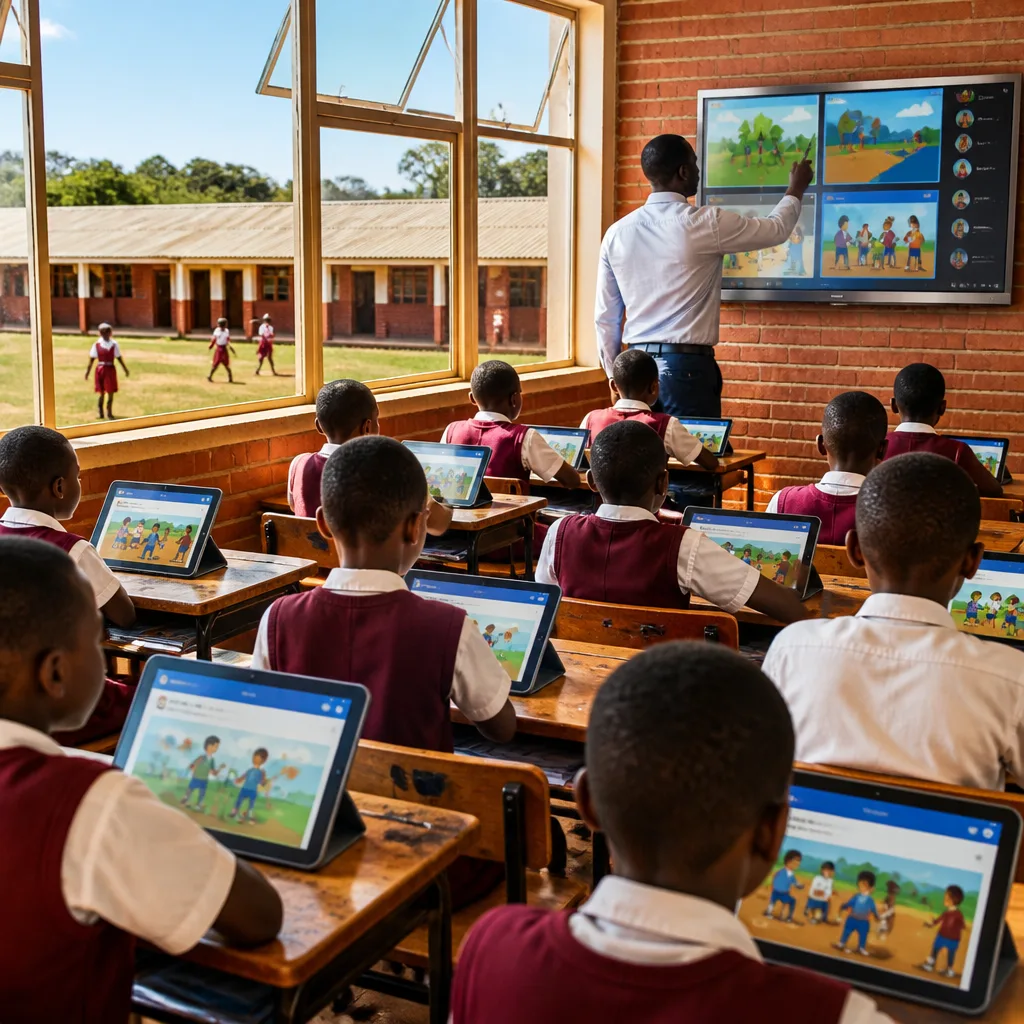
Al‑Lahib Primary School, run under the International Islamic Charitable Organization’s (IICO) social welfare arm, has secured accreditation through the Canva Education programme, the organisation announced. The recognition covers the school’s use of digital tools aimed at supporting teaching, learning and student creativity, according to IICO Deputy Director General for Projects Ibrahim Al‑Bader, who spoke to KUNA.
What the accreditation provides
IICO said the accreditation grants staff and pupils access to a range of digital resources that can be used to produce interactive lessons, presentations and visual learning aids. The platform is also described as enabling collaboration and encouraging learner participation, which IICO linked to improved classroom engagement.
In its announcement, IICO framed the move as part of a broader push to equip educators with modern tools and to prepare students for a technology‑rich environment. The organisation indicated the accreditation will be used to build teacher capacity and to introduce more creative ways for pupils to demonstrate understanding.
School profile and capacity
Al‑Lahib Primary School, established in 2005 and affiliated to the Al‑Lahib Social Welfare Centre, teaches Uganda’s government curriculum in English alongside an Islamic curriculum in Arabic. IICO reported the school currently enrols 271 students and employs approximately 50 teachers and staff, with facilities that can accommodate about 400 learners.
| Item | Figure |
|---|---|
| Current learners | 271 |
| Teachers and staff | ~50 |
| Capacity | ~400 |
Implications for teaching and learning
For educators, the accreditation represents formal access to a platform that can reduce the time required to prepare resources, and which may support differentiated learning through visual and interactive materials. For learners, especially in early grades, the tools could make abstract concepts more tangible and provide alternative ways to demonstrate learning beyond pen‑and‑paper tests.
However, the educational impact will depend on how the technology is integrated into daily teaching, the level of teacher training provided, and whether the school can ensure reliable access for all pupils. IICO emphasised investment in teacher training as central to the initiative, saying it forms part of their effort to build capacity and adapt to changing educational needs, as reported by KUNA.
Scaling and sustainability
While this accreditation is a milestone for a single school, it raises questions about scaling similar interventions across schools with varying resources. Key factors that typically determine whether digital programmes succeed include:
- Teacher professional development and ongoing support
- Infrastructure, including devices and internet access
- Curriculum alignment and assessment practices
- Parental engagement to support learning outside school
IICO positioned the accreditation as part of a deliberate shift to digital education and innovation, intended to strengthen creativity and adaptability among pupils and educators. The organisation told KUNA it sees such initiatives as preparing “future generations to meet the demands of a rapidly changing world.”
For South African educators and policymakers, the development offers a reminder that technology adoption must be accompanied by plans for teacher upskilling, infrastructure investment and monitoring of learning outcomes. When digital tools are used thoughtfully, they can complement classroom practice; without those supports, the benefits are limited.
For parents and school communities, the arrival of accredited digital resources can expand how learners practise and present knowledge, but it requires clear communication between teachers and families to ensure equitable access and meaningful use.
According to the reporting by KUNA, Al‑Bader said the accreditation marks an important stage in IICO’s work to modernise its educational offerings and to encourage student participation and creativity through technology.











