
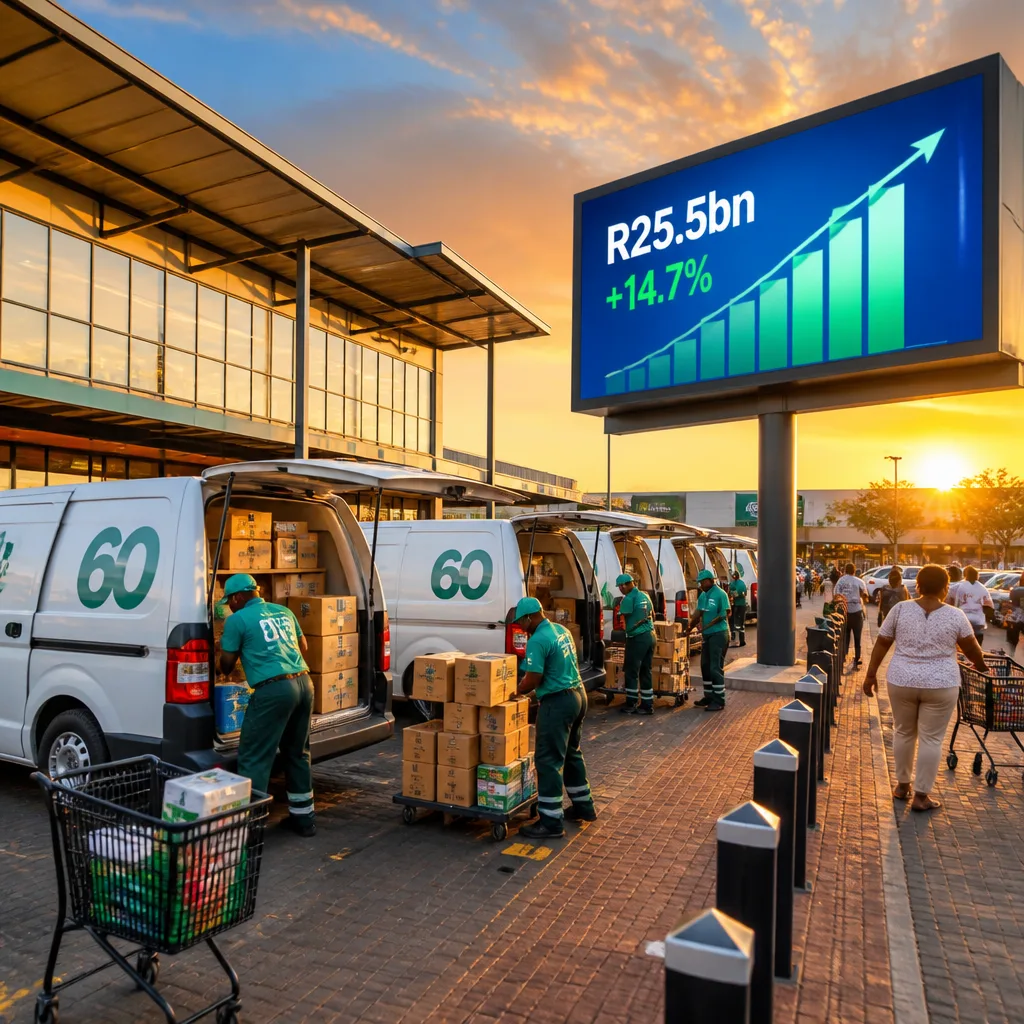
Shoprite Holdings on Wednesday reported a sharp acceleration in its e‑commerce arm and flagged improved profit performance for the year, underscoring how digital convenience is reshaping South Africa’s grocery market.
Sixty60 growth: scale and margin implications
The company said revenue at its Sixty60 on‑demand digital commerce operation rose 35% to R25.5 billion for the 52 weeks ending 28 June. That growth is material for a business where logistics, fleet costs and last‑mile fulfilment have a direct bearing on margins and working capital.
In a regulatory filing, Shoprite said it expects headline earnings per share (HEPS) from continuing operations to increase by as much as 14.7% for the year. The rise in HEPS reflects both the top‑line recovery in core food sales and the higher contribution from higher‑margin formats and digital services.
Brand and regional performance
The group continues to operate a multi‑brand strategy that segments the market by income and shopping preferences. Notable points from the statement include:
- Supermarkets in South Africa accounted for 85% of group sales and grew 7.1%, adding R15.2 billion in sales.
- Checkers and Checkers Hyper, which target higher‑income shoppers, recorded 10% revenue growth — more than double the 4.3% expansion at Shoprite and Usave brands.
- Sales at supermarkets outside South Africa rose 11% in reported currency, or 7.1% in constant currency.
- Same‑store sales in the South African supermarkets unit increased 2%, roughly in line with rest‑of‑market growth measured by NielsenIQ.
These numbers show a bifurcated recovery: higher growth in premium formats and in digital sales, while the more price‑sensitive Shoprite and Usave brands lag behind.
What this means for households and competition
For consumers, Sixty60’s expansion signals greater access to rapid home delivery and click‑and‑collect options, particularly in urban areas. For households managing tight budgets, the mix between Checkers’ fresher, higher‑margin offer and Shoprite/Usave’s discount positioning will matter for how quickly inflation‑related price pressures pass through to shopping bills.
Shoprite noted that Sixty60 is helping it confront renewed competitive pressure from international players. The filing references intensified rivalry from companies including Walmart, which has been stepping up its efforts in South Africa. The growth of Sixty60 to R25.5 billion shows how incumbents are investing to defend market share via technology and logistics rather than competing only on price.
Operational and financial consequences
Rapid expansion of digital fulfilment can improve customer retention and basket size, but it also raises costs for labour, vehicles and cold‑chain infrastructure. The balance between scale and margin will determine whether Sixty60 becomes a significant long‑term profit driver or remains primarily a strategic defensive investment to protect store sales.
| Item | Reported change |
|---|---|
| Sixty60 revenue | R25.5bn (+35%) |
| Group supermarkets (SA) | +7.1% (added R15.2bn) |
| Checkers/Checkers Hyper | +10% |
| Shoprite/Usave | +4.3% |
| International supermarkets (reported) | +11% (or +7.1% constant currency) |
| Same‑store sales (SA) | +2% |
Investors will watch whether the anticipated HEPS improvement materialises in the company’s full preliminary results and how capital allocation shifts between store investment, distribution infrastructure and technology. For lower‑income households, any further roll‑out of digital services could have mixed effects: convenience at a price, but potential upward pressure on delivery fees or minimum order values.
Shoprite’s performance also has labour market implications. Growth in e‑commerce requires drivers, warehouse staff and IT teams, while store expansions and refits support construction and retail employment. How the company balances automation, fixed‑cost investment and wage bills will affect jobs and operating leverage through the coming year.
While the regulatory filing positions Sixty60 as a competitive shield and growth engine, the true test will be whether the ramp‑up converts to sustainable margin expansion rather than an elevated cost base. The coming results season should provide clarity on whether the R25.5 billion milestone translates into stronger profits and improved returns for shareholders—and, crucially, whether customers see lower prices or simply faster delivery.
WE NEWS does not provide financial advice.













