New Zealand’s recent shift in research funding toward commercial outcomes is undermining “fundamental” or curiosity‑driven science, say researchers, with consequences for long‑term understanding of the environment and societal resilience.
Policy shift channels money away from basic questions
At a late‑June business summit, Prime Minister Christopher Luxon expressed an explicit desire to intensify the commercialisation of the science system and to see academics partner with entrepreneurs to build businesses. That orientation, scientists argue, leaves vital but less immediately profitable lines of inquiry underfunded. Maria Armoudian, an associate professor of politics and international relations at the University of Auckland, told reporters this approach "loses sight of the purpose of science and universities more generally" — namely, to strengthen societies by expanding knowledge.
What has changed in funding?
According to reporting on recent budgets, New Zealand now has a single fund dedicated to what is commonly labelled fundamental science — research driven by curiosity and basic understanding rather than direct commercial potential. In 2024, half of that fund was reallocated to support research with demonstrable monetary benefit. Subsequent budgets have reportedly trimmed science allocations further and created new pools explicitly aimed at commercialisation.
Researchers warn the effect is not merely administrative. It concentrates resources on projects with clearer short‑term returns while leaving longer‑horizon work, and especially environmental research, vulnerable.
Environmental knowledge at risk
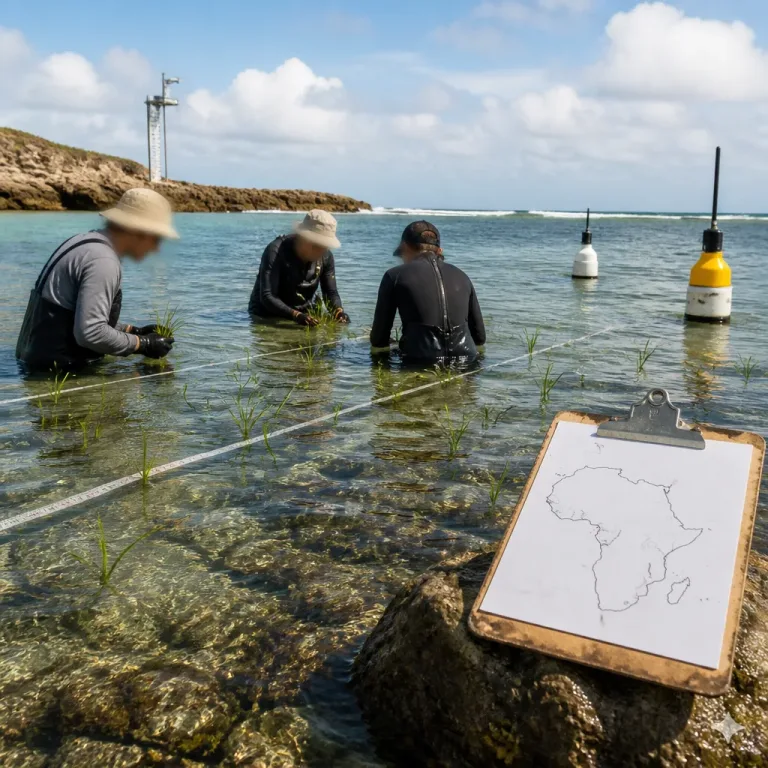
Marine scientist Simon Thrush of the University of Auckland highlighted the practical consequences. He used mangroves as an example to show how incomplete fundamental knowledge can mislead policy and climate accounting.
“There are some studies that are being done in New Zealand saying mangroves are wonderful, they sequester carbon, they’re really great,” Thrush said. “Sounds ideal – until you look at how long it takes the mangroves to do that sequestration. It’s hundreds or thousands of years… Meanwhile… those mangroves are releasing methane. And they’re doing that on timescales of hours to days.”
Thrush’s point is that understanding complex ecosystems requires detailed, often slow, baseline research. Without it, policymakers and the public risk relying on partial or misleading narratives about ecosystem services, carbon budgets and climate mitigation.
Philanthropy and commercial partners: a partial solution
The reporting examines whether private donors and philanthropic organisations can substitute for shrinking public funds. While philanthropy can be nimble and responsive, scientists caution it is no panacea for sustaining the broad portfolio of research that societies need. Private funding tends to follow donor priorities and can favour visible, short‑term projects or those with clear delivery metrics.
Researchers say a resilient national science system requires a mix of funding streams that explicitly protect curiosity‑driven work and long‑term environmental monitoring alongside efforts to translate discoveries into economic value.
Implications for policy and practice
The debate points to several policy choices for decision‑makers:
- Explicitly ring‑fence a proportion of public funding for fundamental, curiosity‑driven research.
- Maintain long‑term environmental monitoring programmes that produce the baseline data policymakers rely on.
- Develop clarity on the roles of public, private and philanthropic funders to avoid gaps and duplication.
Without such measures, scientists warn that the knowledge needed to manage ecosystems, assess climate interventions and support evidence‑based policy will be weakened. The risk is not simply slower scientific progress but poorer public decision‑making on issues that affect everyone.
| Issue | Reported change |
|---|---|
| Fund for fundamental science | One fund, with half reallocated in 2024 to commercially oriented projects |
| Budget trends | Subsequent trims and new commercialisation pools |
| Primary concern | Loss of long‑term environmental and curiosity‑driven research |
The debate in New Zealand mirrors broader international tensions about the purpose of public science funding: whether governments should reward immediate commercial outcomes or maintain investments in exploratory research that may yield unpredictable but societally crucial benefits in future.
For scientists working on ecosystems and climate‑sensitive phenomena, the practical choice is stark: continue advocating for protected funds and long‑term programmes, or accept a research landscape increasingly oriented to short‑term commercial returns. That choice will shape what we know — and what we do not — about the natural world for decades to come.