Scientists in Japan have directly observed a fleeting electronic intermediate that appears during the formation of a photoinduced hidden state in a metal–organic framework (MOF), finding the process completes within 30 femtoseconds — a timescale of 30 millionths of a billionth of a second. The work combines ultrafast laser spectroscopy with theoretical calculations and appears in the journal Physical Review Letters.
What the team did
The research group, led by Assistant Professor Tadahiko Ishikawa at the Institute of Science Tokyo and carried out with collaborators at Tohoku University and Nagoya Institute of Technology, studied how intense light pulses drive a MOF into a new electronic configuration. MOFs are crystalline materials built by linking metal ions and organic molecules; they are valued for tunable porosity and optical or electronic properties.
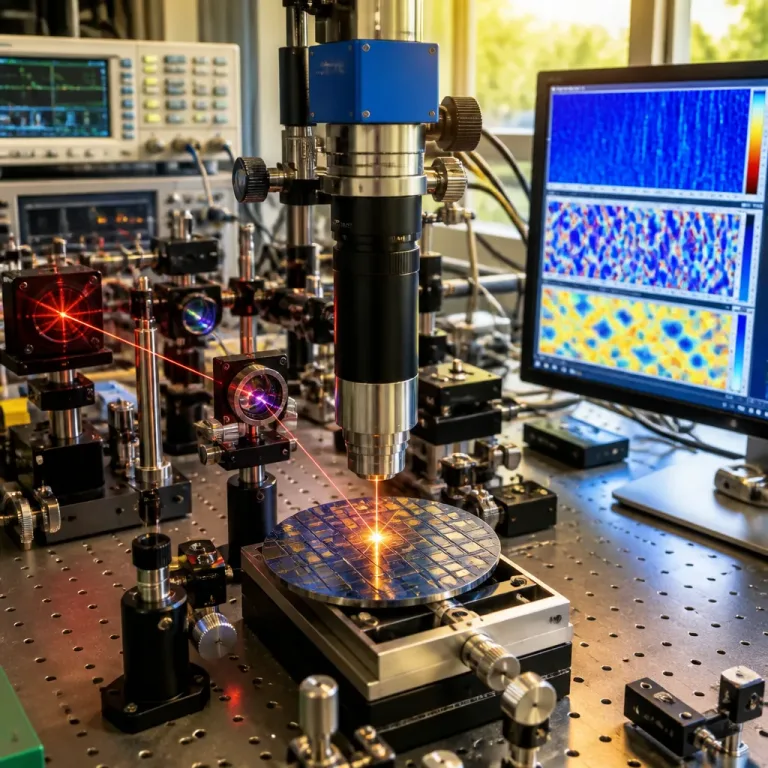
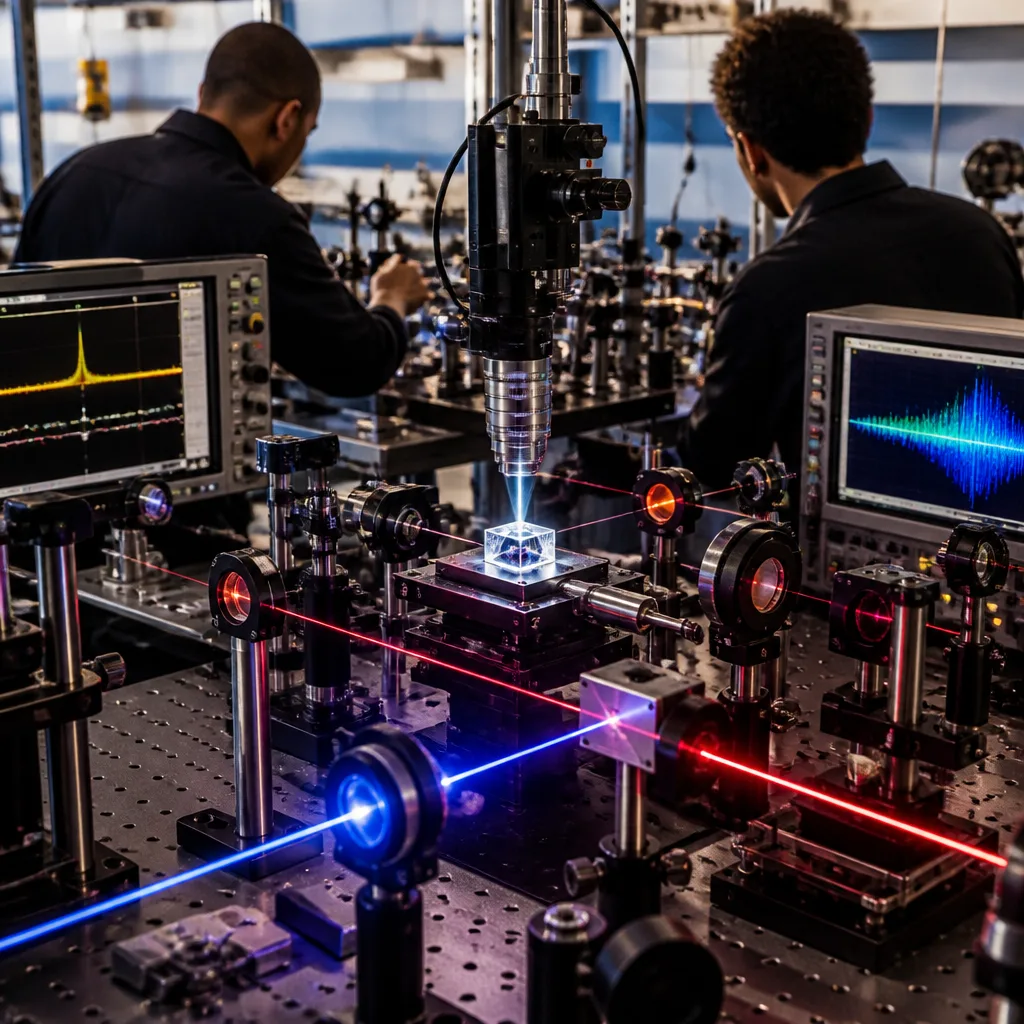
Using pump–probe ultrafast spectroscopy — a method in which one laser pulse excites the sample and a second probe pulse measures ensuing changes at defined delays — the researchers tracked the very first steps after the material absorbed light. The measurements, supported by theoretical modelling, revealed an intermediate electronic state that precedes the established photoinduced hidden state.
"We found that the photoinduced hidden state forms within 30 fs through a previously unknown intermediate electronic state," Ishikawa said.
Why this matters
Photoinduced states are configurations a material takes after absorbing light; they can show properties that differ sharply from the material’s ordinary state. Those altered properties are useful for switching devices, optical memory, sensors and other technologies that rely on controlling a material’s behaviour with light rather than heat or chemical change.
Catching the initial formation steps is difficult because they occur on the femtosecond timescale. By resolving a transient intermediate, the team provides a mechanistic clue to how the hidden state emerges, which is important for designing materials where light can rapidly and reversibly change electronic or structural properties.
Key findings and experimental approach
- The hidden photoinduced state appears via a previously unrecognised intermediate electronic state.
- The transition from initial excitation to the hidden state occurs within 30 fs.
- Ultrafast pump–probe spectroscopy was combined with theoretical calculations to identify and characterise the transient state.
The combination of experiment and computation is essential here: spectroscopy reveals temporal signatures, while modelling helps assign those signatures to particular electronic configurations and transitions.
| Institution | Role |
|---|---|
| Institute of Science Tokyo | Lead laboratory and experimental coordination |
| Tohoku University | Collaborative measurements and analysis |
| Nagoya Institute of Technology | Theoretical calculations and modelling |
Context and caveats
While the discovery clarifies an early step in the light-driven transformation of a MOF, several caveats are important. First, the result applies to the particular MOF studied; other materials may follow different pathways. Second, observing a transient intermediate does not by itself equate to an immediate technological application — it is a mechanistic insight that can guide further materials design and experiments.
Finally, experiments on the femtosecond scale require specialised equipment and interpretation. The robustness of the assignment of electronic states rests on both the quality of the spectroscopic data and the validity of supporting theoretical models.
Nevertheless, resolving an intermediate on the 30 fs timescale is a notable experimental achievement. It opens a route to study and ultimately engineer faster, light‑controlled switching in advanced materials, which could be relevant to optical computing, ultrafast switches and new classes of photoresponsive devices.
As researchers extend similar methods to other materials, they may uncover further rapid processes that have so far been hidden by the limits of temporal resolution. These insights will be important for anyone seeking to exploit light to control matter on its natural, ultrafast timescales.