
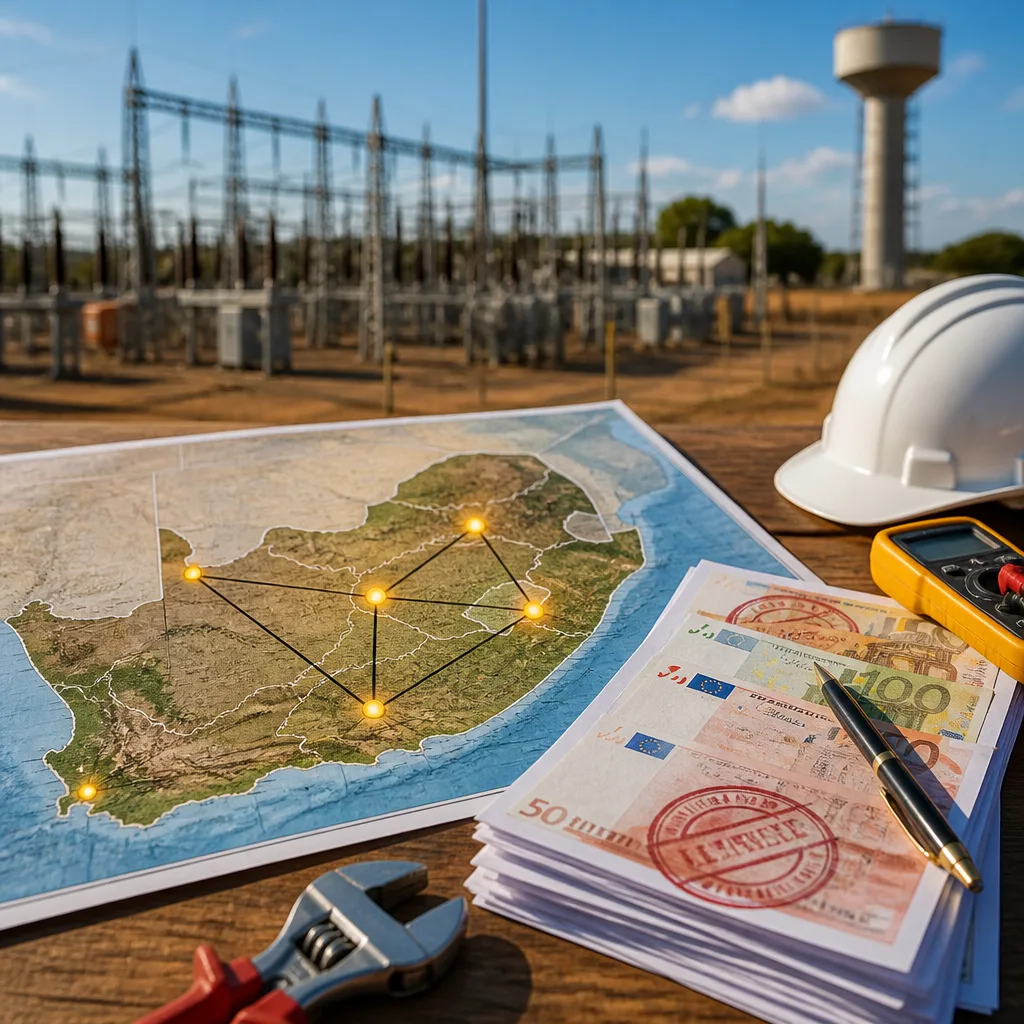
Germany and France have pledged a €300m loan — roughly R5.6bn — to support the National Treasury’s Metro Trading Services Reform (MTSR) programme, aimed at restoring basic services and improving governance and financial sustainability in South Africa’s eight metros.
What the loan will target
The MTSR was launched in March to address chronic breakdowns in municipal delivery of electricity, water and waste management across the eight urban hubs, which collectively serve in excess of 22 million residents. The concessional financing comes via Germany’s KfW Development Bank and France’s Agence Française de Développement (AFD), and is linked to the broader international Just Energy Transition commitments to South Africa.
The Treasury said the financing will strengthen government efforts to improve governance, operational performance and financial sustainability at local level. The loans will contribute to the municipal component of South Africa’s clean energy plan, signalling that part of the funding focus is on aligning service restoration with decarbonisation goals.
“The €300m in concessional financing strengthens the government’s broader programme of support for governance, financial sustainability and operational performance at local level,” finance minister Enoch Godongwana said.
Why metros need the money
Municipalities, including metros, have been hit by long-standing mismanagement, described by officials as fruitless, wasteful and unauthorised expenditure running into billions, alongside fraud and corruption. These governance failures have translated into deteriorating service delivery — from intermittent electricity and burst water networks to ineffective waste removal — raising costs for households and businesses and putting jobs at risk.
Last year, government outlined a separate R54bn performance-based incentive to help metros with cash to fix basic services, conditional on revenue from those services being ring-fenced within professionally run utilities. The reforms introduce a performance-linked incentive under the urban development financing grant to strengthen accountability and improve financial performance and service delivery.
Implications for the economy and households
Fixing municipal services in the metros has a direct bearing on household budgets and the wider economy. Reliable electricity and water reduce contingency spending by households and businesses on alternatives such as private generators and bottled water. For employers, fewer service interruptions mean steadier production and reduced risk of job losses. The metros concerned are economic anchors: Johannesburg alone accounts for about 16% of national GDP and has been the focus of recent private-sector support after the city disclosed it owed creditors more than R25bn.
Donor financing on concessional terms lowers the immediate fiscal burden on national government and metros, but it does not remove the need for deep operational reform. The MTSR’s success will hinge on whether metros can translate finance into improved billing and collection, reduced non-revenue water and theft, and tighter financial controls to stop further wasteful expenditure.
- Loan size: €300m (about R5.6bn)
- Coverage: Eight metros serving more than 22 million residents
- Related measures: R54bn performance-based incentive under the urban development financing grant
| Metric | Figure |
|---|---|
| Loan value | €300m / about R5.6bn |
| Population served (metros) | More than 22 million |
| Johannesburg share of GDP | About 16% |
| Johannesburg creditor arrears | More than R25bn |
The AFD’s engagement is also part of its long-running municipal lending to South African cities, including direct support previously extended to Johannesburg, eThekwini and Cape Town for infrastructure that reduces inequality and improves climate resilience.
Risks and next steps
Concessional loans do not substitute for strong governance. The Treasury and donors will need credible performance indicators and transparent monitoring to ensure funds improve services rather than reinforce poor financial practices. The MTSR’s link to the Just Energy Transition suggests donors will emphasise investments that reduce emissions while restoring services.
For households, the immediate question is whether the promised financing and conditional incentives will translate into fewer outages, cleaner water and regular refuse collection. For the national economy, stabilising metros is critical: they are major employers, key revenue generators and essential to business confidence. The loan gives breathing space — but the hard work will be in municipal boardrooms and utility operations where financial discipline and engineering fixes must follow the pledge of cash.
WE NEWS does not provide financial advice.













