South Africa faces a potentially long delay in rebuilding domestic production of foot-and-mouth disease (FMD) vaccine after Agriculture Minister Willie Aucamp disclosed in a parliamentary reply that a proposed large-scale facility still requires about R1.2 billion before construction can begin.
Interim capacity at Onderstepoort
The Agricultural Research Council (ARC) has re-established an interim production line at its Onderstepoort Veterinary Research campus. The commissioned 200‑litre system can produce up to 20 000 monovalent doses a week or 20 000 trivalent doses a month, the Minister said in response to a question from ANC MP Dina Pule.
The ARC initially manufactured 80 000 SAT2 vaccine doses following an outbreak in KwaZulu‑Natal in January, but those doses were not deployed because of evolving disease dynamics and delays in obtaining test results to identify circulating strains across provinces. Production at the interim site has since shifted to a trivalent formulation covering SAT1, SAT2 and SAT3, with output reported at 20 000 doses a month.
Planned scale-up and timelines
To lift output substantially, the ARC plans to upgrade the platform to a 1 000‑litre system, which Aucamp said would increase monthly trivalent production to roughly 200 000 doses. Procurement for that expansion is under way, with integration scheduled to be completed by February 2027 and commercial production testing set for April 2027.
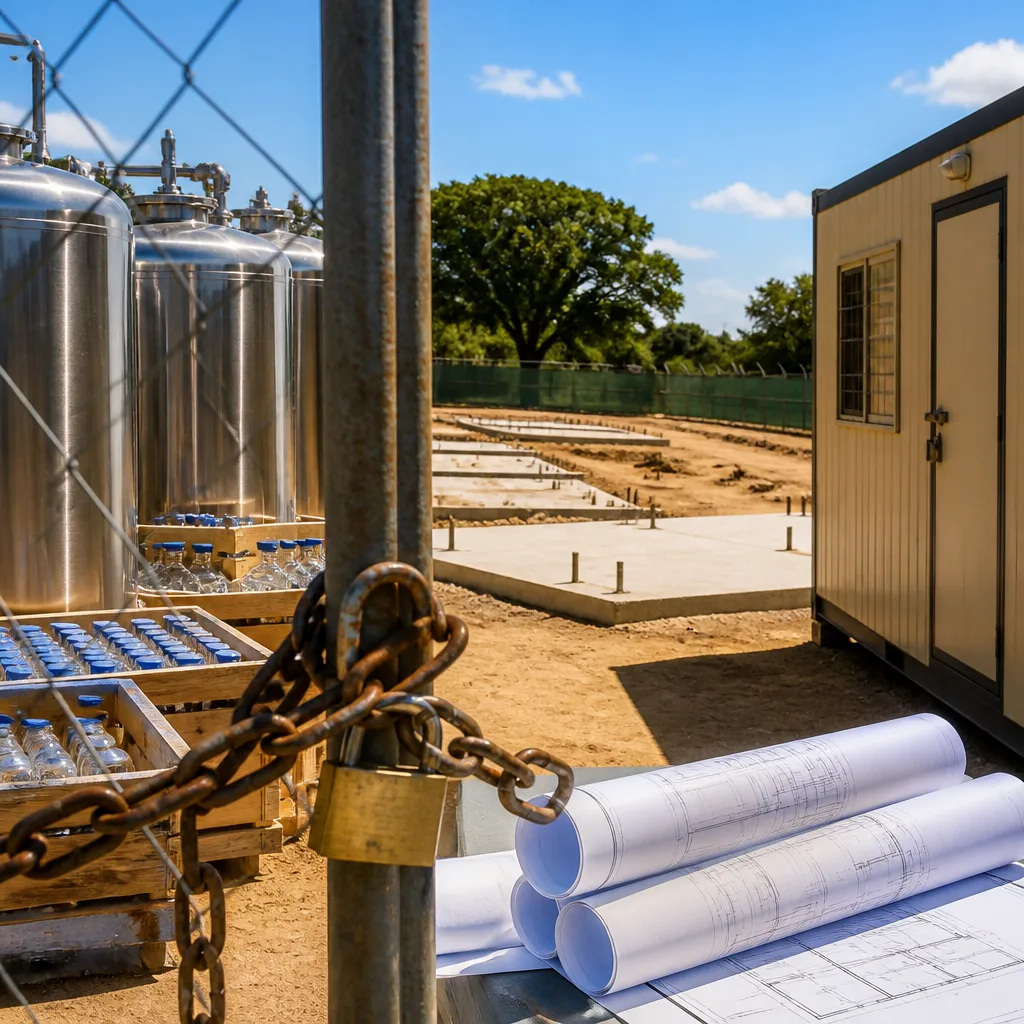
Beyond the upgraded interim plant, the ARC has drawn up designs for a full‑scale manufacturing facility capable of producing up to 20 million doses a year. The project has cleared several preparatory steps — land acquisition, zoning, environmental approvals and infrastructure planning — but has stalled at the financing stage.
"Once integrated with the existing facility, the upgraded production platform is expected to increase output to approximately 200 000 Trivalent FMD vaccine doses per month"
What the funding gap means
The disclosed R1.2 billion shortfall is the immediate barrier to breaking ground on the large plant. For farmers and exporters, local vaccine production is more than technical capacity: it affects the speed of response to outbreaks, the stability of supply and the country’s ability to meet trade requirements without relying on imports.
A locally based, high‑volume manufacturer would reduce lead times and potentially lower the price paid by provincial veterinary services and private producers — a material consideration for household and commercial livestock budgets, particularly in smaller‑scale farming communities where outbreaks can wipe out capital and incomes.
- Interim system: 200 litres — ~20 000 monovalent doses/week or 20 000 trivalent doses/month
- Planned upgrade: 1 000 litres — ~200 000 trivalent doses/month (testing April 2027)
- Full facility design: up to 20 million doses/year — construction pending R1.2 billion
| System | Capacity |
|---|---|
| 200‑litre interim | 20 000 trivalent doses/month |
| 1 000‑litre upgrade | 200 000 trivalent doses/month |
| Full facility (planned) | 20 million doses/year |
While the ARC has advanced planning steps, securing the remaining capital is critical to move from design and approvals to construction. The Minister’s reply did not specify funding sources or a timeframe for raising the R1.2 billion, leaving the project’s start date uncertain.
For policymakers, the financing question intersects with broader debates about public investment in veterinary biotechnology, biosecurity preparedness and the economic cost of outbreaks. Without timely investment, the country risks continued dependence on imported vaccines, which can be more expensive and subject to international supply pressures — a vulnerability evident during disease events that require rapid nationwide vaccination.
As the ARC prepares for an upgraded interim output and eventual commercial testing in April 2027, the immediate priority remains bridging the funding gap so the long‑planned, high‑capacity facility can proceed to construction and deliver vaccine security for South Africa’s livestock sector.
WE NEWS does not provide financial advice.