
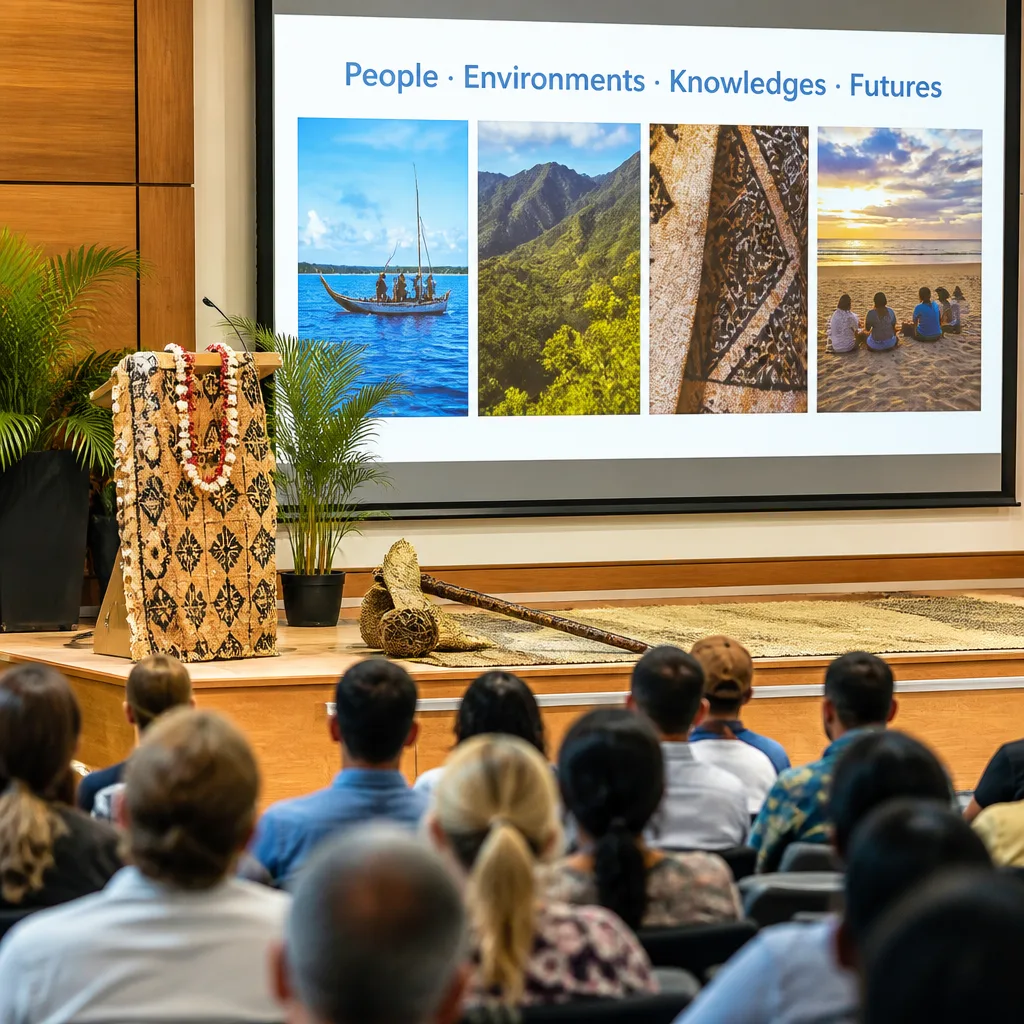
Pacific-led science and the next generation of researchers were the focus of a one-day symposium held on 3 September at Te Papa Ako o Tai Tonga in Manukau. The event convened honours, masters and doctoral students alongside research fellows and senior academics to consider what the future of Pacific-directed scientific work might look like and how diverse ways of knowing can shape it.
An expansive view of Pacific research and leadership
The symposium, organised by the University of Auckland's Faculty of Science, brought together contributions from a wide range of fields—psychology, education, health, environmental science, ecology, computer science and astrophysics—under four interconnected themes: People, Environments, Knowledges and Futures. Organisers said the event aimed to showcase the breadth and influence of Pacific-led research and to strengthen leadership pathways for Pacific scholars.
Programme activity opened with a mihi whakatau, a welcome ceremony led by the faculty Kaiārahi Tui Kaumoana, and included addresses from the interim Dean of Science and the Pro Vice-Chancellor Pacific. The gathering was described as a platform that had grown in significance since its first edition in 2022, with organisers emphasising its role in amplifying Pacific research and mentoring early-career talent.
“When we talk about the future of Pacific-led science, some of that future is already here, with the people in this room and the work they're doing,” said Associate Professor Sam Manuela, the Faculty’s Associate Dean Pacific.
Students and early-career researchers take centre stage
A central aim of the symposium was to support the next generation of Pacific researchers by giving them visibility and a professional forum to present work. Presenters ranged from honours and masters students to doctoral candidates, research fellows and senior academics, reflecting what organisers characterised as a growing pipeline of Pacific talent across scientific disciplines.
Associate Professor Sam Manuela encouraged an expansive approach that values multiple methodologies and knowledge systems. That includes integrating Indigenous and Pacific epistemologies alongside conventional scientific practices—an approach that, organisers said, can enrich research questions, methods and community impact.
- Interdisciplinary reach: presentations spanned natural and social sciences as well as computational and physical sciences.
- Leadership development: the symposium acted as a forum to strengthen Pacific research leadership and mentorship.
- Knowledge pluralism: organisers promoted the inclusion of Pacific ways of knowing in research design and evaluation.
| Theme | Representative disciplines |
|---|---|
| People | Psychology, education, health |
| Environments | Environmental science, ecology |
| Knowledges | Indigenous epistemologies, interdisciplinary methods |
| Futures | Computer science, astrophysics, scenario planning |
Context and implications for research systems
The symposium echoes a wider shift in several research systems towards recognising the value of diverse knowledge systems and of intentionally cultivating researchers from underrepresented communities. For Pacific scholars, the event served both as a showcase and as a reminder that institutional support—for training, mentorship and visible leadership roles—remains critical to converting talent into sustained research careers.
Organisers emphasised that the future of Pacific-led science is not a distant prospect but is already manifest in the work of present-day students and academics. That present-tense framing highlights two practical implications for universities and funders: firstly, investment in early-career researchers to nurture the emerging pipeline; and secondly, structural changes to how research questions, methods and outputs are assessed so that Pacific perspectives are recognised on their own terms.
The symposium also demonstrated the benefits of interdisciplinary dialogue. Bringing together fields as varied as astrophysics and education encouraged participants to think about how Pacific-led priorities can be advanced across methodological and disciplinary boundaries.
While the event was regionally focused, its themes are of interest to research institutions internationally as they consider how to foster inclusive, plural and resilient research ecosystems. For Pacific communities and scholars, the symposium offered both a forum and a mandate: to keep developing leadership, to broaden what counts as evidence, and to ensure that Pacific voices help define the questions that science seeks to answer.









