
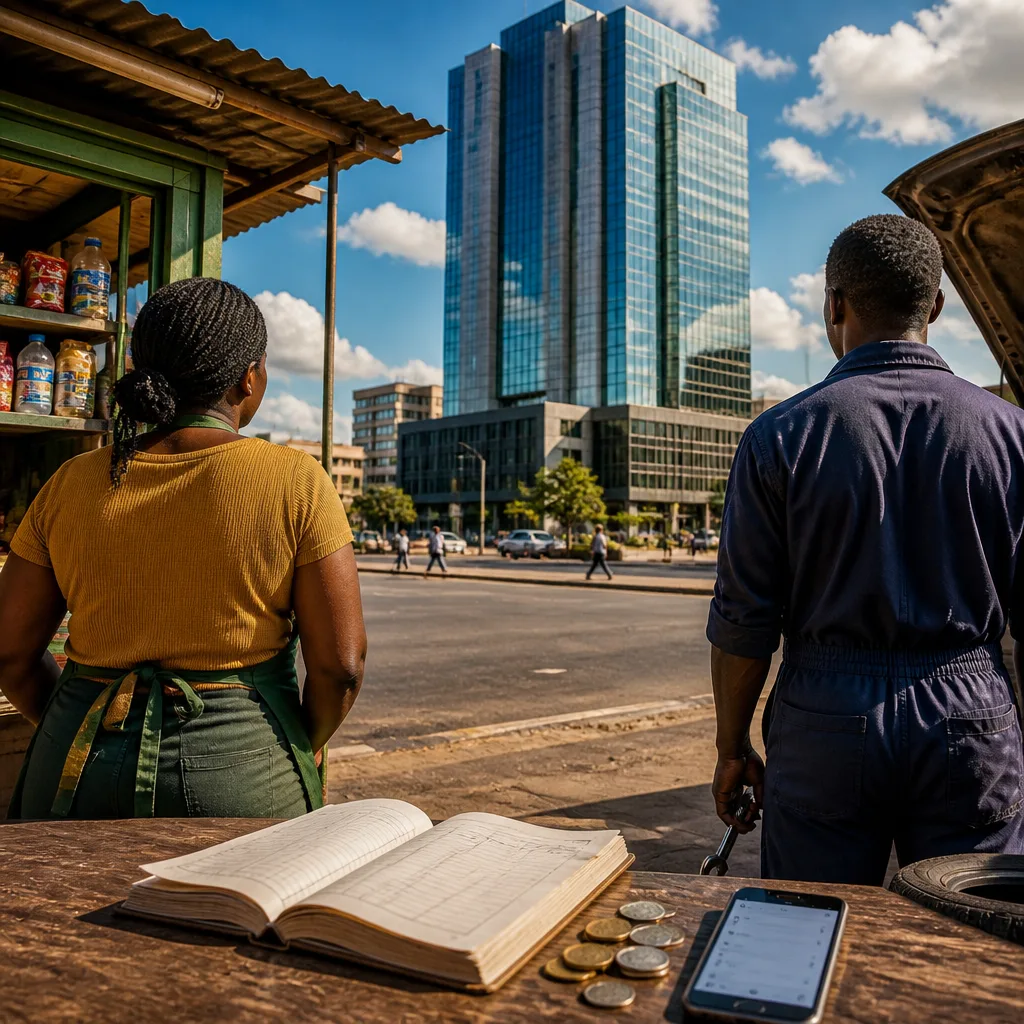
South Africa’s small, micro and medium enterprises (SMMEs) remain a central pillar of the economy but are largely shut out of formal credit markets, according to multiple institutional reports. While SMMEs make up about 90% of businesses and supply as much as 60% of employment, just around 5% of formal SMMEs have access to bank credit, the International Finance Corporation (IFC) is cited as saying.
Visibility, not ambition, is the obstacle
Research collated by Trade & Industrial Policy Strategies (TIPS) and referenced alongside World Bank data suggests the problem is not a lack of enterprise activity but a lack of a credible financial footprint. TIPS reported that formal small businesses contributed about 19% of GDP in 2023 and roughly a third of formal employment, with the informal sector adding a further 17% of employment largely through micro enterprises and own‑account workers.
Yet despite these economic contributions, traditional lenders treat many SMMEs as high risk because of:
- thin or non‑existent credit histories;
- informal operating models that fall outside standard risk assessments;
- irregular cash flows that complicate repayment forecasts.
The result is what analysts call a "visibility gap" — businesses that are productive and employ staff but remain invisible to banks and insurers because they lack the records and data modern finance systems require.
What the numbers mean for households and jobs
When only about 5% of formally registered small firms can secure bank credit, the knock‑on effects are significant. Limited access to affordable loans constrains firms’ ability to invest in equipment, hire additional staff, or smooth cash flow during slower months. For households, that translates into fewer job opportunities and weaker income growth, reinforcing broader macroeconomic challenges such as low GDP expansion and unemployment levels above 30%, according to the World Bank’s latest available data referenced in the reporting.
| Indicator | Reported share |
|---|---|
| SMMEs as share of businesses | 90% |
| Employment supplied by SMMEs (up to) | 60% |
| Formal small businesses contribution to GDP (2023) | 19% |
| Access to bank credit (formal SMMEs) | ~5% |
Those percentages are more than statistics: they represent the diminished capacity of households to rise out of poverty and the restricted pipeline for job creation. Policymakers and lenders face a choice: adapt credit assessment frameworks to the realities of small business cash flows and digital records, or accept that a large chunk of the economy will remain under‑leveraged.
Policy and market responses under discussion
The reporting points to several avenues that could help close the visibility gap without compromising prudential standards. These include expanded use of alternative data — such as digital payment histories, utility bills and mobile transaction records — and tailored lending products that recognise cyclical revenues and permit flexible repayment schedules. There are also calls for stronger digitisation supports so micro and small businesses can generate the kinds of records that banks rely on.
Industry associations emphasise that improved access to credit must be coupled with capacity‑building: bookkeeping, tax compliance and basic financial management training help firms both grow and become more bankable. At the same time, regulators and lenders must guard against predatory products that could trap vulnerable firms in high‑cost debt.
Bridging the finance gap will not, by itself, restore rapid GDP growth or solve unemployment overnight. But given that formal small businesses already account for a sizable share of output and employment, measures that increase their access to affordable finance could amplify investment, stabilise incomes and expand job opportunities across the economy.
WE NEWS does not provide financial advice.













