
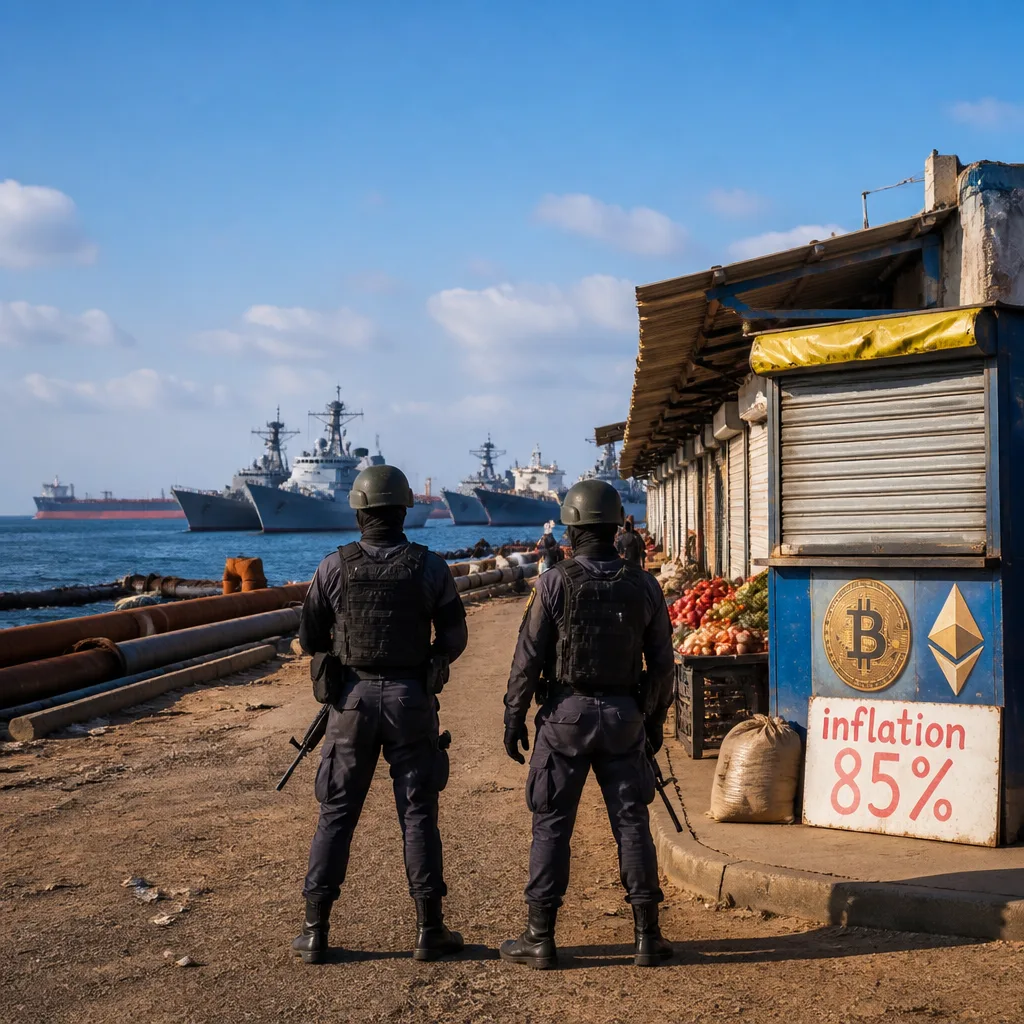
Iran has been unable to export oil since 1 August after a United States naval blockade closed its main export terminals, an economic development that an expert described as making the country more isolated and compounding an already severe domestic crisis.
Economic shock compounds long-running malaise
The assessment comes from economist Djamchid Assadi, who told RFI that Tehran had sought to maximise shipments during a 60‑day grace period that began on 15 June, but that revenues from those shipments have now ceased as the blockade took effect. Assadi, an economist and lecturer at the Burgundy School of Business in Dijon, warned the shutdown of exports coincides with other measures that have choked off alternative revenue streams, increasing pressure on ordinary Iranians.
According to Assadi, the United States has also moved to block several cryptocurrency exchanges that had previously enabled Iran to circumvent sanctions and access foreign currency. Taken together, these steps have intensified what he characterised as an "extremely dire" economic situation.
"All of this shows that the economic situation is extremely dire,"
The disruption has occurred against a background of runaway inflation and rising unemployment. Official inflation is reported at more than 85%, though Assadi noted that some estimates place the rate at 200% or higher. He emphasised that even if the lower official figure is accepted, real wages are not keeping pace with rising costs.
Social consequences: shrinking incomes and rising poverty
Assadi said the gap between incomes and expenditure has left many households worse off, with unemployment driving people into informal commerce. He described a rise in the number of street vendors in Iranian cities — not as professional traders but as people forced to sell household items to try to survive.
- Exports: Oil exports blocked since 1 August after US naval action.
- Sanctions workarounds curtailed: Several cryptocurrency exchanges blocked.
- Inflation: Officially >85%; some outside estimates much higher.
- Social impact: Rising unemployment and increase in street vendors.
Assadi characterised this as a situation of "extreme poverty and inflation, unfortunately with no promising prospects." The economist warned that the economic decline does not automatically translate into the collapse of Iran's political system. While he said the Islamic Republic has been weakened by the combined effects of war and economic sanctions, he cautioned against assuming a rapid political breakdown.
Political effects: a stronger Revolutionary Guards
Beyond hardship for households, Assadi argued the economic pressure is increasing the influence of the Islamic Revolutionary Guard Corps (IRGC) inside Iran. The IRGC has long held a central role in security and economic sectors; growing scarcity and isolation, he said, have bolstered its position within state structures.
That shift has regional and international implications. A state under severe economic strain and with an empowered security apparatus may behave unpredictably in regional disputes and diplomacy — a point of concern for capitals monitoring developments in the Gulf and wider Middle East.
| Date | Event |
|---|---|
| 15 June | Start of 60‑day grace period mentioned by Assadi |
| 1 August | US naval blockade shuts Iran's main oil export terminals |
For South African readers and policymakers, the crisis underlines how sanctions and maritime interdictions can rapidly alter a country's economic trajectory and shift domestic power balances. It also demonstrates the limits of covert financial channels such as crypto to sustain national revenue when major powers act to close those routes.
Assadi's analysis stops short of predicting regime change. He emphasises that while the Islamic Republic is weakened, political collapse is not an automatic outcome of economic stress. The double reality, he implies, is that economic desperation may fuel social unrest while simultaneously strengthening the hands of security institutions that can contain or channel that unrest.
The coming weeks will show whether reduced export revenues and tighter financial choke points deepen poverty further, produce more visible social instability, or lead to adaptive measures within Iran's political economy that recalibrate power between civilian institutions and the Revolutionary Guards.









