
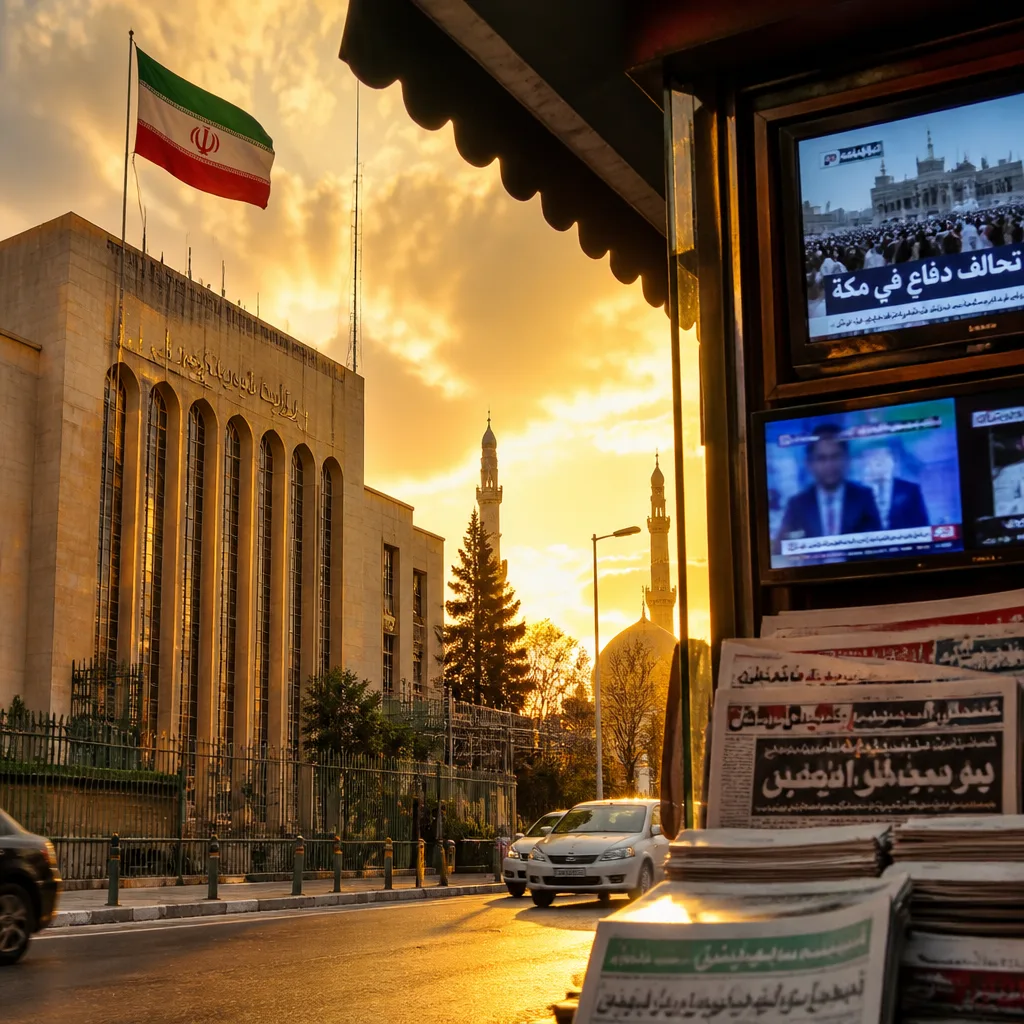
Iran has publicly downplayed the significance of a new defence agreement signed by Saudi Arabia, Pakistan and Turkey, even as some analysts warn Tehran not to underestimate the pact’s potential to reshape regional security calculations, reported Iran International on 10 August 2026.
Tehran frames the pact as limited
A Foreign Ministry spokesman, Esmail Baghaei, said Iran had no reason to fear that the so-called Mecca Pact was directed against it, and portrayed the agreement as a response to Israeli ambitions and diminishing confidence in US security guarantees, according to the report.
Hardline commentary in state‑affiliated media similarly sought to temper alarm. Seyed Abdollah Motavalian, writing in the IRGC‑affiliated Javan newspaper, described the pact as having “considerable propaganda potential” but argued it faced substantial obstacles to becoming a functioning strategic alliance, the report said.
“Tehran’s strategic skill would be not to allow a political document, before it is tested against reality, to become an imaginary power in the calculations of decision‑makers,” Motavalian wrote, Iran International reported.
Questions over commitment and capability
Other Iranian commentary, cited in the report, emphasised the divergent national interests of the three signatories and questioned whether Pakistan or Turkey would become directly involved in Saudi conflicts. One analysis in Javan suggested their likely contributions could be confined to advisory roles, arms sales and joint exercises rather than intervention on the battlefield.
Iranian state‑affiliated outlets have also framed the pact as evidence of growing Saudi dissatisfaction with US protection after repeated missile and drone strikes, arguing Riyadh is diversifying its security partnerships in response to perceived shortcomings by Washington, according to the report.
What the Mecca Pact comprises
The pact was signed by Turkish President Tayyip Erdogan, Saudi Crown Prince Mohammed bin Salman and Pakistan’s Prime Minister Shehbaz Sharif in Mecca on 7 August 2026, the report said. It is presented publicly as a joint defence agreement intended to strengthen cooperation among the three states.
| Country | Leader at signing | Signing date |
|---|---|---|
| Saudi Arabia | Mohammed bin Salman | 7 August 2026 |
| Turkey | Tayyip Erdogan | 7 August 2026 |
| Pakistan | Shehbaz Sharif | 7 August 2026 |
Analysts urge caution in Tehran
Commentators cited by Iran International warned Iranian decision‑makers against allowing a political declaration to become a decisive factor in policy before its practical limits are tested. The tone of that advice reflected concern that overreaction could produce strategic miscalculations, especially amid ongoing negotiations with Washington, the report said.
- Tehran’s official stance: The pact is not targeted at Iran, framed instead as a response to Israeli actions and a perceived decline in US commitments.
- Hardline view: The agreement has propaganda value but faces barriers to becoming a durable alliance.
- Practical doubts: Analyses question the willingness of Pakistan and Turkey to commit forces beyond advisory and material support.
While Tehran publicly seeks to minimise immediate threat perceptions, the debate within Iranian media and commentary underscores uncertainty about how the Mecca Pact will evolve in practice. The differing strategic priorities of Saudi Arabia, Pakistan and Turkey could limit the accord’s operational reach, but the mere prospect of a new security alignment has already entered regional strategic calculations, according to the reporting.
For South Africa and other external observers, the development merits attention as a potential influence on wider Middle East alignments and on the diplomatic space around ongoing negotiations between Iran and other global powers.









