Oil prices rose on Wednesday as shipping disruptions around the Strait of Hormuz continued, keeping markets on edge ahead of key US inflation data that could influence the Federal Reserve's interest-rate plans. The move came amid fragile labour-market data from the US and signs the Iran–US conflict has tightened energy supply routes.
Global drivers: supply squeeze and US inflation focus
Traders were cautious ahead of the US consumer price index (CPI) release, which follows a report showing the US economy lost more than 20,000 jobs last month, a signal of some slackening in the labour market. With inflation having remained above the Fed's 2% target for several years, and the conflict in Iran since February disrupting flows, market participants are increasingly pricing the prospect of higher borrowing costs.
Last month’s Federal Reserve meeting saw three board members call for a rate increase, dissenting from the decision to hold. Investors now expect at least one rate rise before year-end, and some anticipate two, dependent on upcoming CPI and jobs reports.
Why Hormuz matters
The Strait of Hormuz is a choke point for global oil shipments. Continued effective closure of the strait has pushed crude prices higher, and progress in negotiations to reopen it has been limited. A brief glimmer of hope came after Pakistan’s defence minister suggested Islamabad and Tehran were “close to some sort of arrangement”, but that optimism faded as talks between Washington and Tehran remained strained.
“Crude oil prices have surged in the last few days because the Strait of Hormuz remains effectively shut, and there are no signs of progress between the US and Iran,”
— Forex.com analyst Fawad Razaqzada, quoted in reporting on market moves.
Recent incidents adding to tensions
Militarised incidents have compounded concerns. The US military said a helicopter struck the engine room of a Panama-flagged cargo vessel that tried to breach a US maritime blockade of Iranian ports. In parallel, media reports that Iran and Oman were in advanced talks to reopen shipping channels produced little market relief.
- Risk channel: physical disruption to supplies keeps a premium on crude.
- Monetary channel: higher oil can sustain inflation, increasing the odds of further Fed tightening.
- Market channel: oil-driven rate expectations can lift the US dollar, pressuring emerging-market currencies like the rand.
What this means for South Africa
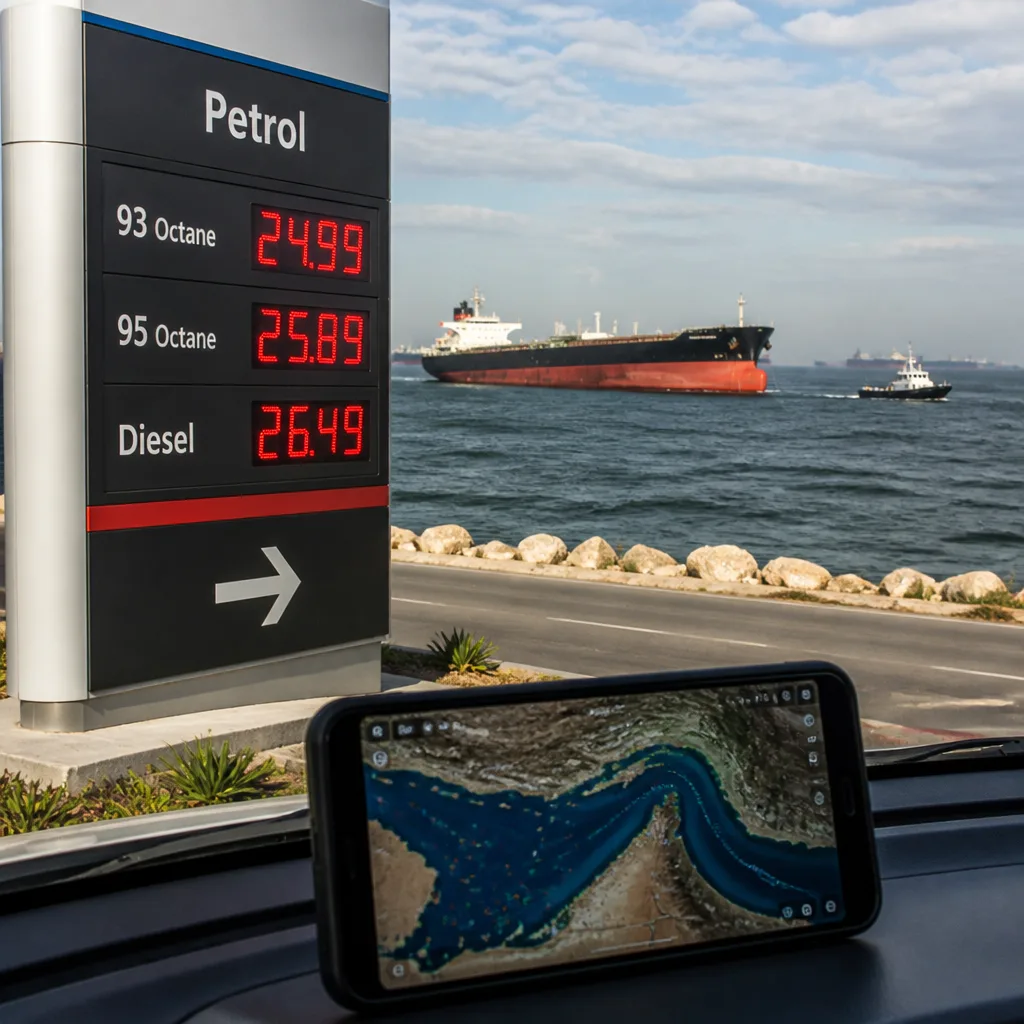
While the reporting focused on global markets, the consequences for South Africa are direct and material. Higher international crude prices typically translate into higher import fuel costs, which feed through to retail petrol and diesel prices, expenditure on transport and freight, and ultimately into consumer-price indices. That dynamic places additional upward pressure on household budgets already stretched by prior inflation and taxes.
There are also second-round effects. A stronger US dollar and higher global yields associated with anticipated Fed tightening can weaken the rand, making fuel and other imported goods more expensive in rand terms. For businesses, higher transport and logistics costs hit margins and may be passed on to consumers in the form of higher prices.
| Channel | Immediate effect |
|---|---|
| Crude price rise | Higher cost of imported petrol and diesel |
| Fed tightening expectations | Stronger dollar, rand depreciation pressure |
| Higher fuel costs | Upward pressure on household budgets and inflation |
These channels matter to the South African Reserve Bank (SARB). Persistent fuel-driven inflation narrows the SARB's room to loosen policy and could compel it to maintain or raise interest rates to keep inflation expectations anchored — a trade-off that affects borrowing costs for households and businesses and can slow economic growth.
For consumers, any further rise in pump prices reduces discretionary spending and raises the cost of commuting and goods that rely on road freight. For firms, particularly in transport, logistics and retail, fuel cost inflation squeezes margins unless offset by productivity gains or higher prices.
Market participants will now watch the US CPI print and the next US jobs report closely, as both will inform the Fed’s path and, by extension, the direction of capital flows and currency moves that feed into South Africa’s inflation and interest-rate outlook.
WE NEWS does not provide financial advice. Readers concerned about the effects of oil-price movements on personal finances or business planning should consult a qualified financial adviser.