
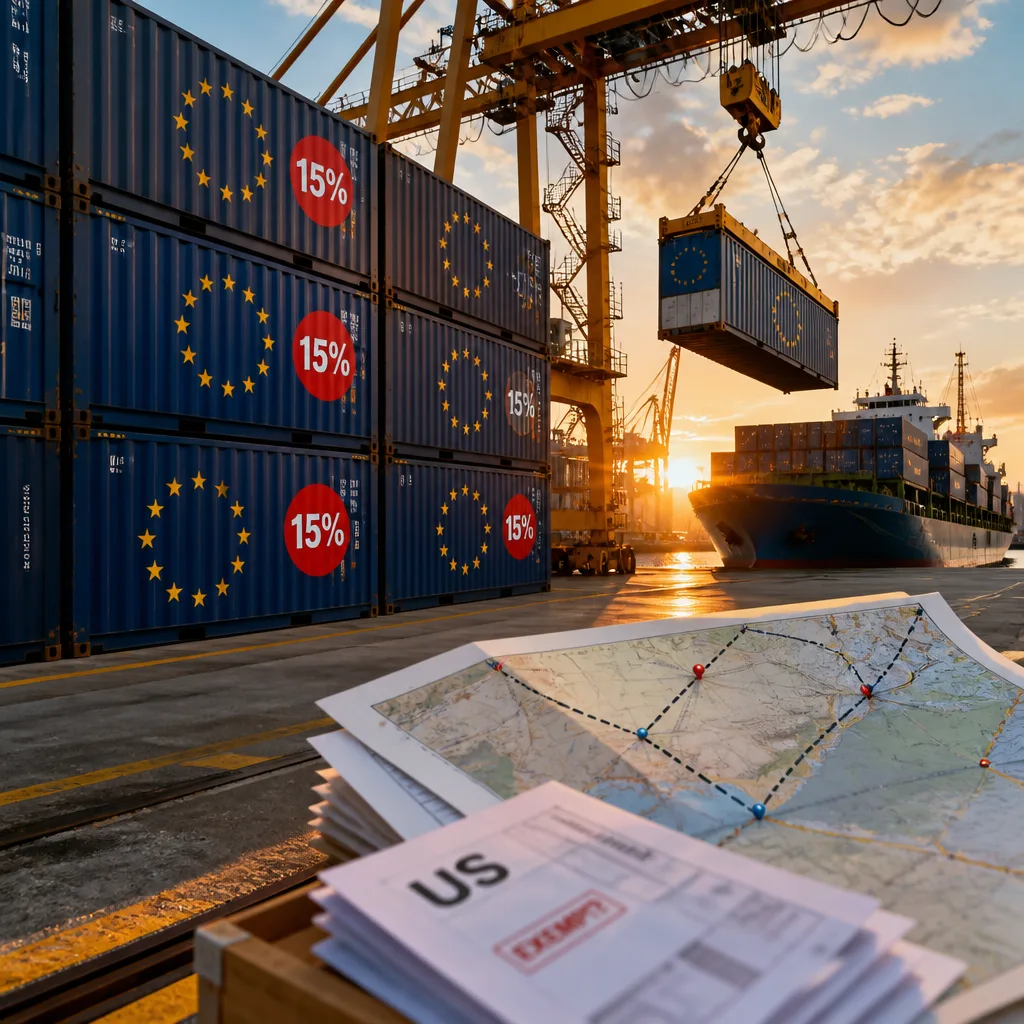
The imposition of broad new tariffs on EU goods exported to the United States has injected notable volatility into trade figures and forced exporters to adapt routes, marketing and logistics, according to industry voices and economists in Ireland.
Tariff shock, front‑loading and a mixed macro picture
When the White House announced sweeping tariff measures last year, it set off a scramble among exporters. The European Union and US negotiators reached an outline agreement in August that included a 15% flat tariff on EU exports to the United States. That move, while described by some as the “least worst scenario”, altered trade behaviour.
Gerard Brady, chief economist at employer group Ibec, told reporters this trade shock has added volatility to headline figures. He said exporters engaged in front‑loading — accelerating shipments ahead of the tariff — which produced a surge in exports followed by a whiplash effect and much weaker numbers in the months after.
“They have added more volatility into the headline figures than anything else,” Brady said, adding that when compared with 2024 the underlying numbers remain relatively robust. He noted that around three‑quarters of Ireland’s exports to the US remain exempt from the new tariffs, which helps explain why macro statistics do not show a dramatic contraction.
Pressure on specific sectors and small exporters
Despite a broadly resilient top line, particular sectors and smaller exporters are feeling the squeeze. The tariff regime and the uncertainty around US policy have forced firms to invest more time and money in customer relations and market intelligence to remain competitive.
Sarah Furno, managing director of Cashel Farmhouse Cheesemakers, described an intensified effort to maintain footholds in the US market. Since the summer of 2025, Furno said the business has travelled to the US every six months to take part in trade shows on both coasts as a way to gauge market temperature and preserve market share.
“People are feeling the squeeze,” Furno said, describing additional travel and customer engagement as necessary to stay competitive.
For Cashel Blue and similar artisan food producers, the added cost of compliance, route changes and sustained marketing has been a direct hit to margins. Where larger multinationals can absorb or shift costs, smaller food exporters face more immediate decisions about pricing, distribution and the viability of particular routes into the US.
- Front‑loading: exporters rushed shipments before tariffs took effect, boosting recent export volumes then slowing activity.
- Exemptions: roughly three‑quarters of Ireland’s US‑bound exports remain exempt, cushioning aggregate trade figures.
- Sectoral pain: niche and smaller exporters, particularly in food and specialised goods, have experienced the most pressure.
Implications for businesses and policy
The episode underlines how sudden trade policy shifts translate into practical costs for companies: higher marketing spend, altered logistics, intensified travel and the need for closer customer management. These are ultimately passed along through prices, margins or reduced investment, depending on a firm’s market position.
While the macroeconomic picture for Irish exports remains comparatively strong against 2024’s numbers, the uneven impact highlights the limits of headline statistics in capturing the lived experience of businesses on the ground. For policymakers, the challenge is to identify and support vulnerable exporters who cannot easily absorb or hedge against tariff shocks.
For business leaders and household budget watchers in South Africa and elsewhere, the episode is a reminder that international trade policy can have quick, tangible effects on costs, availability and competition in specific products and markets — even when national trade aggregates appear stable.
| Aspect | Effect |
|---|---|
| Tariff rate | 15% flat on many EU exports to the US |
| Exports exempt | About 75% of Irish exports to the US |
| Immediate business impact | Increased travel, marketing, logistics changes, margin pressure for SMEs |
WE NEWS does not provide financial advice. Reporting here relies on statements from industry representatives and economists as reported in the source material.













