
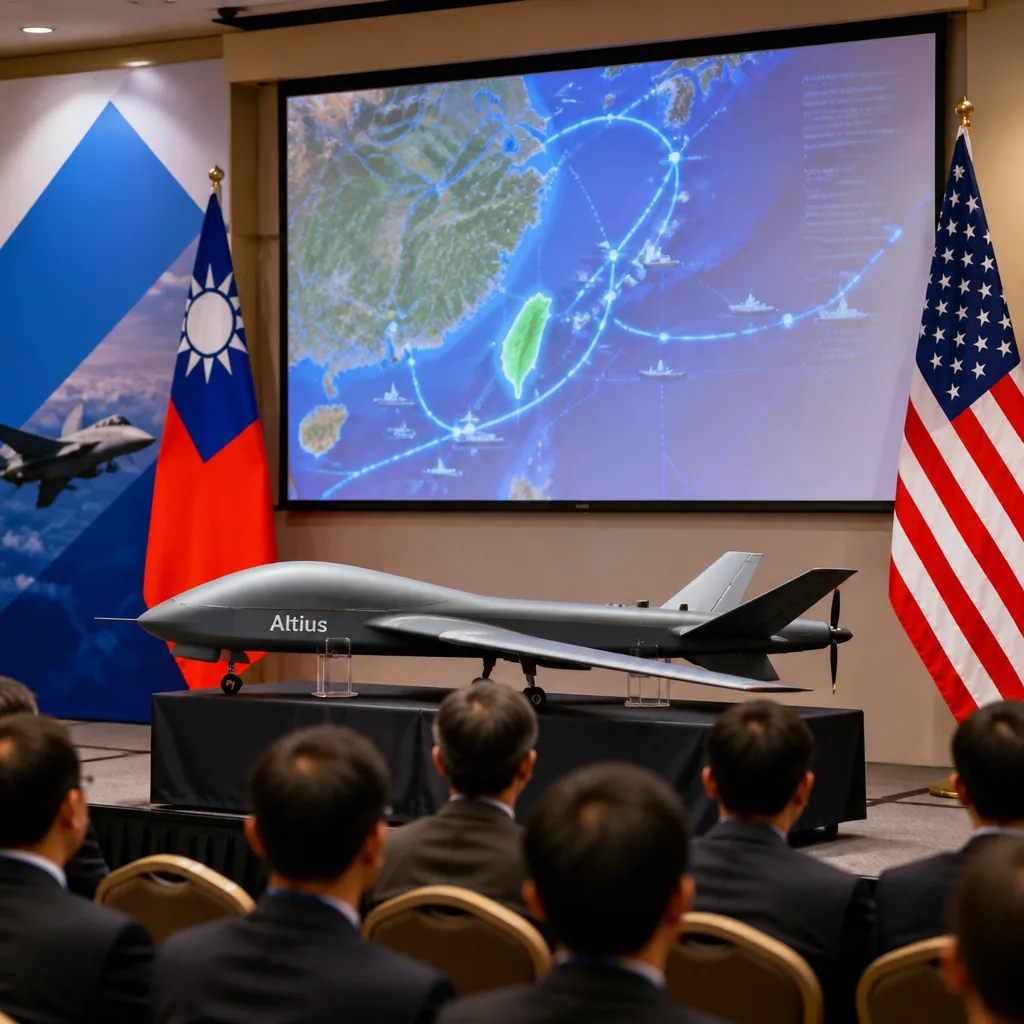
Anduril Technologies is among the defence suppliers feeling the commercial impact of the White House’s delay in approving a US $14 billion arms package for Taiwan, the company’s founder told reporters in Taipei, according to Reuters.
Hold-up reverberates beyond single contracts
Palmer Luckey, who founded the artificial intelligence and autonomous-systems firm that supplies Taiwan with the Altius drone, said the stalled approval has left Anduril’s work on the island “in a different position” than it would be if the package were progressing. He declined to identify specific programmes facing delays, but told attendees at a defence forum — which included Taiwan President Lai Ching‑te — that the pause was constraining broader cooperation.
“A very good negotiating chip,”
The package was held back after President Donald Trump met Chinese President Xi Jinping in Beijing in May; Trump described the proposed sales as “a very good negotiating chip.” With Xi due to meet Trump in Washington next week, Taiwan is expected to figure in the bilateral talks, and Luckey said that the pause has ripple effects across programme timelines and potential future work.
Commercial and strategic consequences
Anduril already supplies Taiwan with autonomous aerial systems, and last year Taiwan unveiled the Barracuda‑500 — an autonomous, lower‑cost cruise missile described in reporting as set to become the island’s first missile jointly produced with a US company. Luckey said the delayed package is not only stalling individual contracts but also preventing progress in other areas of collaboration.
He also raised the prospect that future US weapons sales decisions are being weighed against economic risks, including the possibility that Beijing could leverage access to rare earths — materials crucial to many technology and defence supply chains. China has repeatedly opposed US arms sales to Taiwan and has previously imposed sanctions on American firms involved in supplying weapons to Taipei; Luckey himself was sanctioned by China in December over arms sales to Taiwan, according to Reuters.
What this means for business and jobs
For defence technology firms that depend on export orders and co‑production deals, delays to a multi‑billion‑dollar package can hold up manufacturing schedules, supplier payments and hiring plans. While no specific employment figures or contract values were disclosed by Anduril in the reporting, such pauses typically affect:
- supply chain scheduling and subcontractor cash flow;
- timing for local production and transfer of technology agreements; and
- future investment decisions by firms weighing geopolitical risk.
For national economies that host or rely on defence partners, delays can ripple into lost near‑term revenue and deferred capital expenditure. In this case, the uncertainty also touches on strategic access to capabilities that Taiwan is seeking as it modernises its defences.
Diplomacy and markets remain intertwined
Luckey said he had discussed Taiwan arms sales with a range of US political figures, including the President, Vice‑President and the Secretary of State, Reuters reported. He suggested the administration is conscious of the broader economic consequences of selling more weapons, a calculation that now includes concerns about how Beijing could respond economically.
| Event | Detail |
|---|---|
| Package value | US $14 billion (reported) |
| US position | Approval delayed after May meeting between Trump and Xi |
| Commercial impact | Anduril reports stalled programmes and slower collaboration |
The White House did not immediately respond to Reuters’ request for comment, according to the report. China continues to assert sovereignty claims over Taiwan and opposes US arms transfers; Taiwan rejects those claims and continues to seek capabilities to bolster its deterrence.
For business observers and defence industry stakeholders, the episode reinforces how geopolitical diplomacy — including high‑level summitry — can have direct consequences for company orderbooks and strategic industrial partnerships. Firms operating at the intersection of technology and defence will be watching the upcoming Trump‑Xi talks closely for signals on whether the stalled package will move forward and how markets for defence tech might evolve.
None of this should be read as financial advice; it is a summary of reporting on how a major international policy decision is affecting a private defence technology firm’s operations.













