Researchers have reported a new class of adhesive that can form strong bonds underwater within seconds and becomes stronger the longer it remains submerged. Built around a supramolecular ionic liquid compound called BP16TPB, and used with the solvent dimethyl sulfoxide (DMSO), the material overcame the usual obstacle that prevents glues from working underwater: a thin, repulsive film of water molecules that coats any submerged surface.
Why underwater bonding is hard
Conventional adhesives struggle beneath the surface because a hydration layer — a few molecules thick — separates the glue from the solid surface, preventing the molecular contact required for adhesion. Continuous exposure to water also erodes many adhesives over time, so a practical underwater adhesive must both get past that initial barrier and resist being washed away.
How BP16TPB works
The team formed a supramolecular ionic liquid by combining flexible and rigid molecular segments to make BP16TPB. When dissolved in DMSO, some of the ionic pairs separate, producing an adhesive that can interpenetrate the hydration layer and establish contact quickly. The result, according to the report, is a bond that develops strong adhesive force within seconds of application and continues to strengthen during prolonged immersion.
- Fast setting: strong bonding reported within seconds of contact with water.
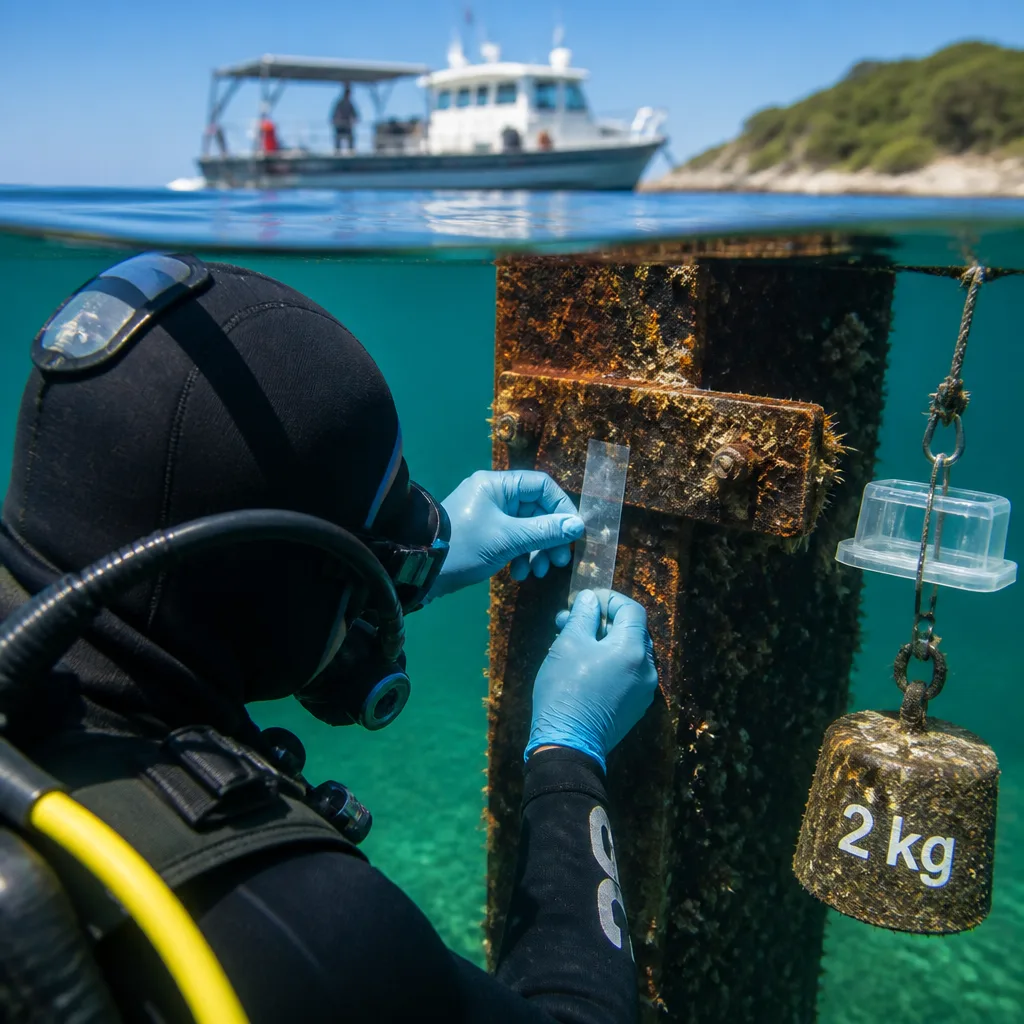
- Durability: a test sample held a 2 kg weight in place for more than three years of continuous underwater immersion.
- Reusability: bonded items can reportedly be peeled apart and reattached multiple times without loss of grip.
Potential uses and limits
The research suggests immediate relevance to sectors that rely on long‑lasting underwater seals: maintenance of undersea pipelines, repairs to marine equipment, and any application where replacing or dry‑working a joint is costly. A fast‑acting adhesive that tolerates continuous immersion could reduce downtime and maintenance costs.
However, the report does not claim the material is ready for all real‑world environments. Important engineering questions remain about scaling production, long‑term environmental effects, mechanical behaviour under cyclic loading and temperature variation, and the safety and handling of the solvent system used in the formulation.
Dimethyl sulfoxide (DMSO) is a common laboratory solvent and can transport dissolved substances across membranes; any commercial use of adhesives that use DMSO would require careful assessment of occupational and environmental safety, and of regulatory compliance for marine deployment.
What to watch for next
Further steps that will determine how quickly this discovery moves into practice include:
- Independent replication of the bonding and endurance data, especially across a variety of materials (metals, polymers, concrete) and surface conditions.
- Mechanical testing that measures shear, peel and tensile strengths under realistic sea conditions, including waves, currents and biofouling.
- Assessment of long‑term chemical stability and any leaching or ecological impact in marine environments.
- Scale‑up studies to evaluate cost, manufacturability and worker safety when using DMSO or alternative solvents.
| Property | Reported result |
|---|---|
| Setting time | Seconds |
| Long‑term hold | 2 kg for >3 years underwater |
| Reusability | Peelable and reattachable multiple times |
The research team framed their advance as a materials‑science solution that uses the physical chemistry of charged, self‑assembling molecules to overcome the hydration layer and to resist breakdown over time. That approach differs from traditional mechanical or polymer‑crosslinking strategies typically used in adhesives.
For South Africa, with extensive coastal infrastructure and growing interest in subsea energy and fibre‑optic works, the innovation is worth following. Yet, as with any early materials advance, cautious evaluation is essential before widespread adoption — to verify durability across diverse conditions and to ensure environmental and occupational safety during manufacture and use.
When new adhesives reach commercial trials, engineers will have to balance performance gains against practicalities such as cost, application methods, solvent handling and regulatory approval. If those hurdles can be cleared, a fast‑acting, long‑lasting underwater glue could become a valuable tool for maritime engineering and repair.