
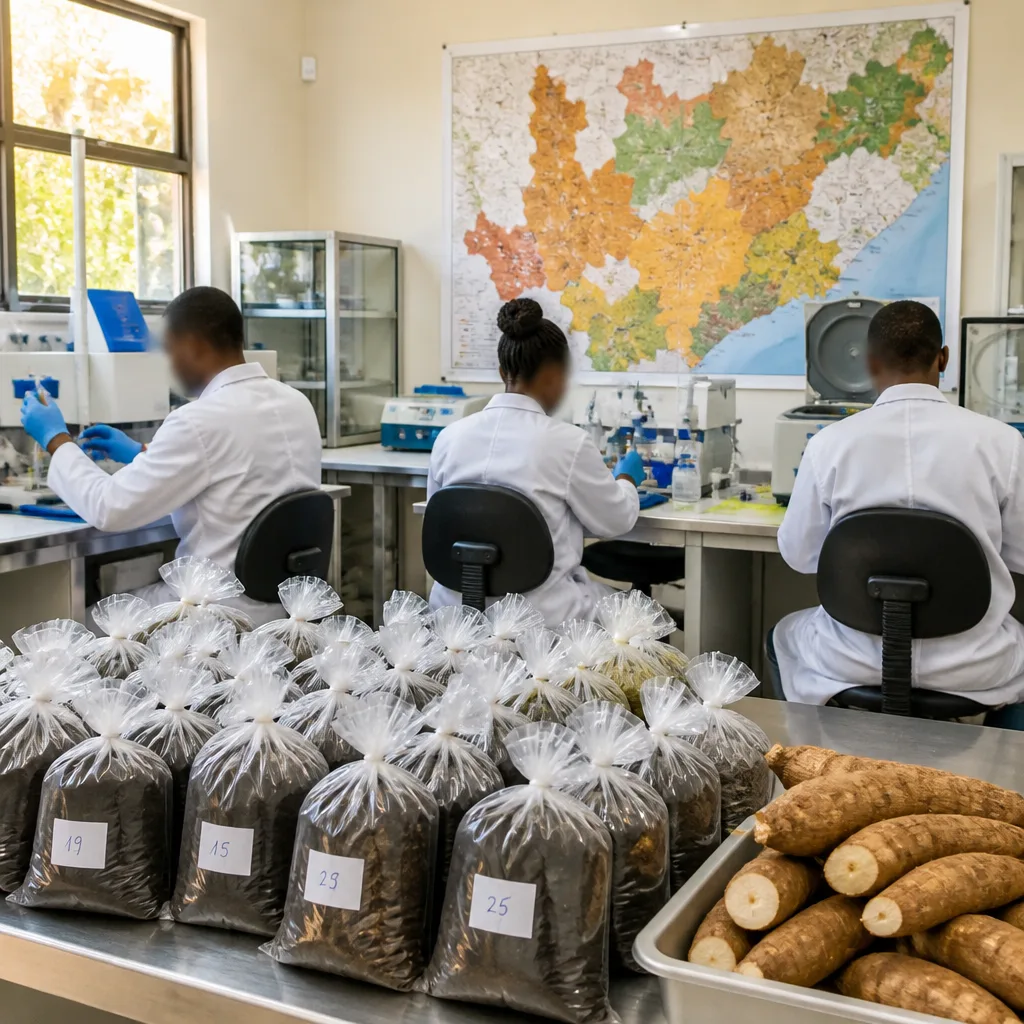
MAPUTO — A soil chemistry laboratory at the Agricultural Research Institute of Mozambique (IIAM) is processing nearly 100 soil samples a day and expanding technical capacity to inform crop management and national agricultural policy, according to reporting on the SoilFER programme.
Why soil analysis matters
Soil analysis provides the foundational information farmers and agronomists use to decide which crops to plant, how much fertiliser to apply and how to manage soil health. At the IIAM chemistry laboratory, technicians run a suite of physicochemical and nutrient tests that together give a picture of fertility and constraints to production.
Analyses performed by the team include texture, pH, electrical conductivity, organic matter and the concentrations of key nutrients and elements: nitrogen, phosphorus, potassium, calcium, sulphur and magnesium, as well as tests for heavy metals. The results are essential for improving productivity and for tailoring advice to smallholder and commercial producers alike.
Strengthening national capacity through SoilFER
The laboratory’s increased throughput and technical training have been supported by the SoilFER — Soil Mapping for Resilient Agrifood Systems programme. SoilFER operates in Ghana, Guatemala, Honduras, Kenya, Mozambique, Tunisia and Zambia and receives financial support from the governments of the United States and Japan. In Mozambique, implementation is led by the Government of Mozambique under IIAM in partnership with the Food and Agriculture Organization of the United Nations (FAO).
According to the report, the programme has provided both equipment upgrades and capacity development that helped to modernise laboratory workflows and safety procedures — important because the analyses involve acids and chemical reagents and rely on instruments such as ultraviolet/visible spectrometers and distillation systems.
People and training
The laboratory team comprises seven permanent technicians — four women and three men — reflecting the growing participation of women in agricultural sciences across the country. One technician profiled, Stília Vilanculos, joined IIAM straight after school. Trained first in chemistry, she later gained a degree in agro‑livestock sciences and is now completing a master’s degree in plant production with a focus on cassava research.
Her day begins at 07:30 in the laboratory, where precision, safety and technical expertise are essential. The accumulated work of the team — processing nearly 100 samples daily — supports research and extension activities and helps to connect farm‑level decisions with regional priorities for food security and resilient production systems.
- Throughput: ~100 soil samples processed each day.
- Team: seven permanent laboratory technicians (four women, three men).
- Analyses: texture, pH, electrical conductivity, organic matter, N, P, K, Ca, S, Mg and heavy metals.
- Programme: SoilFER, supported by the US and Japan; implemented by Mozambique and FAO.
Regional implications
For South Africa and other neighbouring countries, improved soil mapping and laboratory capacity in Mozambique matter in several ways. Better soil data supports cross‑border research on crop suitability and soil health trends; it strengthens regional early warning systems for declining fertility or contamination; and it helps build a shared technical base for climate‑resilient agriculture, an area of common concern in Southern Africa.
| Item | Detail |
|---|---|
| Daily samples processed | Nearly 100 |
| Laboratory staff | 7 technicians (4 women, 3 men) |
| Key tests | pH, texture, EC, organic matter, N, P, K, Ca, S, Mg, heavy metals |
| Programme | SoilFER (operating in 7 countries; supported by US and Japan; implemented with FAO) |
Investments in laboratory equipment and technician training do not by themselves guarantee improved outcomes at farm level, but they are a necessary component of sound agronomic advice and national planning. Accurate soil data reduces the risk of over‑ or under‑fertilisation, lowers input costs for farmers and can inform long‑term soil‑health strategies that are especially important under climate variability.
By combining laboratory capacity, targeted training and international support, Mozambique’s IIAM is broadening the scientific foundations for resilient agrifood systems — an approach that neighbouring countries monitoring soil health and food security will watch with professional interest.









