
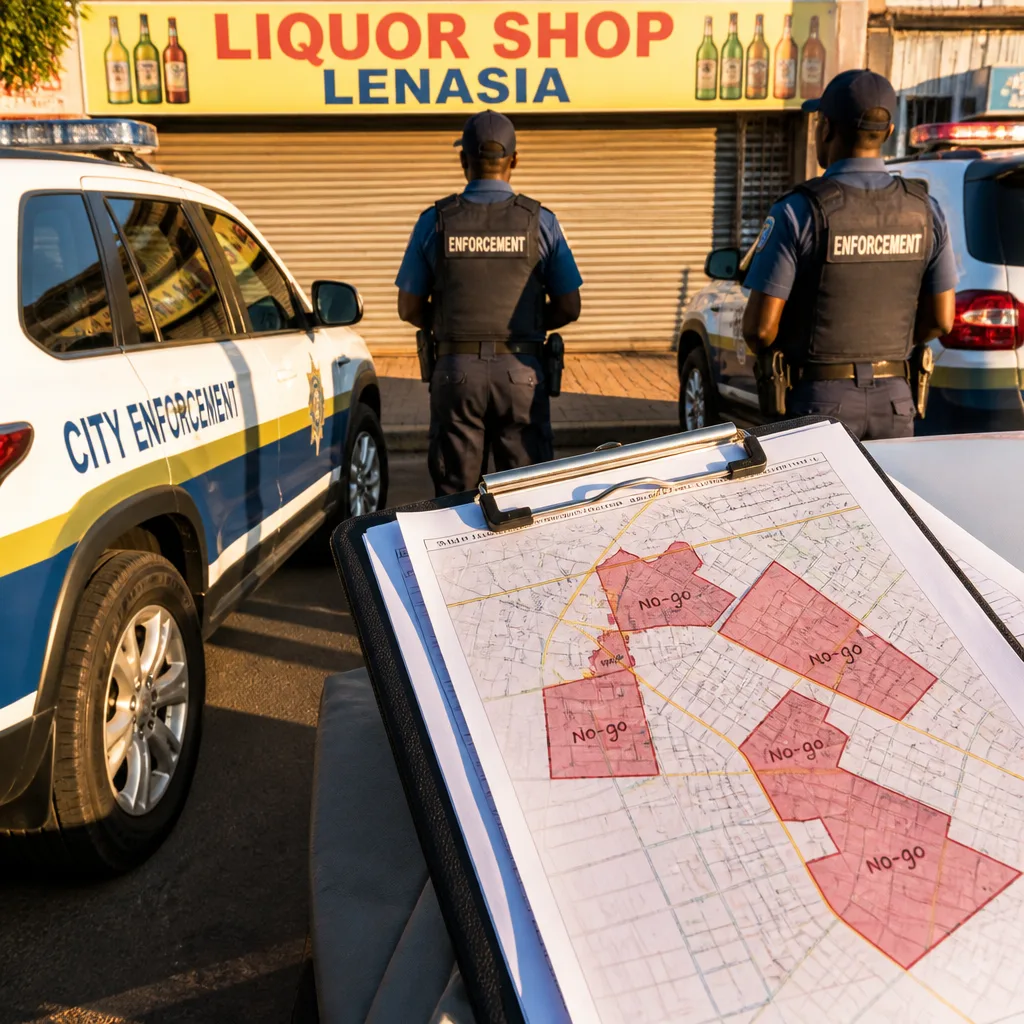
The Madlanga Commission of Inquiry heard on Tuesday that former Johannesburg Metro Police Department (JMPD) superintendent Phineas Manyama allegedly diverted departmental resources to protect a private liquor outlet in Lenasia and instructed officers to avoid certain areas where syndicate activity was reportedly taking place.
Allegations of guarded shifts and restricted policing
JMPD superintendent Elmarie de Beer told the commission that officers and JMPD vehicles were deployed at the liquor business in what appeared to be rotating two‑hour shifts. She said officers would park at the premises for two hours and then be relieved by others.
“They (officers) would be there for two hours; when they leave, others come and park for another two hours,”
According to De Beer’s testimony, Manyama allegedly exercised control over where JMPD officers could operate, creating what she described as “no‑go” areas for routine policing — decisions she said were apparently intended to protect syndicate activity in those locations.
Escorting stolen goods and halting investigations
De Beer also told the commission that the allegations extend beyond protection of a single business. She said Tactical Response Unit (TRU) members were allegedly ordered to escort trucks carrying stolen copper to a criminal syndicate and were rewarded with a share of the proceeds.
In another episode recounted to the commission, TRU officers pursuing a vehicle believed to be involved in a drug transaction requested South African Police Service backup. De Beer said Manyama later contacted the officers and instructed them to abandon the pursuit after being shown a photograph of a JMPD vehicle taken by occupants of that vehicle.
She further alleged that officers were ordered to withdraw from an operation after locating five bricks of suspected cocaine; those officers reportedly refused the order and continued their investigation.
Implications for policing and business confidence
If the claims are upheld, they point to the misuse of municipal law‑enforcement assets to benefit private interests and organised criminal networks. For businesses and residents alike, such allegations raise questions about the impartiality of local policing and the safety of commercial operations that are not connected to influential figures.
For the liquor industry, which operates under tight regulatory frameworks and is frequently a target of both legitimate enforcement and criminal exploitation, claims that municipal officers may have been used as private security or as a shield for illegal activity could damage investor confidence and complicate enforcement of licensing and trading laws.
- Alleged protection: JMPD vehicles and officers reportedly used as rotating guards at a liquor outlet in Lenasia.
- Operational control: An alleged decision to declare certain areas off‑limits to ordinary policing, described as “no‑go” zones.
- Syndicate links: Allegations that TRU personnel escorted stolen copper to criminals and were paid from proceeds.
| Allegation | Reported detail |
|---|---|
| Guarding business | Rotating two‑hour shifts of officers and JMPD vehicles at liquor outlet |
| Restricted policing | Designation of certain areas as “no‑go” for ordinary policing |
| Escorting stolen goods | TRU members allegedly escorted trucks carrying stolen copper |
| Obstruction of drug probe | Officers allegedly instructed to abandon a pursuit after vehicle occupants photographed a JMPD vehicle |
The commission’s proceedings, as reported, stop short of final findings. De Beer’s testimony sets out a pattern of alleged conduct that the inquiry will have to examine alongside other evidence and witness statements.
For companies that rely on predictable and lawful enforcement — particularly in sectors such as retail, liquor distribution and mining‑related logistics — such allegations, if proven, would underline the commercial cost of weak institutional controls and potential collusion between criminals and those charged with upholding the law.
As the commission continues, its findings could have consequences for municipal policing oversight, disciplinary action within JMPD, and broader efforts to sever organised crime networks from state actors. The allegations also underscore the need for robust internal controls to ensure public assets are not used for private gain.
WE NEWS does not provide financial or legal advice. The commission record will determine next steps, including any referrals for criminal investigation or disciplinary proceedings.













