
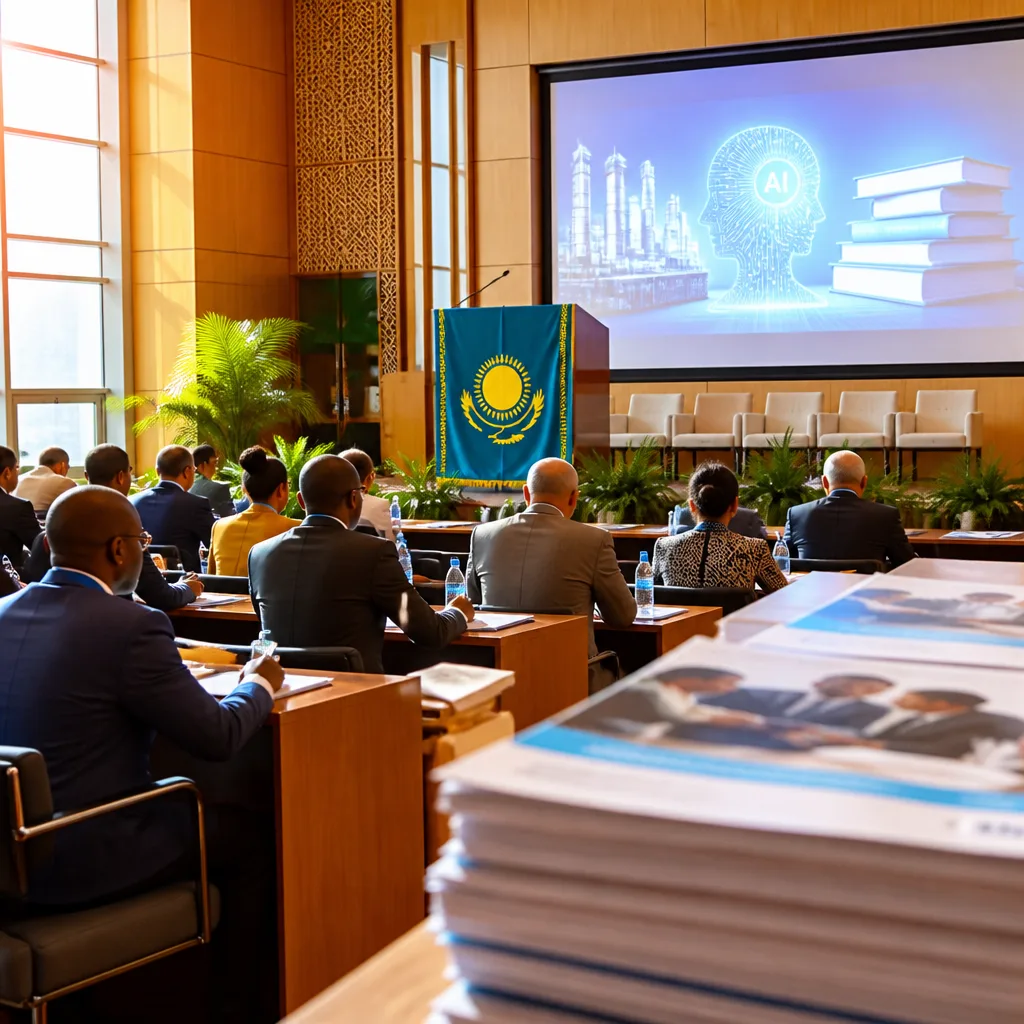
At a 1 July government session, Science and Higher Education Minister Sayasat Nurbek presented a higher education reform model built around five priorities: human capital, educational quality, science, innovation and artificial intelligence. The policy marks a deliberate shift in how universities are expected to function — from degree-awarding bodies to catalysts of technological development, economic diversification and regional influence.
Internationalisation — expansion with limits
The reform places a strong emphasis on internationalisation. According to reporting by Saqib Raza, Kazakhstan has formed 40 strategic partnerships with foreign universities and now hosts 33 branch campuses. More than 35,000 international students were enrolled as of late 2025, and the government has set an ambitious target of 100,000 international students by 2029.
There are also legal moves to support cross-border mobility: Kazakhstan became the first Central Asian country to ratify UNESCO’s Tokyo Convention on recognition of higher education qualifications; the ratification took effect on 1 May. That step strengthens the formal basis for student mobility and recognition of qualifications.
From inputs to outcomes
Raza’s analysis, as reported, stresses that these developments are important inputs but not ends in themselves. The next phase, he argues, should judge success by what the country retains from international engagement: the training of local faculty, joint research teams, doctoral supervision, laboratory development and the growth of future academic leaders.
In practical terms, that means each major foreign partnership should include measurable commitments on:
- skills transfer and local faculty development;
- research infrastructure and laboratory growth;
- supervision and mentorship of doctoral candidates;
- protections for students if an overseas partner withdraws.
Regional missions, not one-size-fits-all
Raza warns against a single-minded pursuit of global rankings. He suggests universities be funded and assessed against missions tied to their regions — for example, an agricultural institution prioritising food systems and water security for its area, rather than emulating a flagship research university’s strategy.
This regional orientation is intended to reduce dependency on foreign providers and to make internationalisation serve national capacity. The reform therefore connects institutional purpose, funding and accountability to local socio-economic needs.
| Measure | Figure |
|---|---|
| Strategic partnerships | 40 |
| Branch campuses | 33 |
| International students (late 2025) | 35,000+ |
| International student target (by 2029) | 100,000 |
What this means for policy and practice
The Kazakhstan approach highlights three practical considerations for education policymakers and university leaders who are weighing international partnerships:
- Negotiate clear, measurable knowledge-transfer clauses in agreements so partnerships build local capacity rather than only importing credentials;
- Align funding and evaluation with institutional missions tied to regional needs, rather than rewarding all institutions according to a single global ranking metric;
- Ensure legal protections and contingency plans for students should a foreign partner change course or withdraw, to safeguard learners’ progression.
These points do not prescribe a single model for every country or institution, but they do shift attention from headline counts of campuses and enrolments to the substance of capacity building. As the 2022 split of the former Education and Science Ministry into two separate ministries shows, Kazakhstan has been rethinking governance and institutional roles for several years; the current reform is a further step in that direction.
For countries watching from afar, including South Africa, the reform underscores that international engagement in higher education can be an engine for national development — but only if partnerships are designed to leave behind strengthened local systems, not just foreign-branded campuses.
Reporting for this piece was based on the account published by Saqib Raza.











