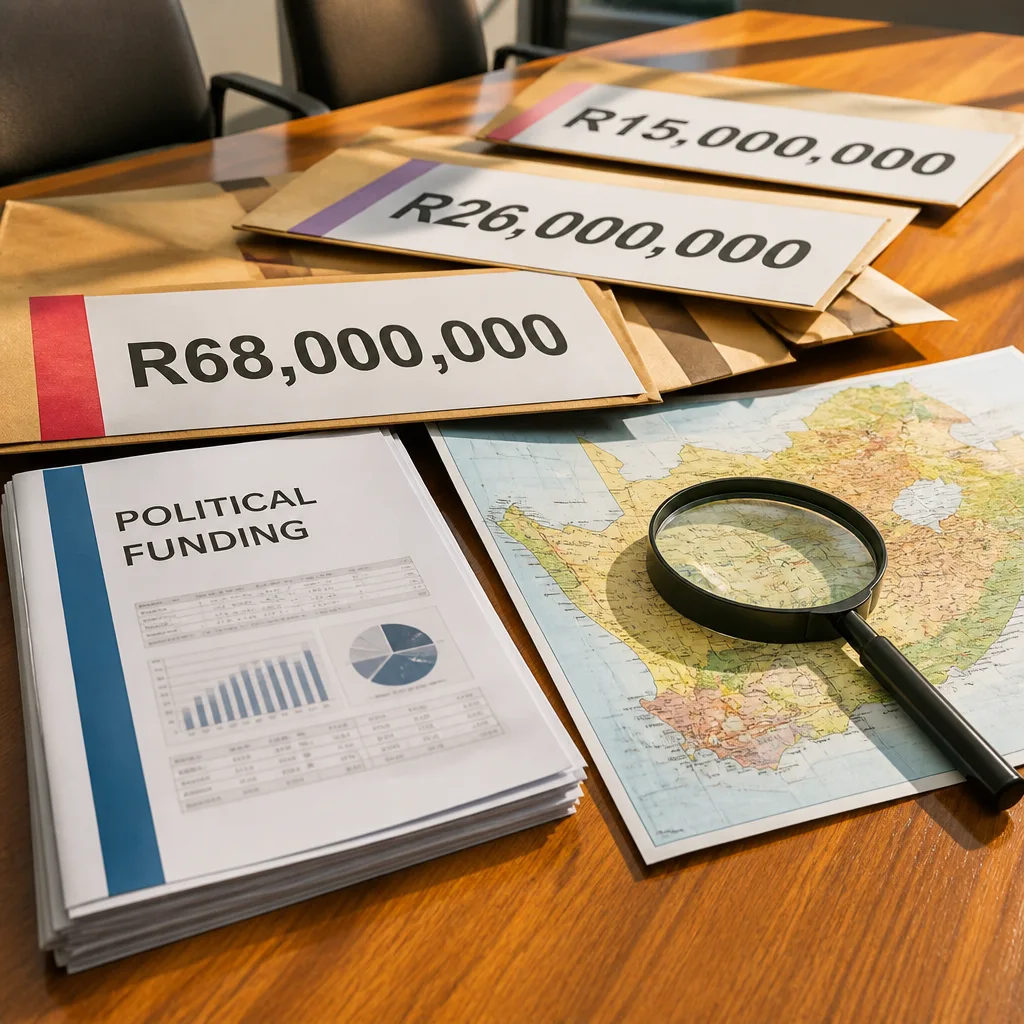
The Electoral Commission (IEC) has disclosed that political parties declared just over R230 million in private donations for the 2024/25 financial year, and the distribution of that money highlights the outsized role of a small group of wealthy donors and corporations in South African politics.
Few donors, large sums
According to the IEC report, the Oppenheimer family donated R15 million directly, but mapped contributions by related interests amount to R60 million split across the Democratic Alliance (DA), the Inkatha Freedom Party (IFP) and Rise Mzansi. Gambling entrepreneur Martin Moshal, identified in the report as the owner of Betway, gave more than R26 million to a group of parties including ActionSA, Build One South Africa (BOSA) and the IFP.
The DA was the largest single beneficiary, receiving roughly R68 million in declared private donations. Two investment firms, Fynbos Ekwitiet and Fynbos Kapitaal, each contributed R15 million to the DA.
The African National Congress (ANC) declared about R53 million in donations, a figure that includes R25 million from its own Batho Batho Trust.
Corporate support for multi-party fund
Separately, the report shows corporate contributions into the IEC‑administered multi‑party democracy fund. Mining group Exxaro gave R25 million, while Standard Bank and Discovery together added R3 million.
| Donor | Recipients / Notes | Amount |
|---|---|---|
| Oppenheimer family | DA, IFP, Rise Mzansi (combined) | R60 million (combined) |
| Martin Moshal (Betway) | ActionSA, BOSA, IFP | R26 million+ |
| Fynbos Ekwitiet / Fynbos Kapitaal | DA | R15 million each |
| ANC — Batho Batho Trust | ANC | R25 million |
| Exxaro | Multi‑party democracy fund | R25 million |
| Standard Bank & Discovery | Multi‑party democracy fund | R3 million (combined) |
Compliance gaps and enforcement warning
The IEC noted that disclosure compliance remains uneven. Some parties failed to fully declare their funding, the commission said, and it signalled plans to tighten enforcement powers ahead of the next election cycle. That warning suggests regulators will move beyond exhortation and may seek stronger measures to compel transparency.
- Concentration of influence: the data reinforce long‑standing concerns that a handful of wealthy families and corporations provide a disproportionate share of private political funding.
- Institutional funding vs private donations: corporate contributions to the multi‑party fund sit alongside direct donations to parties, creating multiple channels for private money to support electoral competition.
- Regulatory trajectory: the IEC’s pledge to tighten enforcement foreshadows possible reforms and greater scrutiny of party finances ahead of future elections.
The IEC’s figures do not, by themselves, show impropriety, but they do clarify the structure of financial flows that shape party campaigns and operations. For voters and watchdogs the report provides a more detailed ledger of influence. For parties it spells out both the benefits of large donations—cash for campaigning and organisational development—and the risks, as heightened transparency may invite closer public and regulatory scrutiny.
Analysts have long suspected that South African party politics is financed by a narrow set of elites; the IEC’s report confirms that hypothesis with granular numbers. What remains to be tested is whether the commission’s promised increase in enforcement will affect reporting behaviour, reduce undisclosed funding or alter the incentives that drive parties toward particular donors.
For now, the headline is clear: private donations disclosed for 2024/25 amounted to just over R230 million, much of it routed through a small group of wealthy individuals, family interests and large companies.