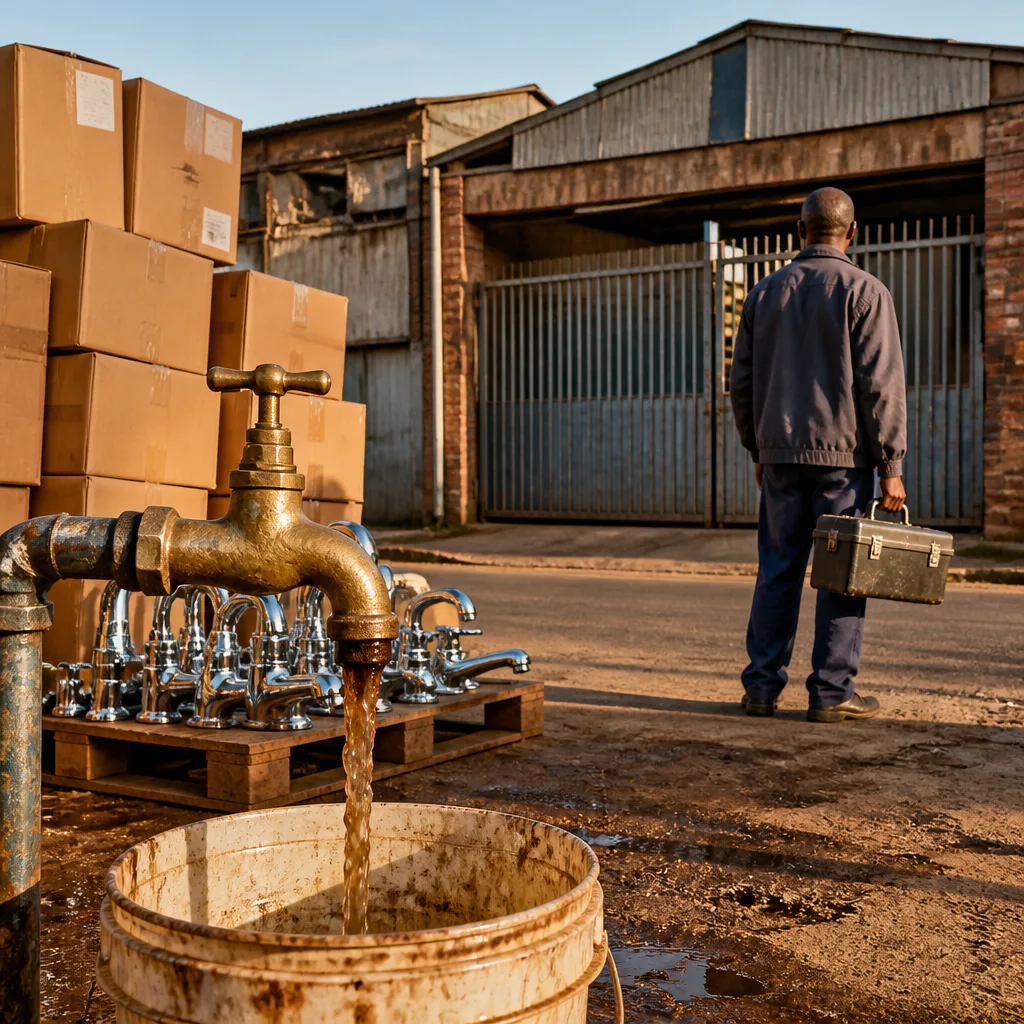
The Plumbing Industry Registration Board (PIRB) has lodged an application with the National Consumer Commission (NCC) seeking accreditation as a consumer protection body, saying a growing inflow of cheap, non‑compliant plumbing imports poses serious risks to public health, water security and domestic jobs.
Regulatory standards in place, but enforcement lacking
In its submission to the NCC, the PIRB said South Africa already has a regulatory framework intended to ensure plumbing safety, including the National Building Regulations, standards from the South African National Standards (SANS) and protections under the Consumer Protection Act (CPA). Despite those rules, the body warned, “a growing flood of noncompliant plumbing products continues to enter the market unchecked.”
“These products are often cheap, untested and unsafe,” the PIRB said. “Their use exposes consumers to serious health and safety risks, including contaminated water supplies, product failures, flooding, scalding, and even structural damage to homes and buildings.”
The PIRB argued that enforcement gaps allow imports that have not undergone required verification and certification to compete with locally manufactured, SANS‑approved items. It noted that importers must comply with measures such as the pre‑export verification of conformity (PVoC), but said these requirements are not being effectively enforced across the market.
Health and infrastructure consequences
According to the PIRB, non‑compliant fittings and components increase the likelihood of leaks, product failure and contamination of potable water. Beyond immediate household impacts, the board said repeated failures place additional strain on municipal infrastructure and contribute to water wastage — a notable concern given South Africa’s existing water security challenges.
The PIRB highlighted a broader economic impact: unfair competition from inferior imports undermines local manufacturers who invest in quality control and certification, with potential consequences for employment in the plumbing and related manufacturing sectors.
- Public health risks: Contaminated water supplies and scalding from faulty fittings.
- Infrastructure damage: Flooding and structural damage from failed installations.
- Economic harm: Job losses and weakened local manufacturing due to unfair competition.
What the PIRB seeks and the implications
If accredited by the NCC, the PIRB says it would be enabled to represent consumer interests, handle disputes and bring matters before tribunals and courts — functions it believes are necessary to curb the flow of unsafe products and to hold suppliers and installers to account.
The board’s appeal to the NCC underscores tensions between import controls and trade, and points to the need for clearer enforcement of existing conformity verification schemes. Strengthening oversight of PVoC compliance and improving market surveillance are among the regulatory steps that would address the concerns raised by the PIRB.
| Issue | Potential consequence |
|---|---|
| Non‑compliant fittings | Leaks, water contamination, flooding |
| Unchecked imports | Unfair competition, pressure on local manufacturers |
| Poor enforcement of PVoC | Market infiltration by uncertified products |
The PIRB’s concerns tie into broader conversations about consumer safety and the resilience of municipal services. For households experiencing leaks or contamination, the board’s warnings serve as a reminder to seek assistance from accredited plumbers and to use certified products where possible. For policymakers, the submission to the NCC raises questions about whether existing compliance systems and market surveillance are adequate to protect public health and preserve jobs in local industry.
Healthcare providers note that waterborne illness and injuries related to faulty plumbing are clinical issues best managed via local clinics and hospitals; anyone concerned about contaminated water or related symptoms is advised to consult a healthcare professional rather than self‑diagnose.
The NCC will now consider the PIRB’s application for accreditation and weigh whether granting that status would strengthen consumer protection efforts around plumbing and related products.