Donald Trump said on Saturday he would “love to see” a united Ireland and that reunification would be “a fantastic thing”, remarks made as he began a two‑day visit to Ireland that provoked swift responses from British and Northern Irish politicians and revived sensitivities around the island’s constitutional status.
A high‑profile comment on a delicate issue
After a meeting in Dublin with Ireland’s Prime Minister Micheál Martin, Trump told reporters he thought the reunification of the Republic of Ireland and Northern Ireland — which have been separate since 1921 — was inevitable and that “it may as well happen now”. He added, however, that “the UK will have something to say about it, obviously.”
“The way I look at it, it’s going to happen eventually. It may as well happen now,”
Under the 1998 Good Friday Agreement, which brought an end to three decades of sectarian violence that claimed about 3,000 lives, the process for constitutional change on the island is clearly prescribed: a referendum may be held if the UK government considers a majority in Northern Ireland is likely to favour joining the Republic, and the people of the Republic of Ireland would also have to vote in favour.
Reactions and the diplomatic backdrop
Trump’s remarks stand apart from the traditional US posture of neutrality on Irish unity. According to the reporting, Downing Street referred journalists to comments by UK Prime Minister Andy Burnham, who had told parliament that he would “stick to the Good Friday Agreement 100 percent” — a formulation intended to reassure about the UK government’s commitment to the agreement’s terms.
The response from Northern Ireland’s pro‑British Democratic Unionist Party (DUP) was blunt. DUP leader Gavin Robinson said on X that “as unionists we are not interested in the destruction of our country by joining with the Irish Republic”, framing reunification as an existential threat to Northern Ireland’s unionist community.
Security and symbolism
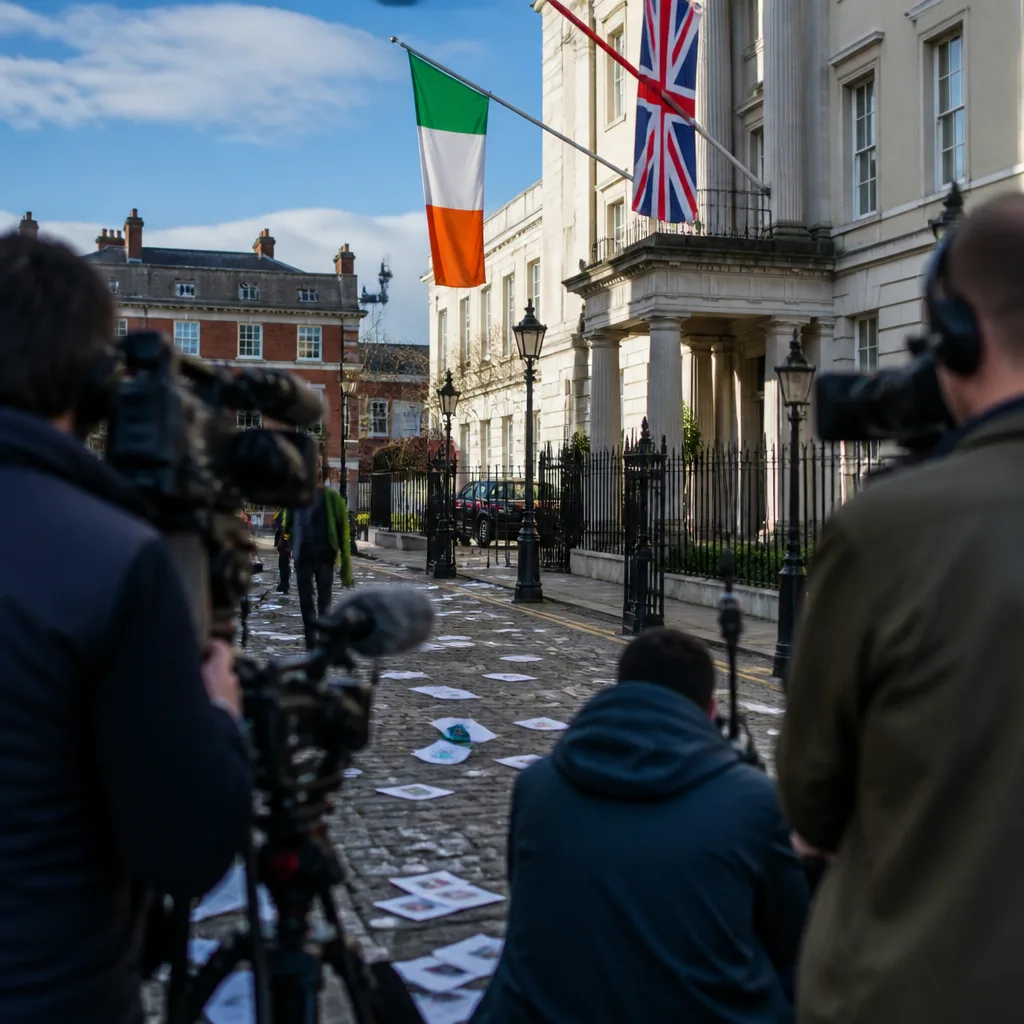
The visit was accompanied by an unusually large security operation in Ireland, with reporting noting at least 4,000 police and other personnel deployed, including snipers. Trump inspected a military guard of honour and was due to travel to his luxury resort in Doonbeg on Ireland’s west coast to attend the Irish Open golf tournament.
The security footprint and ceremonial elements underscored the diplomatic sensitivity surrounding the visit. The issue of Irish unity remains one that touches deep historical, cultural and political fault lines on the island and among its neighbours.
What the statements mean, and who gains or loses
Trump’s public preference for Irish reunification may have multiple effects: it could embolden nationalist voices who favour a referendum, alarm unionists in Northern Ireland who see such statements as undermining their position, and put pressure on the UK government to restate or clarify its approach to the Good Friday Agreement. The US diplomatic stance has typically been cautious, mindful of the agreement’s role in maintaining peace.
- Nationalists and Sinn Féin may take the remark as validation of their long‑term political goal.
- Unionists and the DUP are likely to interpret the comment as hostile to the union and respond defensively, as Gavin Robinson’s statement showed.
- The UK government is placed in a delicate spot to reiterate its legal and political commitments under the Good Friday Agreement.
The reporting notes that the mechanics for change remain strictly governed by the 1998 agreement and by the separate ballots required in Northern Ireland and the Republic of Ireland. Any move toward reunification would therefore need clear legal and political triggers recognised by the UK government.
| Actor | Role / Quote |
|---|---|
| Donald Trump | “The way I look at it, it’s going to happen eventually. It may as well happen now.” |
| Micheál Martin | Met with Trump in Dublin (reported). |
| Andy Burnham | Said he would “stick to the Good Friday Agreement 100 percent” (Downing Street referred reporters to these comments). |
| Gavin Robinson (DUP) | “As unionists we are not interested in the destruction of our country by joining with the Irish Republic.” |
For observers, the episode is a reminder that statements by prominent foreign figures can quickly intersect with complex, locally rooted political processes. The Good Friday Agreement remains the legal and political framework that would govern any change, and the path to reunification would require both legal triggers and majorities in two separate jurisdictions.
How the UK government and political parties in Northern Ireland and the Republic manage the fallout from the remarks will determine whether the visit becomes a short‑lived diplomatic ripple or a more consequential moment in discussions about the island’s future.