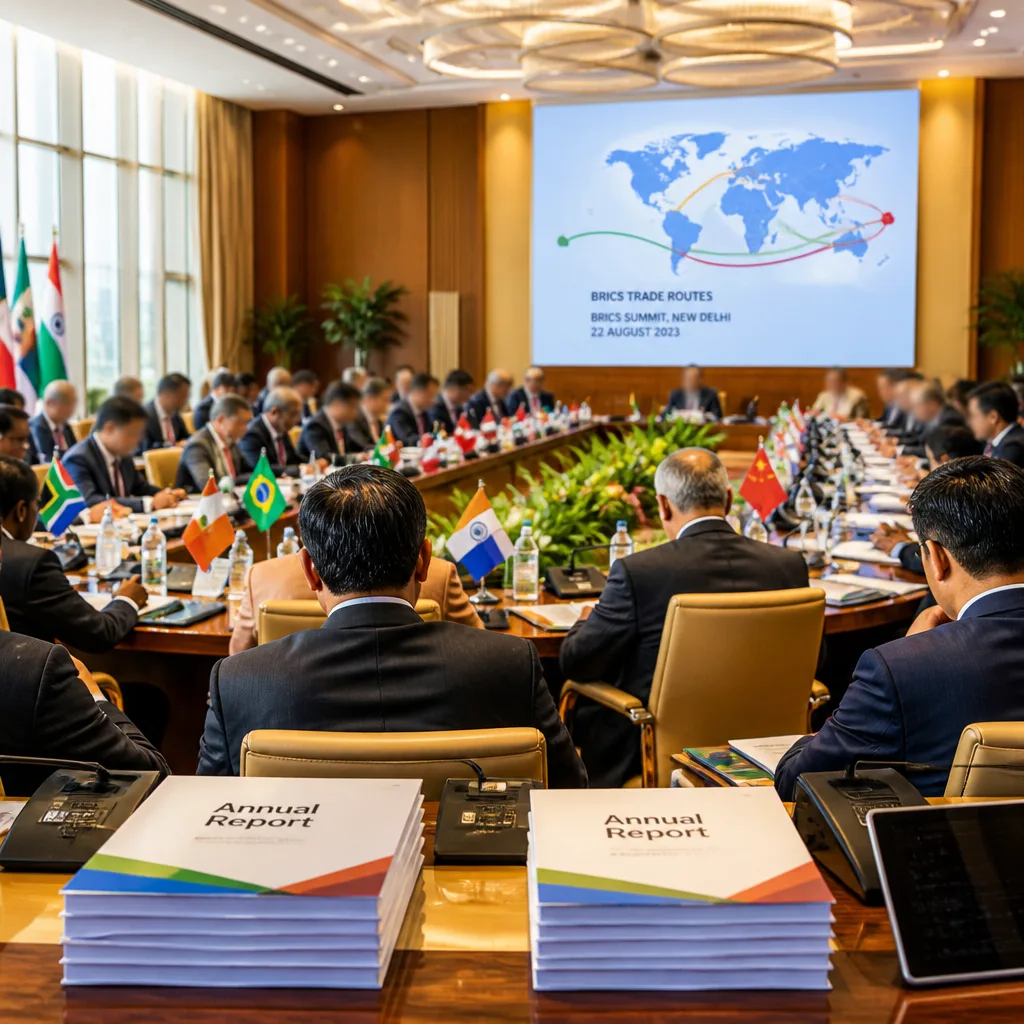
The BRICS Business Council met in New Delhi to review the results of work carried out under India’s chairship, approve its annual report and set priorities for more practical business cooperation across the grouping. The council’s document will be presented to BRICS leaders at their summit on 13 September.
Focus on real business cases, supply chains and technology
Delegates reported that working groups over the past year concentrated on strengthening trade and investment, improving supply‑chain resilience, and promoting the application of technology. Other areas addressed included infrastructure, agriculture, energy, finance, aviation and industry.
“For me, the most useful outcome of these years has been the better understanding of the capabilities that exist across our countries. There has been a great deal we can offer one another. We have large markets, natural resources, and manufacturing capabilities. We have strong technology businesses, financial institutions, and research capabilities. And across our countries, there is a tremendous entrepreneurial energy. The question is how we connect these strengths,” said Jai Shroff, chair of the Indian chapter of the BRICS Business Council.
Shroff said the council’s approach under India’s chairship has been guided by the theme “Building for Resilience, Innovation, Cooperation and Sustainability”, and that the emphasis has been on identifying areas where there is a clear business case for cooperation rather than mandating identical systems across member states.
From reports to implementation
According to the council’s chairs, national chapters worked closely in 2026 and the working groups implemented proposals made at a mid‑term meeting, allowing the preparation and approval of the annual report now destined for leaders. The chair of the Chinese chapter, Liao Lin, proposed four areas for future work, and noted the collaborative effort in preparing the report.
While the council stopped short of publishing a detailed implementation timetable at the meeting, its shift towards concrete, business‑facing initiatives signals a move from high‑level rhetoric to operational projects that, if taken up by member states, can influence how companies trade, form joint ventures, source inputs and organise regional supply chains.
What this means for South African business
South African firms that already export to or invest in BRICS markets should watch the outcomes presented to leaders on 13 September. The council’s emphasis on connecting capabilities — markets, resources, manufacturing, technology and finance — suggests more structured opportunities for cross‑border collaboration, provided member states translate council proposals into policy and practical support.
Key potential implications include:
- easier identification of bilateral or multilateral projects that make a clear commercial case;
- greater focus on supply‑chain resilience that could affect sourcing and logistics decisions; and
- opportunities for technology and research partnerships across BRICS economies.
These are possibilities rather than guaranteed outcomes: the council’s work must be taken up by national governments and translated into concrete trade facilitation, finance arrangements or regulatory cooperation before South African businesses will see direct effects.
| Item | What was reported |
|---|---|
| Meeting location | New Delhi |
| Key outputs | Annual report approved; priorities identified for further cooperation |
| Next step | Document to be presented to BRICS leaders at summit on 13 September |
The council’s insistence on identifying areas of “genuine business interest” reflects a pragmatic turn in BRICS business diplomacy. For South African policymakers and executives, the test will be whether the summit produces follow‑through measures — for instance streamlined regulatory cooperation, financing mechanisms or project pipelines — that lower transaction costs and create measurable opportunities for firms and workers at home.
WE NEWS does not provide financial advice. Businesses and investors should consult their advisers before acting on international developments.