
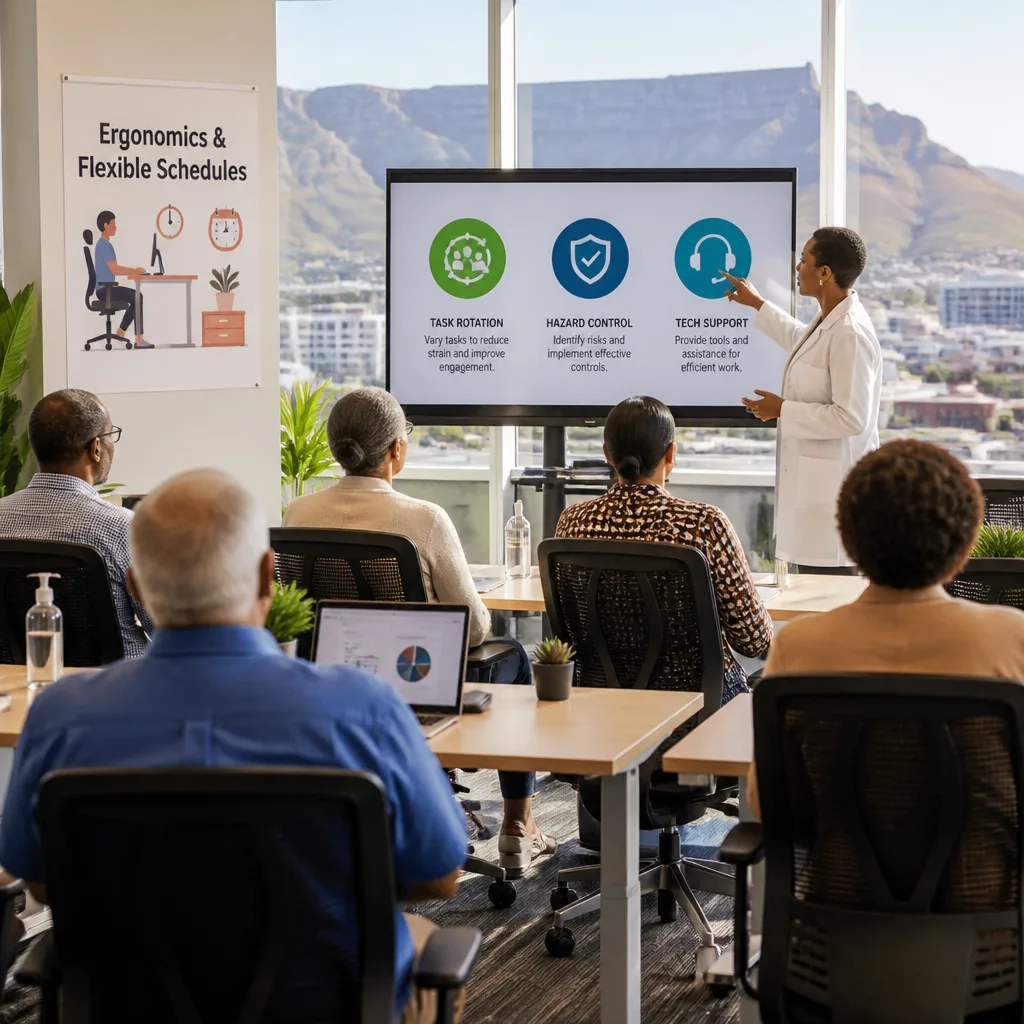
South African employers are being urged to rethink workplace design and management as the labour force includes more older employees. Guidance from the US National Institute for Occupational Safety and Health (NIOSH) highlights actions that benefit workers of all ages and can reduce injury, improve productivity and retain institutional knowledge.
Why age-friendly workplaces matter
With many sectors retaining experienced staff, employers face the twin challenges of protecting health and maintaining organisational capacity. Age-friendly practices help preserve functional ability, lower the risk of musculoskeletal injuries and support workers to remain productive and safe on the job.
The NIOSH guidance captures the point concisely:
“an age-friendly workplace benefits all workers.”
While this advice originates from a US public health agency, occupational health specialists in South Africa say the principles are transferable across different industries and business sizes.
Concrete measures employers should consider
NIOSH and occupational health practitioners recommend a range of interventions that can be introduced incrementally. Core measures include:
- Flexible work arrangements: Allowing adjustments to hours, shift patterns or workload helps employees manage chronic conditions, medical appointments and recovery periods.
- Ergonomic workstations: Chairs, desks, tool design and equipment layout should be tailored to reduce strain and prevent musculoskeletal disorders.
- Hazard management: Reducing noise, improving lighting and removing slip, trip and fall risks cut common workplace injuries among older staff.
- Task variation and breaks: Avoid long periods of repetitive or sedentary work; enable employees to set a comfortable pace and take restorative breaks.
- Technology training and time to adapt: Provide structured training and mentoring when new systems are introduced so older workers can learn at an appropriate pace.
These steps are relevant to both formal workplaces and informal employment settings where simple, low-cost adjustments can have immediate benefits.
How employers and occupational health services can implement change
Implementation need not be costly or complicated. Practical starting points include conducting risk assessments that consider age-related functional changes, consulting employees about their needs and piloting small adaptations before wider rollout.
Labour representatives and occupational health professionals play key roles in shaping policy and practice. Employers who involve workers in designing changes often find higher acceptance and better outcomes.
| Measure | Primary benefit |
|---|---|
| Adjustable workstations | Fewer musculoskeletal complaints |
| Flexible schedules | Improved attendance and retention |
| Technology upskilling | Greater engagement and productivity |
Occupational health clinics and primary healthcare providers can assist by offering functional assessments and rehabilitation plans when needed. Employers should also ensure access to timely medical advice rather than encouraging self-diagnosis.
Benefits for business and workers
Beyond ethical and legal responsibilities, age-friendly workplaces deliver tangible returns: reduced absenteeism, lower compensation claims and retention of experienced staff who contribute tacit knowledge. For employees, adaptations can preserve independence, financial security and quality of life.
Experts caution, however, that interventions must be tailored. What works in an office may require modification for mining, manufacturing or health services environments. Regular review and employee feedback are essential.
Before making health or workplace changes based on general guidance, workers with medical concerns should consult their doctor or an occupational health professional. Clinicians can provide personalised advice about functional capacity and suitable workplace adjustments.
Adopting age-friendly practices is a pragmatic step for South African employers seeking to foster an inclusive, safe and productive workforce as demographic and labour-market pressures evolve.











