
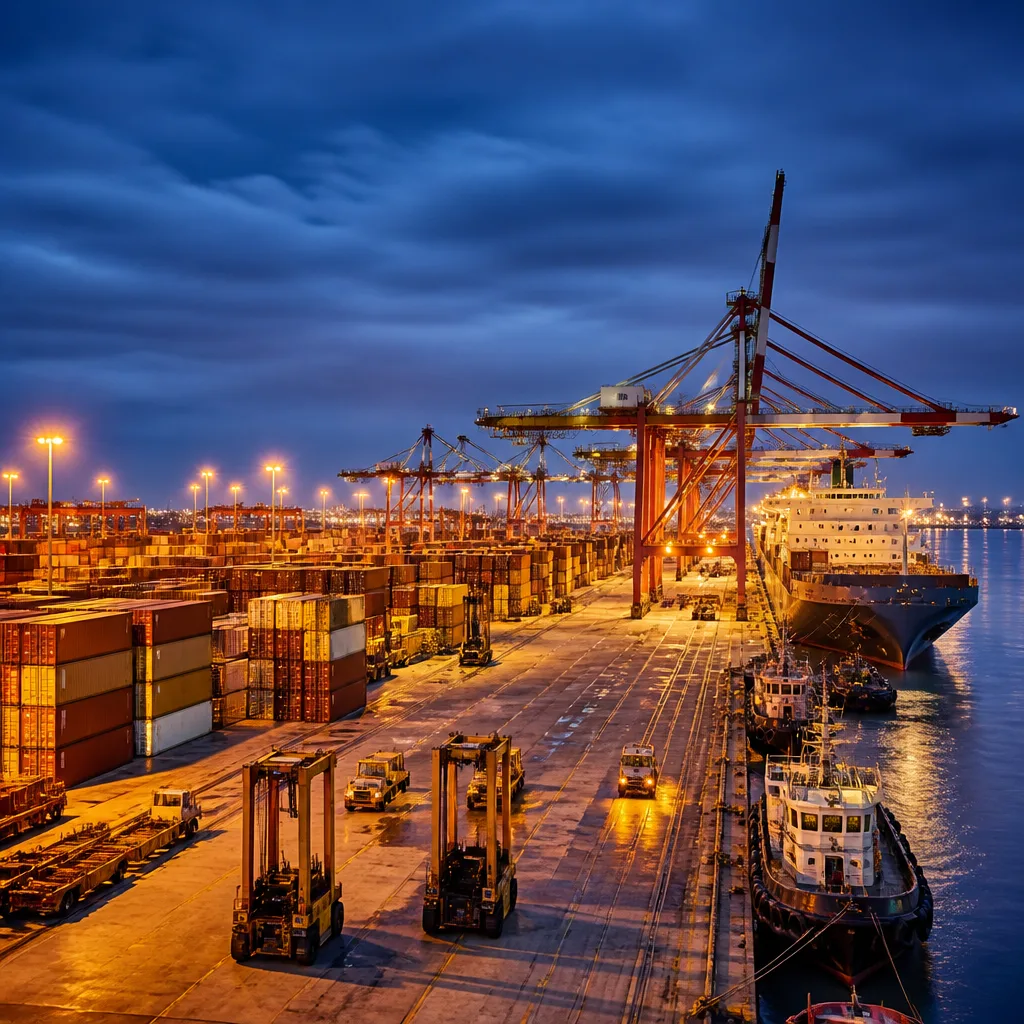
Verdi’s 24‑hour warning strike brought container handling to a standstill at six German seaports on Tuesday, affecting operations in Hamburg, Bremerhaven, Bremen, Wilhelmshaven, Emden and Brake. The stoppage began with the night shift after midnight and hit all four major container terminals in Hamburg, including those run by HHLA and Eurogate.
What the dispute is about
The union representing seaport workers has demanded a substantial pay increase amid stalled collective bargaining rounds. Verdi seeks an 8.2% wage rise for about 11,000 seaport employees over a 12‑month period, with a minimum uplift of €2.50 per hour. Employers, represented by the Central Association of German Seaport Operators (ZDS), tabled a counteroffer of 5.1% pay increases spread over 19 months, plus an additional €300 in holiday pay from January 2027.
“Our message to employers is that we are serious about our demands. The workers want a better offer, and they deserve it. They are the ones who keep the infrastructure running at the ports and ensure that the industry as a whole remains stable and successful.”
The quote above was said by Sylvi Krisch, a Verdi negotiator. Verdi rejected the employers’ proposal on Friday after an internal survey of members: more than 6,100 workers participated and the majority found the ZDS offer insufficient.
Action on the ground and planned protest
In Hamburg, dockworkers and supporters planned a strike demonstration starting at 09:00 at the car park of HHLA Container Terminal Burchardkai, with a march through the port and a rally expected at about 10:30. André Kretschmar, Regional Department Head at Verdi Hamburg, was listed as available for interviews at the rally.
- Duration: 24‑hour warning strike, beginning with the night shift after midnight on Tuesday.
- Workers covered: Approximately 11,000 seaport staff in collective bargaining scope.
- Employer stance: ZDS offered 5.1% over 19 months plus €300 holiday pay from January 2027.
Broader context and potential consequences
The work stoppage is the latest episode in a pattern of industrial action tied to seaport bargaining rounds. The source notes that past negotiations have required multiple rounds and, on occasion, extended strike action before agreements were reached. For port operators, this walkout renews debate about how automation and flexible workforce planning might blunt operational disruption caused by labour disputes.
While this is a 24‑hour warning strike, the immediate effect is the suspension of container moves at busy terminals in northern Germany. For an economy where seaports are critical nodes for imports and exports, even short disruptions can reverberate through logistics chains, affecting shipping schedules, trucking movements and warehousing operations. International shipping lines, forwarders and companies reliant on just‑in‑time deliveries will be among those monitoring developments closely.
| Port | Noted impact |
|---|---|
| Hamburg | All four major container terminals affected (including HHLA, Eurogate) |
| Bremerhaven | Container handling halted |
| Bremen | Container handling halted |
| Wilhelmshaven | Container handling halted |
| Emden | Container handling halted |
| Brake | Container handling halted |
For South African and other global trade observers, labour disruption at major northern European ports is relevant because delays can cascade down shipping schedules and cargo availability. Firms that import components or export goods via North European hubs may face booking squeezes and short‑term cost increases if strike action persists or escalates.
Negotiations opened in July and the dispute appears set to continue until unions and employers reach a compromise or further action is authorised. The balance of negotiations will hinge on whether the ZDS revises its offer and whether Verdi’s membership sustains support for escalated measures beyond warning strikes.
At stake are pay levels for a workforce Verdi describes as essential to keeping port infrastructure operational — and the wider stability of a sector that links Germany’s industrial base to global markets.









