
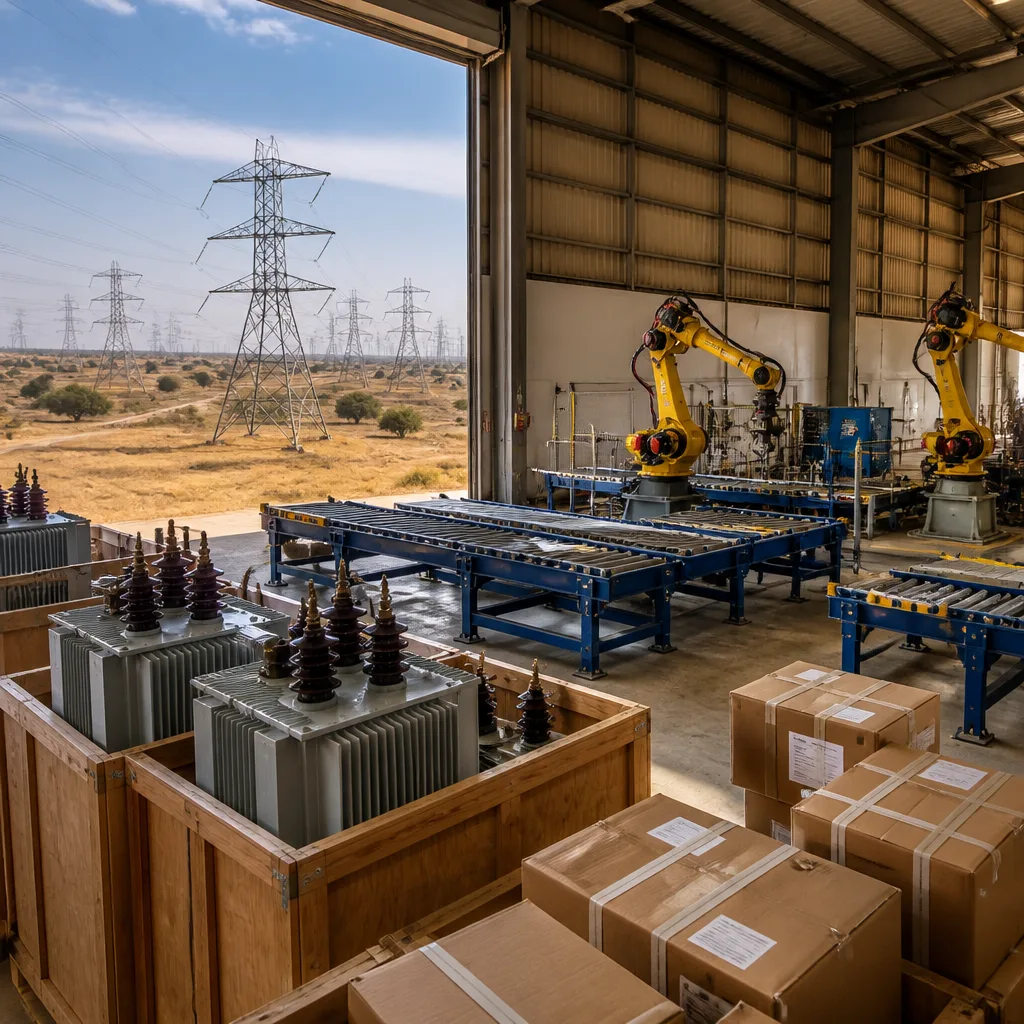
President Cyril Ramaphosa’s renewed call for manufacturing to underpin South Africa’s economic recovery has drawn sharp criticism from commentators who say the strategy repeats long-standing ambitions that have failed to materialise.
In a column published this week, Peter Bruce argued the government’s focus on industrial policy amounts to “doing the same thing over and over and expecting a different result”. He said the ANC has promoted manufacturing as central to development since 1994, yet successive efforts have not reversed the sector’s decline.
Ambition mapped out by the Presidency
At a steel and engineering industry breakfast, the President urged South Africa to become “the engineering workshop of the African continent”, listing sectors where he said the country should be exporting goods:
“We should be exporting transformers to the continent. We should be exporting mining machinery. We should be exporting railway equipment. We should be exporting pumps and valves, fabricated steel and electrical equipment,”
Ramaphosa also invoked a long-standing infrastructure requirement — the need for about 14,000km of new electricity transmission lines — as a potential catalyst to revive manufacturing and spur what he described as reindustrialisation.
Why critics say the plan is unlikely to deliver
Bruce set out a blunt case against treating manufacturing as the primary route to renewed growth and job creation. He warned the global and domestic landscape has changed since the ANC first made industrial policy central to its economic message.
His critique highlights two broad obstacles drawn from current global trends:
- Fierce external competition — China’s export push means global markets are already saturated with low-cost manufactured goods, making it harder for South African producers to win market share.
- Automation and declining labour intensity — Bruce noted that even where manufacturing expands, modern factories often employ far fewer people because of automation.
The column cited recent global automation figures to underscore this point: China installed almost 300,000 robots in factories in 2024, and robot density worldwide has more than doubled in the past decade. Bruce argued these trends reduce the potential of manufacturing to generate mass employment.
Historical failure to shift the needle
Bruce traced the disconnect between aspiration and outcome back through three decades of policy declarations. He said successive administrations have repeatedly promised an industrial revival while allowing conditions that undermine manufacturing competitiveness to persist. That critique raises questions about whether fresh targets, however ambitious, will yield materially different results without systemic change.
He warned that attempting to use a single infrastructure project or policy lever — for example, new transmission lines — as the spark for an industrial renaissance risks overstating what such investment can achieve on its own.
Questions for policy-makers
The column sets out a stark challenge for government policy-makers: how to reconcile laudable export ambitions with a global manufacturing environment shaped by massive state-backed competition and rapid automation. It also presses for clarity on what policies would make South African manufacturing genuinely competitive and labour-absorbing in the current era.
| Presidential aim | Challenge highlighted |
|---|---|
| Export engineering goods across Africa | Chinese export saturation of global markets |
| Use transmission-line projects to kick-start industry | Automation limits job creation even where factories expand |
Bruce concluded that continuing to repeat the same industrial prescriptions without addressing these structural problems risks persistent policy failure. His column recommends a sober reassessment of industrial strategy rather than renewed rhetoric — a position likely to prompt debate within business and government circles as South Africa seeks sustainable growth pathways.
These observations frame a broader national debate about how to balance infrastructure investment, industrial policy and labour-market realities while competing in a fast-changing global economy. Further policy detail and implementation plans from government will be needed to test whether current ambitions can translate into measurable industrial revival.














