
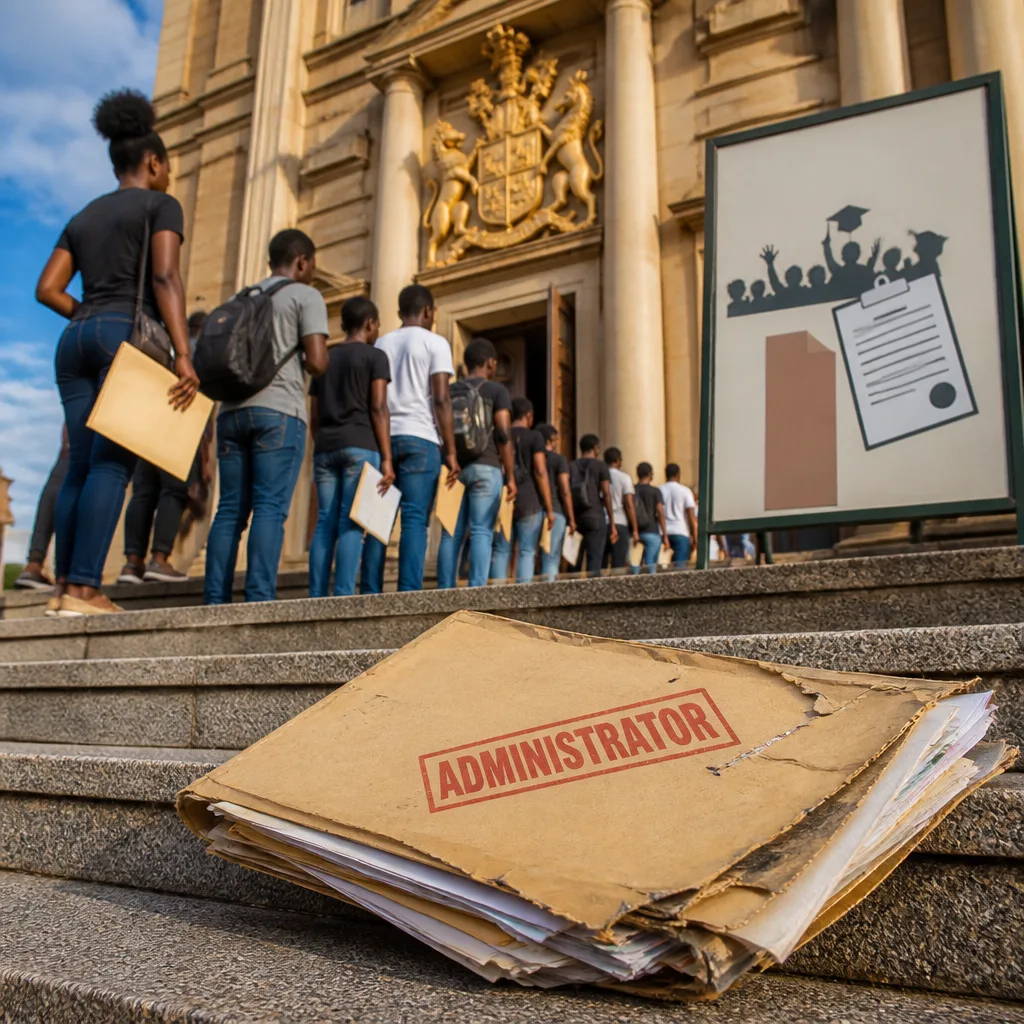
The Pretoria high court has declared unlawful the decision by the Minister of Higher Education and Training to dissolve the board of the National Student Financial Aid Scheme (NSFAS) and to appoint an administrator, a ruling that intensifies scrutiny of choices made in recent months and the consequences for students dependent on the scheme.
What the court found and why it matters
The court judgment came after a period of contentious oversight and controversy. The minister had cited an adverse audit and the board’s loss of both its chair and deputy — which left it unable to meet quorum requirements — as reasons for intervening. However, the ruling concluded that the process used to dissolve the board and install an administrator did not comply with the law.
The minister’s appointment of Hlengani Mathebula as administrator has also been criticised. Questions were raised during a gruelling appearance before the parliamentary portfolio committee on higher education about the minister’s handling of the process, including a failure to provide clear information about the number of advisers Mathebula had engaged and about whether the finance minister, Enoch Godongwana, had been consulted on Mathebula’s remuneration.
Concerns over the administrator’s record
Scrutiny intensified because Mathebula’s public service record includes adverse findings from the Nugent commission, which examined governance and administrative failings at the South African Revenue Service (SARS). The editorial reporting notes Mathebula was part of Tom Moyane’s executive team, a period when the Large Business Centre at SARS was dismantled and the agency’s capacity was weakened.
Those historical findings were among the red flags critics say should have been picked up by ministerial advisers and departmental officials before the decision to remove the board. The controversy has prompted debate over vetting processes, governance safeguards and how best to protect student funding from political or administrative missteps.
Consequences for students and institutions
The NSFAS is central to access to tertiary education for thousands of poor and working-class learners. Any prolonged governance uncertainty risks delays or confusion in the disbursement of funds at a critical time in the academic calendar. The court ruling also raises the prospect of further legal and administrative action, which could stretch capacity inside the department and NSFAS and distract from the scheme’s operational priorities.
- Ministerial process questioned: The parliamentary session exposed gaps in information and decision-making.
- Administrator’s past scrutinised: Adverse Nugent commission findings related to SARS attracted fresh attention to Mathebula’s appointment.
- Legal setback: The high court judged the board’s dissolution unlawful, potentially requiring corrective measures.
Parents, learners and university administrators will want clarity on how the ruling affects NSFAS’s immediate functioning. Universities rely on predictable funding flows to register and support students. Any interruption could increase administrative burdens and financial stress for households already stretched by rising living and education costs.
What needs to happen next
Accountability and operational continuity must be balanced. The ruling underscores the need for transparent processes when intervening in governance bodies that manage critical public funds. It also highlights the role of departmental advisers and parliamentary oversight in ensuring that interventions are legally sound and in the best interests of beneficiaries.
For learners and their families, the priority should be an unbroken pipeline of support. Restoring confidence will require clear, public steps from the department to explain how NSFAS will continue to operate while any remedial actions or new appointments are undertaken.
| Issue | Immediate implication |
|---|---|
| Unlawful board dissolution | Potential reversal or corrective process; legal and administrative delays |
| Administrator appointment | Questions about vetting and suitability given past findings |
| Funding continuity | Risk of disruption for student allowances and university payments |
The ruling is likely to trigger renewed calls for robust governance reforms at NSFAS and for stronger systems that protect students from the fallout of administrative and political disputes. For now, learners, parents and campus administrators will be watching closely for departmental guidance on how NSFAS operations will be secured while compliance with the court’s decision is addressed.











