
More than three-quarters of flowering plants require animal pollinators, and roughly one in every three mouthfuls of food people eat depends on the services these insects provide. That is the starting point for Maegan Luckett’s investigation into how the physical design of gardens affects pollinators’ ability to forage and survive.
Design choices that help pollinators
Luckett, a horticulturist and recent graduate of an online Master of Horticultural Science programme, set out to test whether different garden layouts have a positive, negative or neutral effect on pollinators. Guided by Danesha Seth-Carley, an associate professor in horticultural science, she examined practical measures that garden managers and home gardeners can adopt to support bees, butterflies and other flower-visiting insects.
Her work emphasises two straightforward design principles:
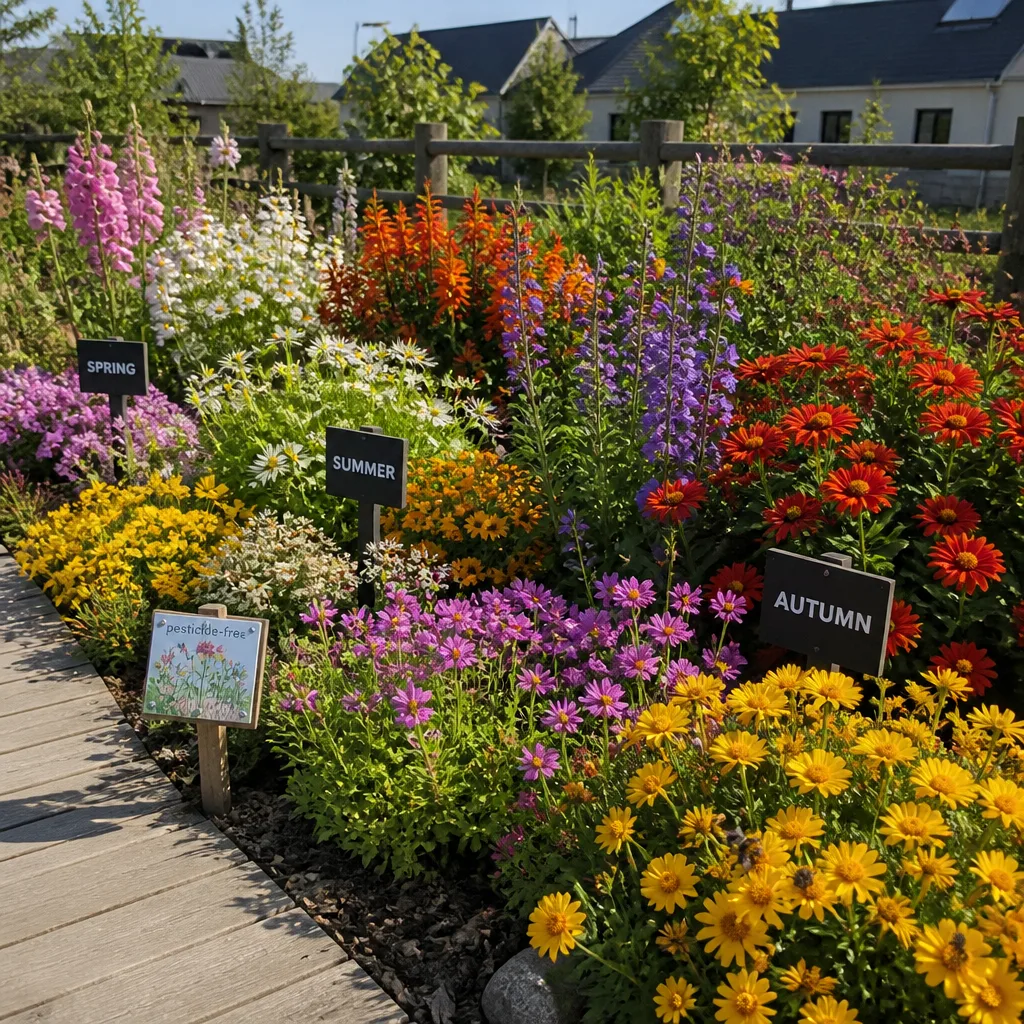
- Season-long bloom — arranging plants so that something is flowering from early spring to late autumn provides continuous food for pollinators throughout their active periods.
- Species grouping — planting similar species together reduces the distance insects need to fly between matching blossoms, saving energy and increasing foraging efficiency.
These measures are practical: they do not require large land areas or specialist equipment, but they do require planning and plant selection that prioritises pollinator resources over purely ornamental criteria.
Why layout matters
Pollination is the transfer of pollen from the male parts of a flower to the female parts, which enables seed, fruit and nut production. Many wild plants and a substantial share of our crops depend on animals — predominantly insects — to move pollen. The two headline figures Luckett cites set the scale of the problem: more than 75% of flowering plants rely on pollinators, and one in three bites of food that humans consume is made possible by these organisms.
Garden layout affects pollinators in three linked ways: availability of floral resources, energetic cost of foraging, and habitat suitability. By ensuring continuous blooms and clustering similar plants, gardeners reduce the time and energy insects must spend travelling between flowers. That, in turn, can improve individual fitness of pollinators and the stability of local pollinator populations.
“It was a very magical moment where I was able to de-centre my human concerns and just simply observe,” Luckett said, describing a formative experience in an apple tree that changed her perception of bees.
From personal experience to public horticulture
Luckett’s interest began with a childhood encounter that transformed fear into fascination. That experience helped shape a career pathway that moved from agricultural biotechnology to public horticulture. She is now a horticulturist at a public garden, where the practicalities of planting design come into daily focus.
The research she did while completing her master’s explored how layout and species choice can be used deliberately to support pollinators. Under Seth-Carley’s supervision, Luckett investigated whether garden beds could be structured so there is always a floral resource available and whether grouping species could reduce pollinator flight distances.
| Fact | Figure |
|---|---|
| Flowering plants dependent on pollinators | More than 75% |
| Human diet reliant on pollinators | 1 in 3 bites |
These are not abstract concerns. Urban and suburban gardens, parks and public landscapes can act as refuges for pollinators in fragmented habitats. When designed with pollinators in mind, even small plots contribute to broader ecological networks.
There are some caveats. Garden design alone cannot solve larger threats to pollinators such as pesticide use, habitat loss on a landscape scale, invasive species, and climate change. But careful planting can be a low-cost, scalable intervention that complements bigger conservation actions and agricultural practices.
For South African readers, the practical message is clear: planning gardens to provide continuous floral resources and grouping similar species will help local pollinators. Gardeners do not need to replicate research gardens; small changes in plant selection and layout can yield measurable benefits for bees and other pollinating insects.
Practical takeaways include:
- Plant for overlapping bloom times from early spring to late autumn.
- Group like-with-like to reduce pollinator travel distances.
- Prefer diverse, nectar- and pollen-rich species over purely decorative hybrids with reduced floral resources.
Luckett’s study is a reminder that design choices in our immediate environment can influence ecological outcomes. Thoughtful gardens are not just pleasing to the eye; they are part of a practical toolkit to sustain pollinators on which both nature and people depend.









