
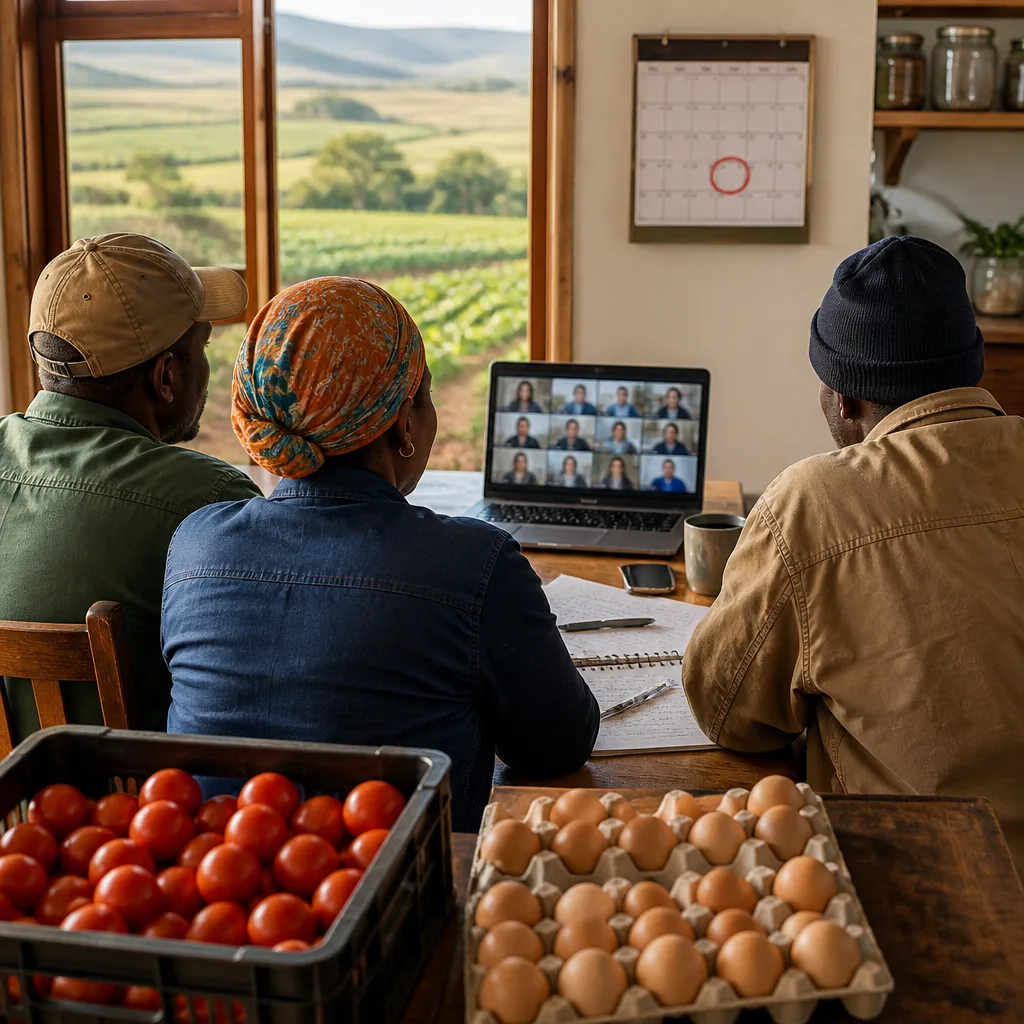
A new, cohort-based business development programme is offering free training to small- and mid-size farmers, ranchers, fishers and food producers aimed at strengthening their financial stability and operational resilience.
Programme at a glance
The Business Launchpad is being run by UC Agriculture and Natural Resources (UC ANR), the Southwest Regional Food Business Center and F3 Local. The fall 2026 intake will enrol up to 40 participants in a nine-week virtual cohort, with applications open until 1 September.
- Who: Small- to mid-size farmers, ranchers, fishers, food producers and food business owners.
- What: Free business training, weekly online sessions, individual technical assistance and in-person buyer engagement opportunities.
- When: Nine-week virtual cohort in fall 2026; applications until 1 September.
- Capacity: Up to 40 participants.
Practical skills for the whole operation
Organisers say growing and preparing food is only part of building a sustainable food business. Producers are increasingly expected to manage marketing, finance, regulatory compliance and sales while continuing day-to-day production. The Business Launchpad targets those gaps with instruction from subject specialists on:
- Recordkeeping
- Business planning
- Access to capital
- Marketing and branding
- Food safety
In addition to group learning, participants will receive individualised technical assistance and have chances to meet peers and potential buyers in person — an important element for enterprises seeking to scale or stabilise revenue streams.
“We are recruiting up to 40 participants across the state to be part of a nine-week virtual cohort designed to improve the financial stability and operational resilience of small- to mid-sized agricultural enterprises in California,” said Tracy Celio, regional director of F3 Local Farm and Food Innovation and UC ANR’s Southwest Regional Food Business Center.
What this means for producers and the wider market
For many small producers, weak business systems are a barrier to growth. Better recordkeeping and formalised business plans make it easier to qualify for loans, comply with buyers’ requirements and identify cost-saving opportunities on the farm or in processing. Practical marketing and branding training helps producers capture more value from their products rather than competing only on price.
Those shifts matter at the household level: improved access to capital and stronger buyer relationships can translate into steadier cash flow and more predictable income for farming families. At scale, better-resourced small producers also strengthen local food supply chains by reducing disruptions and widening the pool of reliable suppliers for retailers, restaurants and institutions.
The hybrid design — combining online learning with one-on-one advisory time and in-person buyer engagement — reflects a recognition that knowledge alone is not enough. Successful transitions to higher-margin products or new markets often require technical tweaks, introductions to buyers and help navigating certification or food safety rules.
How to apply and next steps
Interested producers should seek application details through the partnering organisations: UC ANR, the Southwest Regional Food Business Center and F3 Local. The programme is cohort-based and limited to 40 participants, so prospective applicants should plan to apply ahead of the 1 September deadline.
| Feature | Detail |
|---|---|
| Duration | Nine weeks (virtual) |
| Participants | Up to 40 |
| Cost to participants | Free |
Stronger business skills are a practical lever for small‑scale producers attempting to move from survival to stability. The Business Launchpad adds to a growing set of interventions that pair technical farming knowledge with the commercial tools needed to keep the lights on, pay workers and compete for contracts — all outcomes that matter to household budgets and local economies. This report is informational and does not constitute financial advice.













