
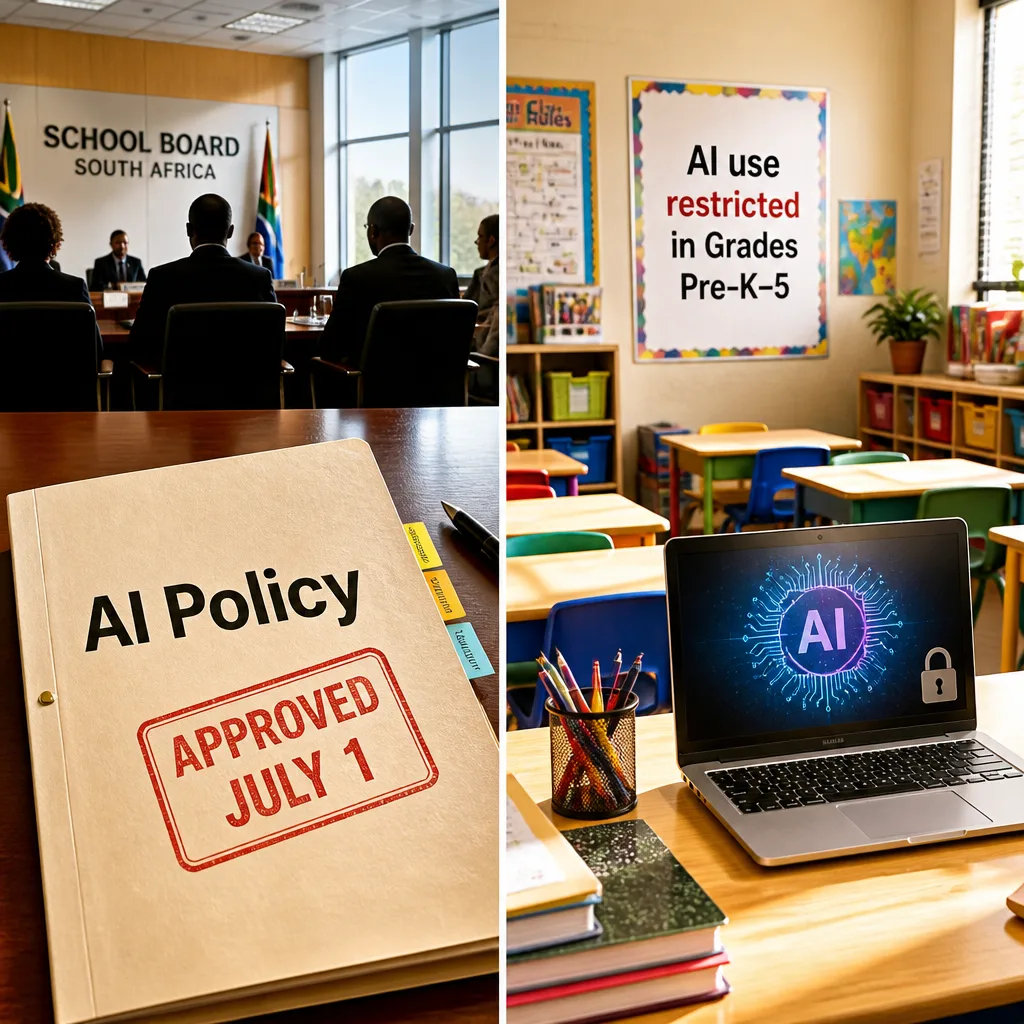
The Florida Board of Education has approved new regulations governing the use of artificial intelligence in K–12 schools and public colleges, requiring districts and institutions to draw up or update policies that address academic integrity, student privacy and responsible AI deployment.
What the rules require
Under the new framework, school districts must revise their policies to address AI by 1 July next year for the 2027–2028 school year, and public colleges will have to publish AI guidelines for students, staff and faculty. The rules also call for extra review before permitting AI use in pre‑primary to Grade 5, and explicitly prohibit using AI to meet a learner's social or emotional needs.
"The proposed rules give schools and colleges a clear framework. They empower parents. They empower faculty. They empower students. They protect academic integrity, student information, privacy and the primacy of learning," said Henry Mack, Florida commissioner of education.
Officials in Florida emphasised three central aims: safeguard academic honesty, protect student information and ensure that AI supports—not replaces—teacher‑led learning. Public colleges must adopt guidelines that explain acceptable AI use in coursework, and districts are expected to spell out processes for vetting tools before classroom use.
Practical deadlines and scope
The new timeline sets a clear compliance date for schools: policies must be in place for the start of the 2027–2028 school year. For younger learners (pre‑K to Grade 5), the rules require additional institutional review prior to any classroom deployment of AI tools.
| Area | Requirement |
|---|---|
| School districts | Revise AI policies by 1 July for 2027–2028 school year |
| Public colleges | Adopt and publish AI guidelines for students, faculty, staff |
| Pre‑K to Grade 5 | Additional review before AI use permitted |
Implications for educators, parents and policymakers
Though the measures are specific to an American state, they reflect a broader global turning point: education systems are moving from ad hoc classroom use of AI towards formal governance. For teachers and school leaders this means planning policy, training staff and establishing clear academic‑integrity protocols. For parents and guardians the rules signal an expectation that they will be involved in decisions about how AI affects their children’s learning.
Education systems considering similar approaches will need to balance innovation with risk management. Key considerations include:
- Academic integrity: defining cheating and acceptable assistive uses of AI in assignments and assessments;
- Privacy and data protection: ensuring student data used by AI tools is secure and compliant with privacy laws;
- Age‑appropriate use: limiting or subjecting early‑grade AI use to extra oversight;
- Transparency and communication: publishing policies so learners, parents and staff understand expectations.
These elements echo questions South African educators are already facing: how to harness AI to enrich learning without undermining teacher authority, how to prevent bias in algorithms and how to ensure equitable access for schools with limited infrastructure. While Florida’s rules ban using AI to substitute for a student’s social or emotional support, many jurisdictions will need to clarify what supportive, ethical AI looks like in practice.
Next steps for schools
Districts and colleges in Florida now face the practical work of drafting policy, setting review processes and training staff. Policymakers elsewhere, including in South Africa, may look to this model as a starting point when developing their own guidance. For educators, the priority is to design measures that protect learners while preserving the teacher‑learner relationship and the central mission of classrooms: meaningful learning.
As the global conversation about AI in education evolves, clarity in policy, investment in teacher development and transparent communication with families will be essential to ensure technology serves learners’ needs rather than complicates them.











