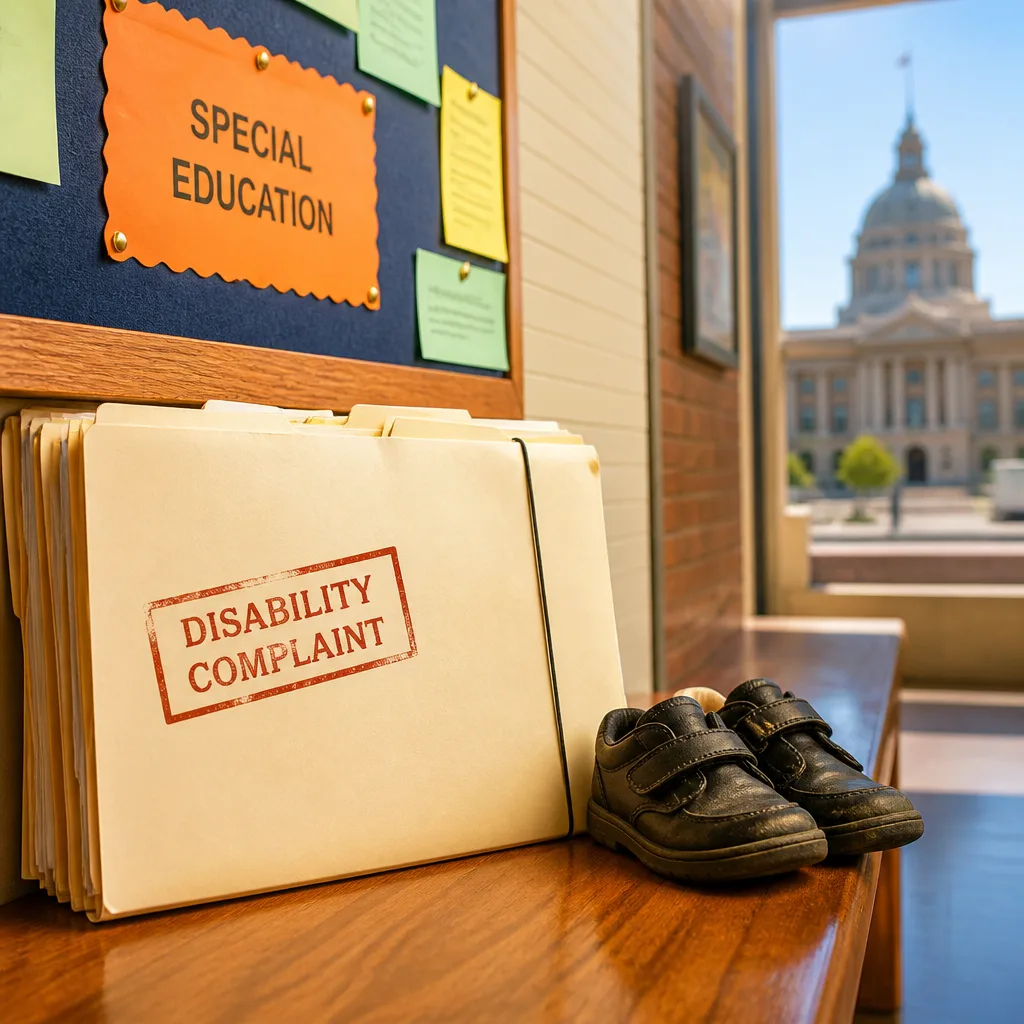
A recent federal change in oversight of special education has cast doubt on the future handling of civil complaints alleging disability discrimination in schools, according to reporting by SD News Watch that draws on records from the US Department of Education’s Office for Civil Rights (OCR).
Pending investigations and historical casework
The OCR’s publicly available information shows that, as of January 2025, there were seven elementary and post‑secondary institutions with pending investigations related to disability discrimination. Across a longer timeframe, OCR records indicate 27 resolutions involving disability discrimination between 2013 and 2026. Of those resolutions, 25 involved specific school districts or post‑secondary learning institutions, according to the reporting.
Resolution times also vary considerably. Published letters of resolution reviewed by SD News Watch show that, between 2015 and 2022, OCR has taken as little as three months and 10 days and as long as five years and three days to issue letters of resolution on disability discrimination matters.
“A recent federal shift in special education oversight raises uncertainty in future handling of civil cases involving discrimination based on disability,” the SD News Watch report said.
What the numbers show
The available figures illustrate two trends: that enforcement action through OCR continues to be used by parents and advocates to address alleged violations of disability rights in education, and that the pace of investigation and resolution can be highly variable.
- 7 schools under pending OCR investigation as of January 2025.
- 27 OCR resolutions related to disability discrimination from 2013–2026.
- 25 of those resolutions involved identifiable local or post‑secondary institutions.
- Resolution timelines ranged from 3 months 10 days to 5 years 3 days in the 2015–2022 period.
| Period | Metric |
|---|---|
| As of 14 Jan 2025 | 7 pending investigations (elementary and post‑secondary) |
| 2013–2026 | 27 resolutions related to disability discrimination |
| 2015–2022 | Resolution times ranged from 3 months 10 days to 5 years 3 days |
Implications for parents, schools and advocates
The reporting highlights practical concerns for families and advocates seeking redress when a child’s right to a free appropriate public education (FAPE) or proper accommodations under Section 504 is in dispute. OCR enforcement is one avenue for resolving systemic or individual complaints when local remedies do not lead to a satisfactory outcome. But the variability in resolution times suggests parents may face prolonged uncertainty.
For schools and post‑secondary institutions, extended investigations can mean sustained scrutiny of policies, recordkeeping and the implementation of individualised education plans or accommodation arrangements. The SD News Watch analysis notes that the majority of resolved cases in the period reviewed were tied to specific institutions, emphasising the local focus of many complaints.
Context for South African readers
While these developments concern US federal oversight, they underline broader themes relevant to South Africa: the need for clear, timely processes to investigate alleged disability discrimination in education; effective local dispute resolution mechanisms; and transparency about outcomes. In South African schools, families rely on the South African Schools Act, the Constitution and sector policy to secure reasonable accommodation and inclusive education. Comparative reporting like this can prompt reflection on whether existing systems provide predictable, accessible remedies for learners with disabilities.
The SD News Watch piece draws directly on OCR records and published letters of resolution; it raises questions about how shifts in federal priorities or administrative structures could affect enforcement and the timeliness of responses to discrimination complaints.
Policymakers, school leaders and parent groups will be watching for further clarification from federal authorities and any changes to protocols that might affect how disability‑related complaints are filed, investigated and resolved.