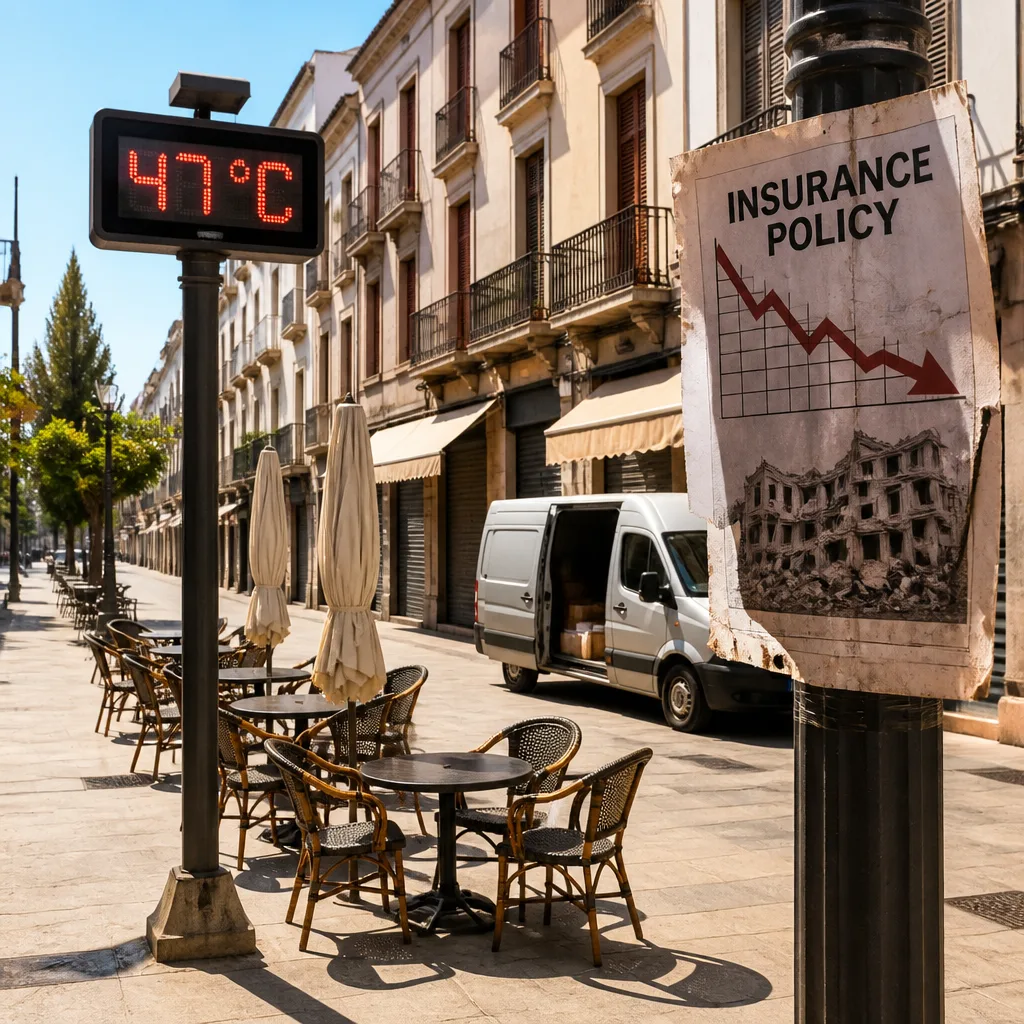
Europe’s record heatwaves are increasingly translating into large economic losses that insurance contracts are not designed to cover, creating a widening protection gap for businesses across sectors from hospitality to transport.
Heat’s economic toll exceeds insured cover
Research and industry reporting indicate that last summer’s heatwaves cost the European economy an estimated €43bn — quoted in reporting as R805bn — in lost output, while insured payouts related to those events totalled only about €500m. The mismatch highlights that most heat‑related losses stem from indirect operational disruption rather than the kind of physical damage traditional property insurance is built to address.
Hospitality operators are among those already feeling the strain. In Padua, Italy, where aperitivo culture traditionally keeps terraces and outdoor seating busy in early evening, hospitality association APPE Padova reported more than 80% of about 600 surveyed businesses experienced turnover declines of around 20% during a recent heatwave. As the association’s president noted, that scale of decline can eliminate profit margins for many operators.
“A 20% decline wipes out your margin,” said Federica Luni, president of APPE Padova.
Insurers and risk managers say the nature of extreme heat makes it hard to insure in the conventional way. Heat rarely causes the catastrophic physical destruction associated with storms or floods, but it can trigger a cascade of operational impacts — workers unable to function at full capacity, lower consumer footfall, transport delays and supply interruptions — that amount to sizeable economic loss without obvious physical damage to insure.
“Heat in itself is not a traditionally insured risk,” said Swenja Surminski, managing director for climate and sustainability at Marsh, according to the reporting. That view helps explain why a sizable share of small and medium firms in Europe do not hold business interruption cover that would protect against such non‑damage losses.
What the numbers show
| Measure | Reported figure |
|---|---|
| Estimated economic loss (last summer) | €43bn (R805bn) |
| Approximate insured payouts | €500m |
Regulatory surveys point to low take‑up of business interruption protection among smaller firms. A 2023 survey of 9,000 small and medium‑sized enterprises for Europe’s insurance regulator found just 28% had business interruption cover as part of property insurance, and only 17% held non‑damage business interruption protection that might cover events such as strikes or operational disruption.
Implications for businesses and insurers
The protection gap has several consequences that matter for South African businesses and policy watchers even though the data refer to Europe:
- Household and corporate budgets: Lower sales and higher operating costs during extreme heat translate into tighter margins and, for households, weaker employment prospects in affected sectors such as hospitality and retail.
- Insurance product design: Insurers may need to revisit how business interruption and non‑damage triggers are offered or priced if heat‑related operational losses become more common.
- Public policy and resilience: Governments may face pressure to invest in adaptation — cooling centres, transport adjustments, workplace protections — because private insurance will not cover many systemic losses.
Practical measures already appearing in Europe include changes in operating hours for heat‑sensitive businesses, investment in workplace cooling and greater attention by risk managers to scenario planning. Yet wider adoption of such measures will come at cost — a reality that threatens margins for sectors that operate on thin profitability.
For South African companies exposed to European markets through tourism, exports or supply chains, the trend signals another channel by which climate extremes can compress revenues and increase costs. For local insurers and corporate risk teams, the European experience is a reminder to assess whether current covers, pricing and contingency plans are adequate in a warming climate.
As industry figures and regulators weigh how to close the protection gap, any market response will affect premiums, cover availability and corporate risk management — all of which have direct implications for household budgets and employment across affected sectors. WE NEWS does not provide financial advice; readers should consult licensed advisers on insurance decisions.