
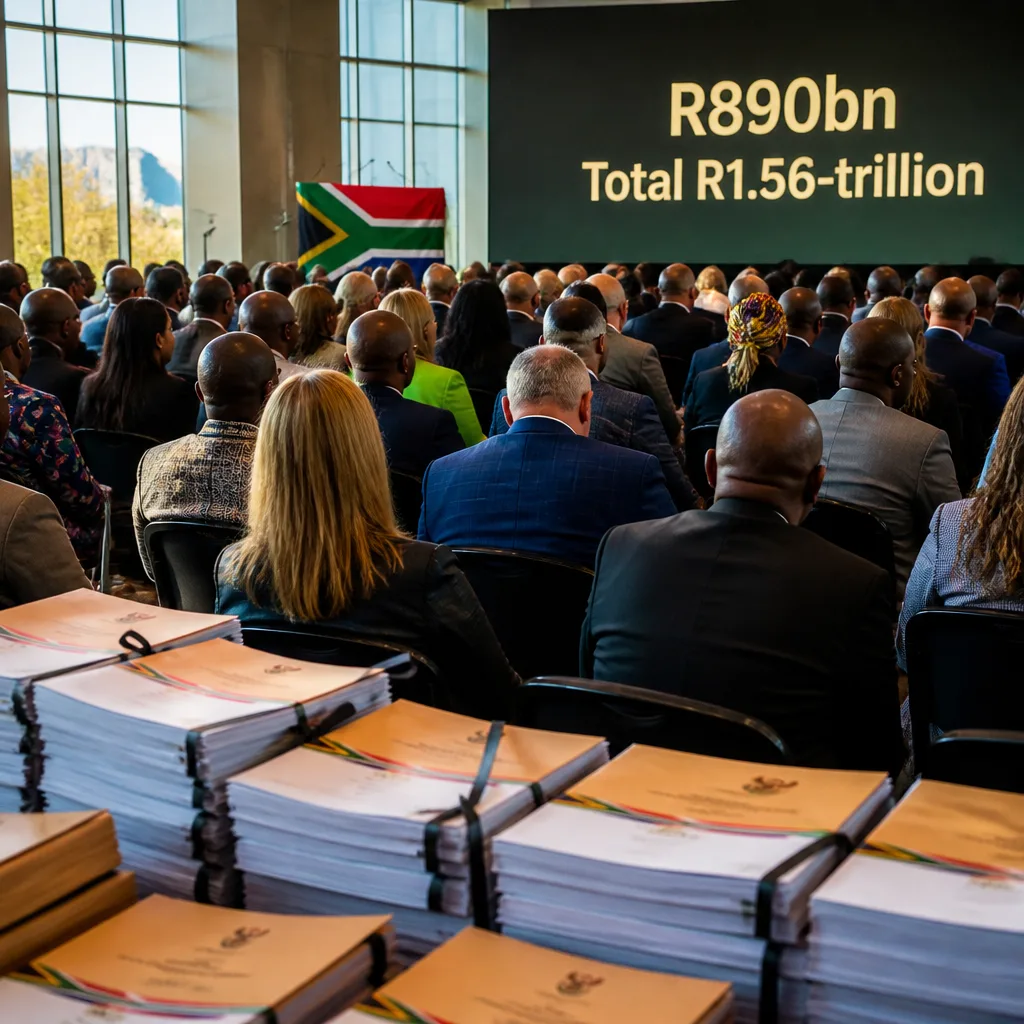
South Africa’s sixth investment conference concluded with roughly R890 billion in new investment pledges, taking the cumulative commitments secured through the government’s drive since 2018 to about R1.56-trillion, the government reported.
Why domestic investors matter
Officials said many of the announced projects have either been completed or are under construction, signalling that a notable share of past commitments has translated into tangible activity. What stands out in this round, however, is that the largest number of new pledges came from domestic investors rather than foreign sources — a dynamic that has implications for confidence, jobs and the fiscal outlook.
Domestic capital is different from foreign capital in an important way: local investors experience the country’s municipal services, ports, power system, tax administration, courts, regulations and labour market every day. Their willingness to commit funds therefore represents a judgement about operating conditions that goes beyond the polished narrative of an international roadshow.
Viewed this way, the domestic commitments are a kind of vote of confidence from the country’s own citizens and firms. That matters because investment commonly follows confidence: businesses and households allocate labour, savings and time based on expectations about institutions, contract enforcement and the predictability of policy.
What this means for households and jobs
For households, the headline numbers are more than big round figures. Investment creates productive capacity and employment, expands opportunities for growth and, over time, can ease household budget pressures if it lifts incomes and reduces unemployment. The government’s figure that many past pledges are now completed or under construction suggests some of those effects may already be filtering into local economies where projects are underway.
- R890bn — fresh pledges at the sixth investment conference.
- R1.56-trillion — total commitments reported since 2018 under the investment drive.
- Majority of recent pledges came from domestic investors, according to the government.
The precise translation of pledges into jobs and sustained output depends on many factors no single announcement can guarantee: the pace of project implementation, supply-chain constraints, municipal readiness, labour relations and the state of infrastructure such as ports and energy. The government’s statement that many projects are under construction is encouraging, but households and workers will look for visible, local impacts — factories hiring, roads being built, and contracts flowing to small businesses.
Policy implications
Policymakers should register that domestic investors are signalling a level of trust. That does not eliminate the need for reforms or for steady delivery on public services; it does, however, shift the spotlight. Retaining and deepening investment from citizens requires predictable institutions, efficient municipal services and a tax and regulatory environment where long-term effort is rewarded.
There is also a broader social dimension. Every graduate, entrepreneur and professional who decides to remain and build a life in South Africa is effectively deploying human capital in the expectation of returns over years or decades. Governments seeking to keep those investments must focus on the conditions that sustain them — reliable public services, functioning courts and labour markets that balance protection with flexibility.
Measured against household budgets and job prospects, the headline sums are only the beginning. The test for the coming months and years will be whether the pipeline of pledged projects keeps flowing into construction sites, payrolls and local supply chains. If it does, the recent conference will have delivered more than announcements; it will have shifted livelihoods.
| Metric | Amount |
|---|---|
| New pledges (sixth conference) | R890 billion |
| Total since 2018 | R1.56-trillion |
WE NEWS does not offer financial advice. The figures above are taken from the government’s reporting on the investment conference and reflect commitments rather than guaranteed disbursements or completed investment.













