
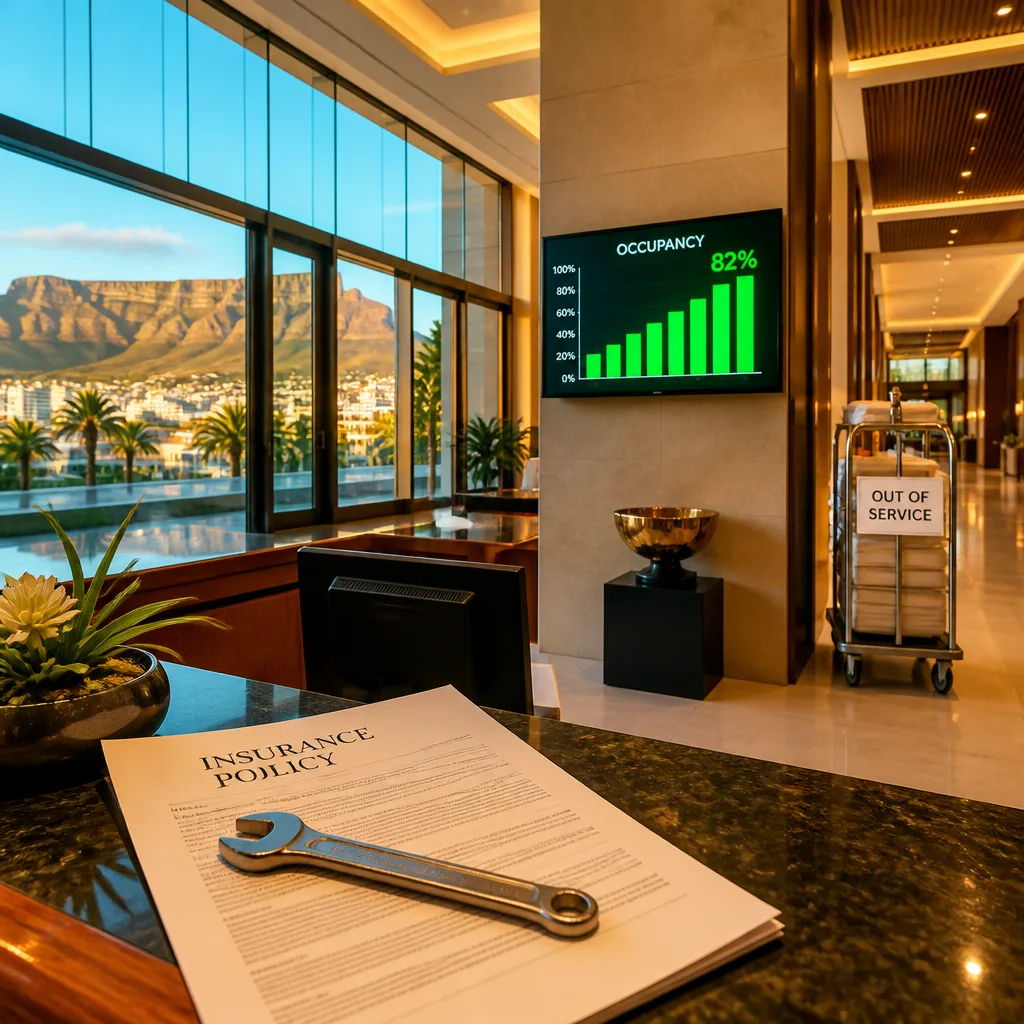
Cape Town’s winter events calendar and a growing year-round tourism demand are squeezing the traditional off-season for South African hospitality businesses, leaving less time to carry out maintenance and to review insurance cover, industry figures have warned.
Insurers call for maintenance during quieter months
Ryno de Kock, Head of Distribution at PSG Insure, said the reduction in genuine slow months is creating a risk that routine upkeep and insurance alignment do not keep pace with evolving operations. In Cape Town, major sporting, cultural and business events are reportedly pushing accommodation occupancy above 80% during peak periods, he noted.
“As winter tourism gathers momentum, the reality is that some businesses will no longer experience a true off-season,” the PSG Insure executive said.
The immediate consequence is practical: a room left empty in a quieter period can conceal maintenance issues — a leaking roof, faulty geyser or electrical fault — that become expensive and disruptive when occupancy picks up. De Kock emphasised that this is not solely an operational problem but one that affects how insurers evaluate claims.
Insurance principle: duty to prevent avoidable damage
Short-term insurers operate on the principle that policyholders must take reasonable steps to prevent avoidable damage and to maintain assets. De Kock explained that policies are designed to cover sudden, unforeseen events, not gradual deterioration or losses arising from neglect. Wear and tear is typically excluded.
That has direct consequences for accommodation businesses. When a storm damages a roof, for example, an assessor will look for evidence of prior neglect — clogged gutters or longstanding leaks — which can affect the outcome of a claim.
- Year-round events push occupancy above 80% in Cape Town at peak times.
- Reduced off-seasons limit windows for maintenance and insurance reviews.
- Insurers may decline or limit claims where damage stems from neglect or wear and tear.
For smaller operators and owner-managed guesthouses, the warning is particularly urgent. Limited cash buffers and tight staffing make it tempting to defer maintenance, but doing so can materially increase the risk of uninsured losses at critical trading moments.
What operators should prioritise
De Kock urged businesses to use quieter periods — however brief — to complete preventative work and to ensure policy terms match actual operations. That includes documenting maintenance, cleaning gutters, servicing geysers and ensuring electrical systems are inspected. These steps not only reduce the chance of interruption but also demonstrate to insurers that reasonable care was taken.
From a budgeting perspective, operators should factor maintenance into operating costs rather than treating it as discretionary. Even modest, regular expenditure can avoid a single large uninsured loss that would harm both revenue and employment.
| Issue | Why it matters |
|---|---|
| Reduced off-season | Fewer windows for maintenance and inspections |
| Policy exclusions | Wear and tear and neglect often not covered |
| Occupancy spikes | Hidden defects become urgent during peak trading |
Operators should also consider whether their existing insurance covers new revenue streams or events-driven activities. Expansion into conference hosting or winter festivals may change risk profiles and require specialist cover.
Ultimately, the message to the sector is practical and financial: prioritising maintenance protects households that depend on hospitality wages and preserves business continuity. For insurers, evidence of maintenance and appropriate cover helps avoid disputes when claims arise. For operators, the cost of routine upkeep should be weighed against the potentially larger cost of an uninsured disaster during a peak trading period.
While these comments come from a distribution head at PSG Insure and reflect industry practice, each business should review its own circumstances and policy wording. This article does not constitute financial or insurance advice.













