Emerging technologies and artificial intelligence are prompting a fundamental reconsideration of what a classroom should be. What has long been defined by projectors and recorded lectures is evolving toward learning spaces that support collaboration, personalised instruction and new teacher roles, according to a recent opinion piece that surveyed developments in higher education.
From projection to personalised learning
Traditional technology-equipped rooms typically have video projection, automated room controls and audio-visual systems that allow instructors to stream or record lessons and enable students to present their work. But the piece argues these features alone are no longer sufficient: designers and educators should rethink room organisation, furniture and lighting to better support active and customised learning.
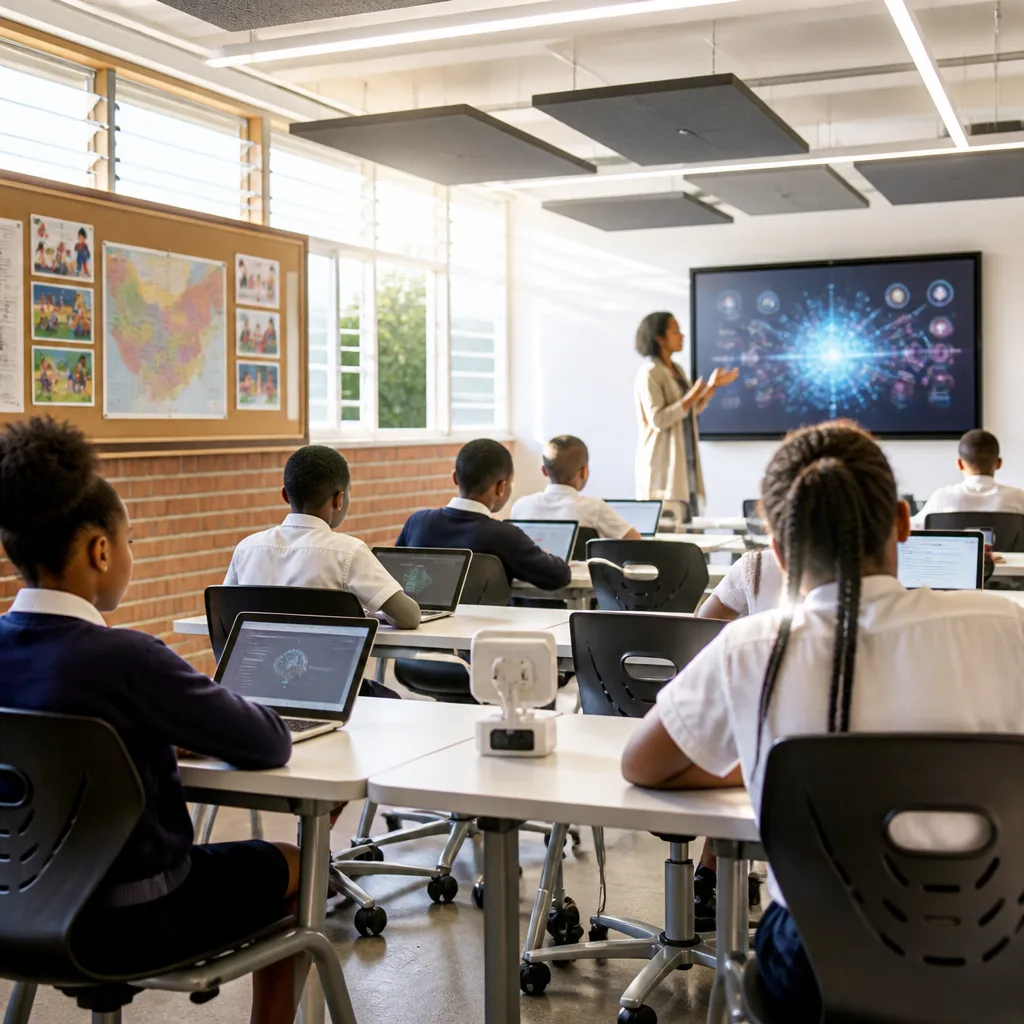
Important elements identified as part of an innovative classroom include:
- Flexible space design that supports various teaching formats and group work;
- Mobile and modular furniture to reconfigure learning arrangements quickly;
- Integrated technologies that allow instructors and learners to interact with digital resources across the room;
- Lighting and sound treatments that enhance concentration and communication.
The place of AI in the classroom
The author highlights that the next wave of change will be driven by AI. In a referenced interview, George Otto, former chief academic officer at the School of Professional Studies at the City University of New York and a Senior Fellow at the Centre for Digital Education, said:
“The use of AI will radically accelerate and accentuate this reconfiguration of the classroom without displacing it. AI is superb not just at information mining but casting that in effective forms and formats. It is not as good at managing perspectives, especially opposing viewpoints or novel approaches and outlooks…”
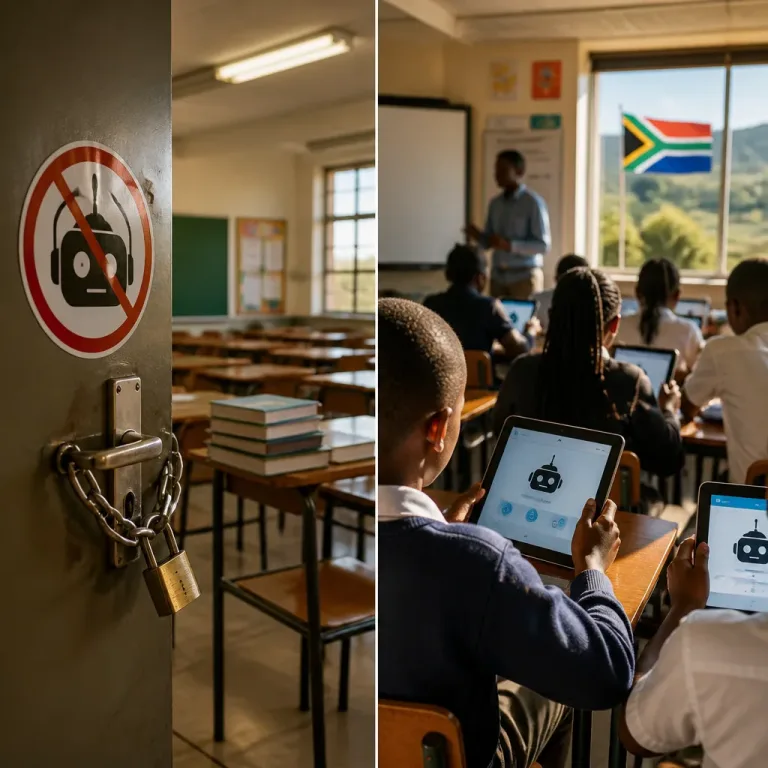
This observation points to a dual role for AI: it can streamline access to information and personalise learning materials, while human teachers remain essential for moderation of debate, critical thinking and the cultivation of novel perspectives.
Implications for South African education
Although the commentary focused on higher education, the themes are relevant across the schooling system. If classrooms are to support AI-infused learning, policy-makers and school leaders will need to consider several practical issues:
- How teacher training and continuous professional development prepare educators to use AI as a pedagogical tool rather than a replacement.
- Whether existing classroom environments and furniture can be adapted to more collaborative and technology-rich approaches.
- How schools address equity — ensuring all learners have access to devices, connectivity and safe, functional learning spaces.
Those decisions will determine whether AI widens existing gaps or becomes a lever for more personalised support in crowded classrooms.
Design, pedagogy and the future workforce
Beyond immediate classroom arrangements, rethinking the room also invites broader curricular reflection. If AI handles routine information retrieval and presentation, curricula may shift further toward skills that machines do less well: managing perspectives, critical inquiry, creativity and cross-cultural understanding. The commentary suggests that classroom design — from acoustics to layout — should follow pedagogy, not the other way around.
| Current classroom feature | Future consideration |
|---|---|
| Single lectern and fixed desks | Flexible zones for group work and one-on-one coaching |
| Projector-centred teaching | Distributed displays and personalised learning streams |
| Teacher as content deliverer | Teacher as facilitator of learning and critical dialogue |
Design changes will have cost and logistical implications. Decisions about investment in hardware, connectivity and teacher development will shape how quickly and evenly schools can adapt.
As the sector grapples with these choices, the central question remains: how can South African classrooms be organised so that technology, including AI, enhances learning for all pupils while preserving the human skills that underpin democratic and inventive societies?
Policymakers, school leaders and teacher educators will need to collaborate on practical roadmaps that connect classroom design, teacher development and curriculum review — with equity and learner-centred practice at the heart of those plans.