
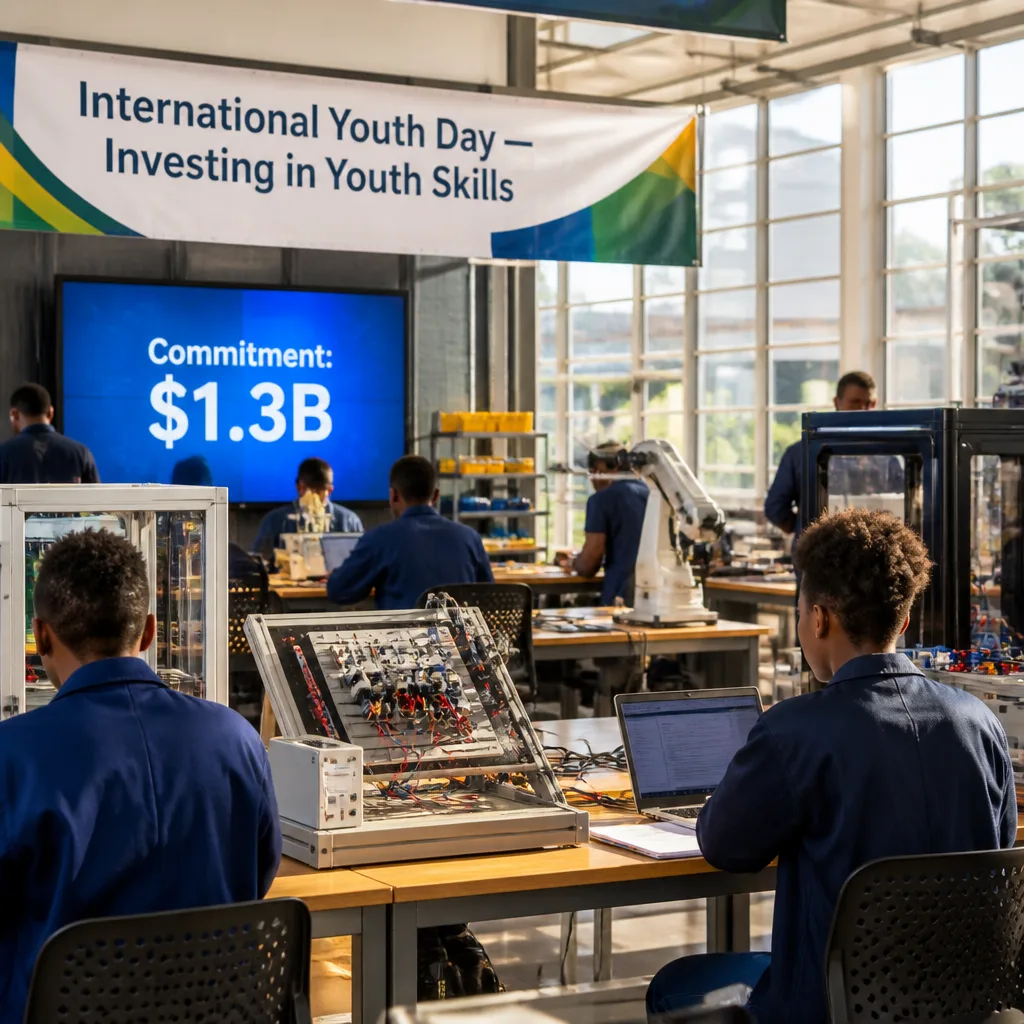
The African Development Bank (AfDB) used International Youth Day on 12 August to underline its commitment to building skills, education and employment pathways for young Africans, emphasising investments in science, technology and technical and vocational education.
Investing in skills and infrastructure
In a message marking the day, Martin Fregene, Officer in Charge for the Agriculture, Human and Social Development Vice Presidency, set out the Bank’s focus on making young people agents of change by improving access to relevant skills, education and finance. The Bank highlighted a project in Zambia — the Support to Science and Technology Education Project — as an example of how investments in engineering centres and related facilities are helping young people develop marketable skills.
The AfDB said its recent push to expand skills and employability across Africa is part of a broader action plan that has directed substantial resources at education and training over the past three years.
Scale of the programme
The Bank reported that, under its Skills for Employability and Productivity in Africa Action Plan, it has committed an estimated $1.3 billion over the past three years to strengthen education infrastructure and support demand-driven skills development.
| Intervention | Scale (as reported) |
|---|---|
| Higher education and TVET institutions supported | Nearly 400 |
| Open distance and digital learning centres | More than 50 |
| Innovation centres | 73 |
From classroom to workplace
The Bank framed these investments as part of its wider Four Cardinal Points vision, which includes efforts to transform Africa’s demographic dividend into tangible economic opportunities, with a particular focus on women and youth. The Support to Science and Technology Education Project in Zambia was presented as a concrete example: visiting Bank officials saw young people at engineering centres gaining hands-on experience and the practical skills required for careers or enterprise creation.
- Practical skills: The programme prioritises science, technology and technical and vocational education to align training with labour market needs.
- Digital reach: Investments include open distance and digital learning centres intended to expand access beyond urban campuses.
- Innovation support: The establishment of innovation centres aims to nurture entrepreneurship and applied research.
Implications for South Africa and the region
For South Africa, where debates continue about improving the relevance of post-school training and expanding access to STEM and TVET pathways, the AfDB’s emphasis on demand-driven skills and digital outreach resonates with national priorities. The Bank’s approach underscores the need for partnerships between governments, training providers and the private sector to ensure that investments translate into jobs and sustainable livelihoods.
While the AfDB’s figures describe continental-scale commitments, the experience from projects such as the one in Zambia highlights practical implementation challenges: ensuring quality of training, linking graduates to employment, and maintaining facilities. Those are the same issues education policymakers face at provincial and national levels when attempting to scale successful pilot programmes.
By profiling young people benefiting from the project, the Bank sought to illustrate how targeted investments in engineering and vocational education can open pathways to careers and entrepreneurship — and how those pathways contribute to broader economic and social development across African countries.
The AfDB’s International Youth Day message reiterates that investing in education infrastructure, digital learning and innovation hubs is central to creating employment opportunities for young Africans and realising the continent’s demographic potential.











