
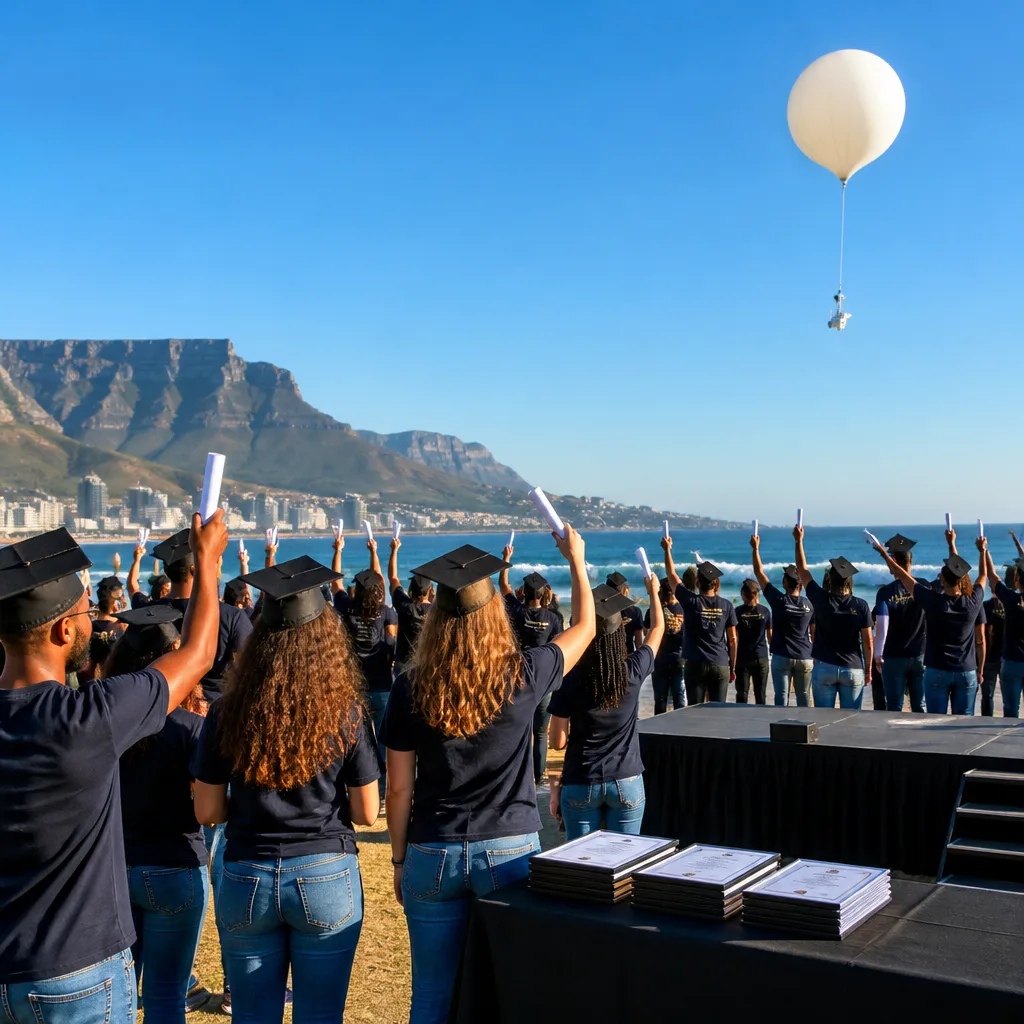
More than 1 300 South African learners were among the 2 626 students who graduated from the third annual Pathways to Space programme, organisers announced. The initiative, run by aerospace group Boeing in partnership with the Future African Space Explorers STEM Academy (FASESA), completed a five‑month course this year that combined theoretical modules with hands‑on projects.
Scale and representation
South Africa accounted for 1 313 of the graduates. The remainder were from other participating African countries: 832 from Ethiopia, 431 from Nigeria and 50 from Kenya. Organisers said this was the first year South Africa took part in the programme.
| Country | Graduates |
|---|---|
| South Africa | 1 313 |
| Ethiopia | 832 |
| Nigeria | 431 |
| Kenya | 50 |
What learners did
The 2026 programme ran for five months. Students covered foundational topics including astronautical principles, systems engineering, materials science and human factors. Learning emphasised project work and culminated in a high‑altitude balloon mission designed to develop practical data‑analysis skills.
- Duration: five months
- Curriculum highlights: astronautics, systems engineering, materials science, human factors
- Practical work: project assignments and a high‑altitude balloon mission
Industry links and mentorship
Organisers said the programme paired students with industry mentors and provided virtual sessions with prominent international space professionals. Participants had access to former NASA astronauts and specialists from leading universities, as well as companies involved in space suit design and testing.
Named contributors to the programme included Capitol Technology University Astronautical and Space Engineering Chair Prof Jeff Volosin and biomedical engineer and former NASA aquanaut Dr Andrew Abercromby. The space suit design company Final Frontier Design also took part in virtual sessions.
“By pairing students across the continent with distinguished industry mentors and real aerospace engineering challenges, we are helping build a homegrown talent pipeline that will power Africa’s contributions to the global space economy for decades to come,”
Henok Teferra Shawl, Boeing MD for Africa
“Pathways to Space is not only preparing students to pass examinations and earn qualifications, but also equipping them to solve real‑world challenges and make meaningful contributions to society,”
Sean Jacobs, MD of FASESA
Context and immediate outcomes
Since the programme began in 2024, organisers reported that almost 3 500 students across Africa have graduated from Pathways to Space. The initiative is presented as aligned with the continent’s expanding space activity and with coordination from the AU African Space Agency.
Organisers also highlighted early successes: one learner from the programme was selected to participate in an international women‑led lunar mission, according to the reporting.
For South Africa the intake represents a rapid scale‑up of exposure to aerospace engineering topics for learners previously unlikely to encounter such structured, industry‑linked training. The graduates now form part of a growing pool of young people with practical experience in data analysis, systems thinking and mission work—skills that are valuable both inside and beyond the space sector.
Longer‑term effects will depend on how these learners progress into higher education, apprenticeships and local industry roles, and on whether follow‑up programmes and partnerships can convert early interest into sustainable career pathways within South Africa.


