
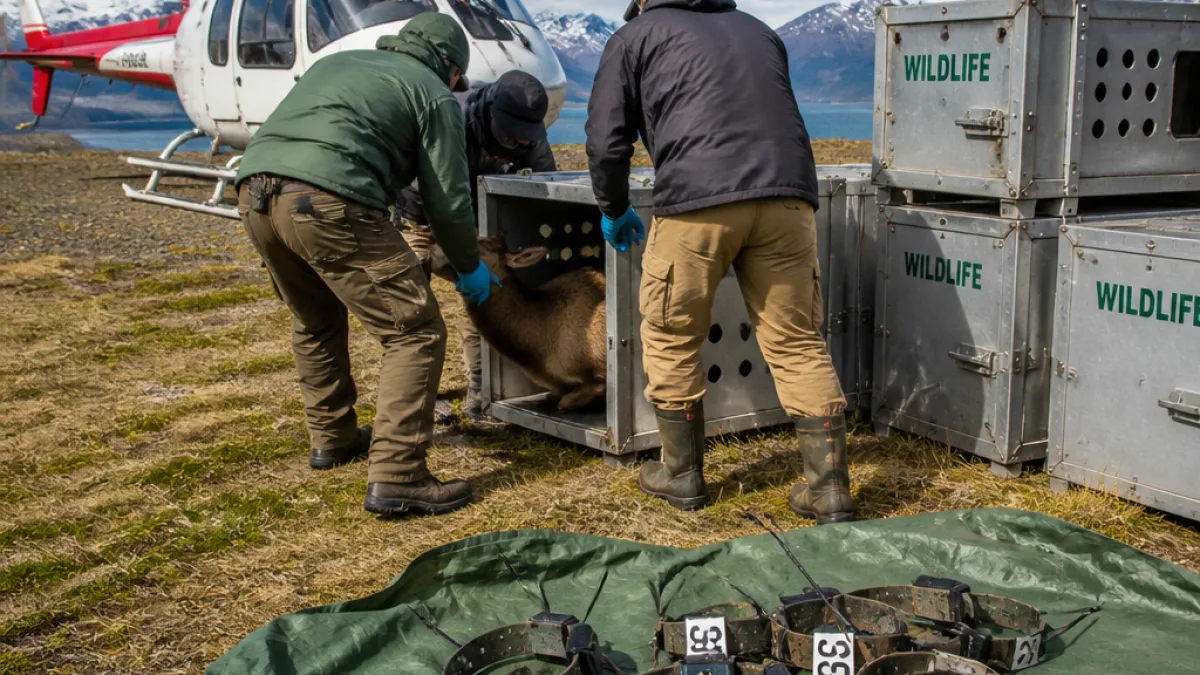
The Alaska Department of Fish and Game plans to continue its controversial effort to establish a population of Sitka black-tailed deer on the southern Kenai Peninsula, saying it will relocate another 15–20 animals this fall despite the first round of transplants producing an unexpectedly high mortality rate.
High losses, renewed commitment
Last fall the department moved 19 deer from an island near Kodiak to the lower Kenai Peninsula, an effort officials call the first deer translocation in Alaska in four decades and the first aimed at the southern peninsula. An update posted Tuesday identifies at least 13 of those animals as dead; one animal slipped a GPS collar and its fate is unknown. Only five deer — two does and three bucks — are currently confirmed alive.
Despite that grim tally, Fish and Game said it is planning to bring an additional 15–20 deer this fall, focused mostly on does, to supplement the survivors and increase the chance that a self-sustaining herd will establish.
"The goal of this is to provide hunting opportunity and food security for Alaskans," Fish and Game Commissioner Doug Vincent-Lang said in the department's update.
Why the move matters locally
Officials frame the program as a long-term attempt to expand hunting opportunities and bolster local food security on the Kenai Peninsula. Supporters say creating a reproducing deer population could eventually provide a renewable source of wild game for residents and subsistence users.
Critics, however, question whether the project justifies its cost and risk to animal welfare after last winter's losses. Environmental advocates who have scrutinized the program say internal documents suggest the mortality rate was higher than first reported, and they say the state should invest in other measures to increase food security.
Cooper Freeman, Alaska director for the Center for Biological Diversity, told reporters his group does not back the project and believes there are better ways for the state to support food security. The group obtained internal department records months ago through a public records request.
Numbers at a glance
| Metric | Number |
|---|---|
| Deer moved in first effort (autumn) | 19 |
| Confirmed deaths | 13 |
| Unknown due to collar loss | 1 |
| Confirmed survivors | 5 |
| Planned additional translocations (this fall) | 15–20 (primarily does) |
Questions from the public and advocates
Opponents have raised several concerns to the department and in public comments:
- Whether the initial animal deaths were caused by inadequate pre-release conditioning or by harsh winter conditions on the peninsula;
- The cost of the project, which officials acknowledge ran into the hundreds of thousands of dollars, and whether that money could be better spent on other food-security or conservation programs;
- The timeline for any hunting opportunities: even in a best-case scenario, a translocated population would take years, likely decades, to grow to numbers that could sustain regulated harvest.
Agency response and next steps
Fish and Game said the next translocation will focus primarily on does to increase reproductive potential and that the agency will continue to monitor the animals with GPS collars and field checks. Department staff provided the status update on the program and reaffirmed their objective of creating a reproducing herd on the southern peninsula.
The agency did not provide a detailed breakdown of causes of death for each animal in the public update. Some of that information has been the subject of debate after environmental groups used public-records requests to obtain internal correspondence and mortality reports.
For residents of the Kenai Peninsula and hunters statewide, the project underscores a broader tension in Alaska wildlife management: balancing attempts to expand game availability with the cost, logistical difficulty and biological uncertainty of moving wild animals into new habitat.
Fish and Game officials say they will release more details on the fall translocation plan in the weeks ahead and continue tracking the surviving deer to see whether the population begins to recover.
— Erik Lindgren, State Correspondent
















