
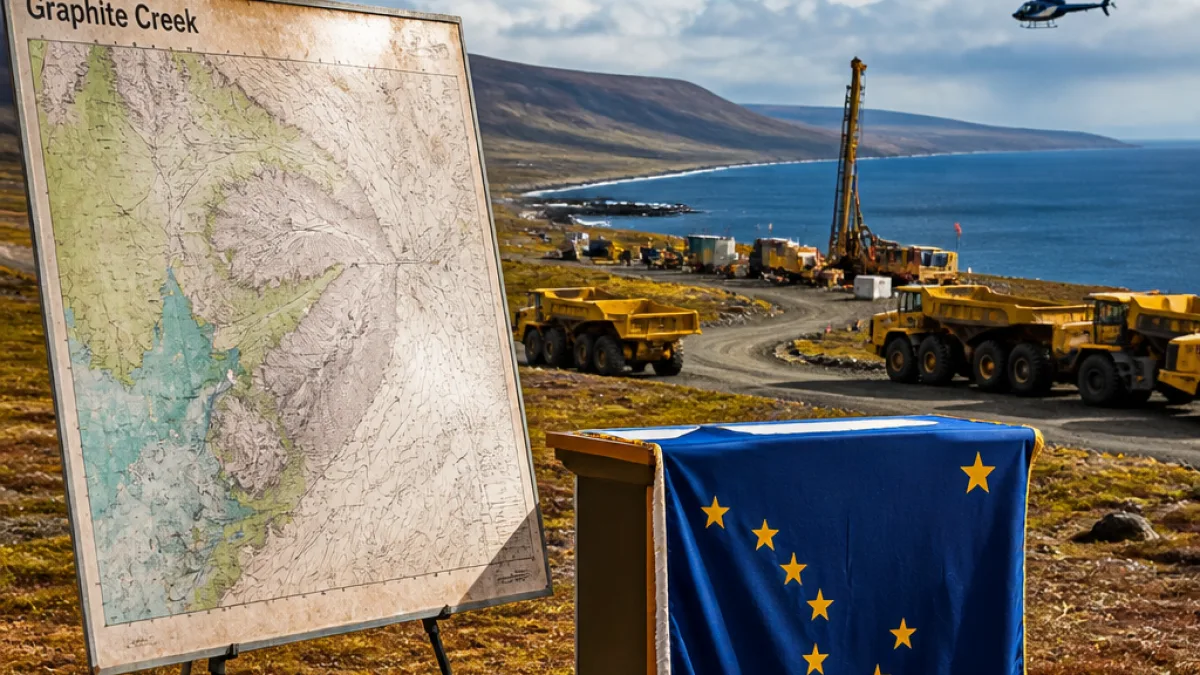
Alaska resource could reshape U.S. graphite supply, governor says
Nome, Alaska — Gov. Mike Dunleavy on Tuesday elevated the strategic profile of the Graphite Creek deposit north of Nome, saying the site could supply enough natural graphite to meet the nation's needs for a century as the United States seeks to lessen reliance on foreign sources for critical minerals.
The governor's comments, carried in an opinion piece and a subsequent television interview, were highlighted by Graphite One Inc., the company developing the Graphite Creek project. The state and company emphasize the size of the deposit — characterized by the U.S. Geological Survey as the largest known graphite occurrence in the country — as central to national efforts to secure domestic supply chains for battery materials and other technology uses.
Graphite is a key ingredient in battery anodes and other high-technology applications. The U.S. Geological Survey reported that the United States was 100% net import reliant for natural graphite in 2025, underscoring the vulnerability U.S. manufacturers face without domestic alternatives.
Local development and national security intersect
Graphite One’s leadership framed the governor’s endorsement as further evidence of Graphite Creek’s national importance. Company executives say the project could be a foundation for a U.S.-based graphite supply chain extending from Alaska to processing and manufacturing facilities in the Lower 48.
"Governor Dunleavy's comments underscore the strategic importance of Graphite Creek to the United States," said Anthony Huston, president and CEO of Graphite One.
State officials argue that developing domestic sources of critical minerals will bolster both economic opportunity in Alaska and national security. Alaska hosts known resources of the vast majority of government-designated critical minerals, and Graphite Creek has become a focal point as policymakers weigh how to reduce dependence on imports for essential inputs.
What the data show
| Item | Detail |
|---|---|
| Largest known U.S. deposit | Graphite Creek (U.S. Geological Survey) |
| U.S. net import reliance (natural graphite) | 100% in 2025 (U.S. Geological Survey) |
Local impacts and practical considerations
Development of Graphite Creek would involve permitting, community engagement, infrastructure investment and long-term operations. Officials and industry advocates say a domestic project could create jobs in Alaska and along the proposed supply chain, but also acknowledge that large-scale mineral projects typically face environmental review and regulatory steps before production can begin.
For residents in Nome and surrounding communities, proponents point to potential employment and contractor opportunities during construction and operation. Skeptics and stakeholders often ask detailed questions about environmental protections, subsistence impacts, and the timeline for actual production — issues that remain part of any permitting and public review process.
What to watch next
- Progress on federal and state permits and any required environmental reviews for Graphite Creek.
- Announcements from Graphite One about project milestones, financing or partnerships to build processing capacity.
- Federal policy moves related to critical minerals that could affect incentives, permitting timelines or funding for domestic supply chains.
Graphite One has positioned Graphite Creek as the starting point for a U.S.-based graphite industry that would include extraction in Alaska and downstream processing elsewhere in the country. Officials in Alaska say leveraging the state's mineral resources is part of broader efforts to support domestic manufacturing of advanced batteries and other technologies deemed essential to economic competitiveness and national defense.
As the project advances through technical studies and regulatory steps, industry advocates and state leaders will likely continue to frame Graphite Creek as an example of how Alaska's mineral wealth could play a role in securing critical supply chains for the nation.
Local communities, regulators and national policymakers will be watching the pace and scope of the project closely as the debate over domestic sources for strategic materials continues.
















