
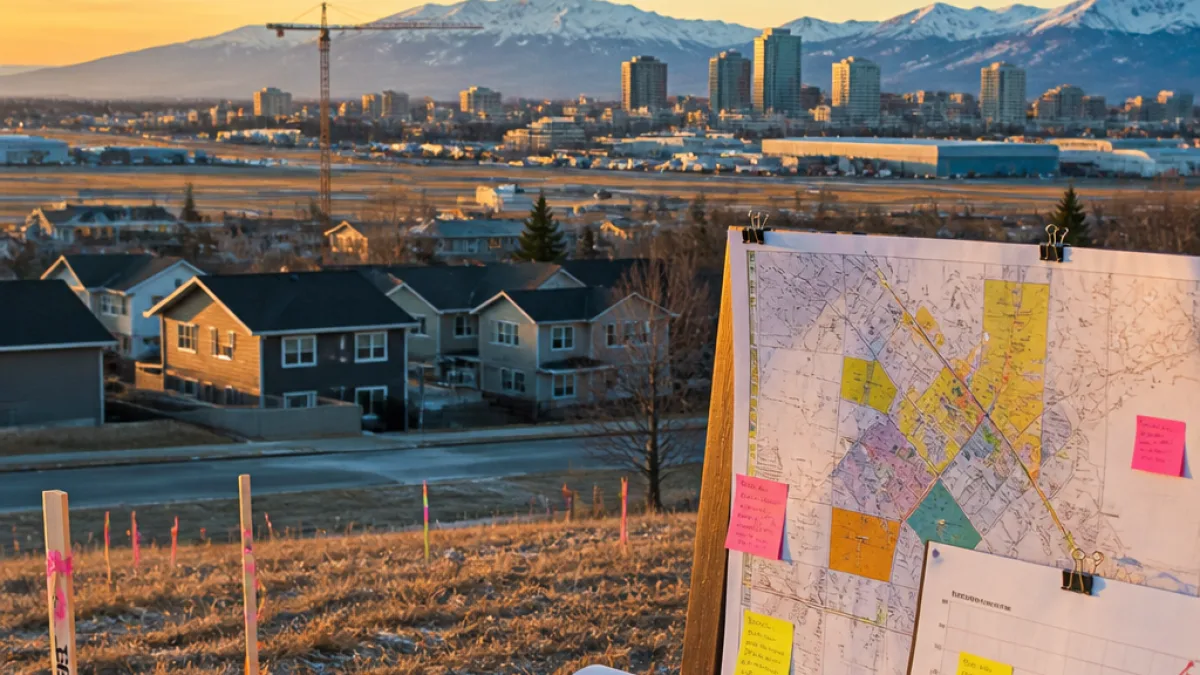
Municipal leaders confront housing crunch tied to JBER expansion
Anchorage officials are racing to understand how a proposed multibillion-dollar expansion at Joint Base Elmendorf-Richardson could intensify an already strained local housing market, municipal staff told Assembly members during a budget work session Sept. 18.
The federal initiative, known as the Fightertown Recapitalization, could inject more than $2 billion into the base next year and potentially grow to $7 billion in coming years. While city leaders have largely welcomed the economic boost, they are increasingly worried about where thousands of additional active-duty personnel and their families will live.
"The housing market is already strained," Office of Management and Budget Director Ona Brause told Assembly members as staff outlined coordination with JBER on financing and potential locations for housing development. The work is being folded into Anchorage's 2027 budgeting process.
Numbers underline the challenge
Recent economic reports underscore the pressure on Anchorage homebuyers and renters. The average home price in the city this year is about $481,000 — a 42% rise over the past decade — and the average monthly rent for a two-bedroom unit plus utilities has climbed past $1,700, city and state data show.
Municipal staff said JBER provided projections of the military's housing needs if the expansion moves forward. To meet the base's projected demand by 2030, Anchorage would require the following additional units:
| Unit type | Additional units needed by 2030 |
|---|---|
| Two-bedroom | 1,200 |
| Three-bedroom | 650 |
| Four-bedroom or larger | 645 |
Municipal response and planning
Mayor Suzanne LaFrance and municipal staff are working to identify financing strategies and potential parcel locations with JBER representatives as part of the budget preparations. The administration and the Assembly have both signaled interest in easing housing pressure, but staff emphasized the scale of the task when matched against current development rates and market trends.
City officials said the projected military-driven demand — nearly a quarter of the mayor's earlier goal to build 10,000 homes over the next decade — would require accelerated construction, zoning adjustments and targeted financing to be feasible.
What this means for Anchorage residents
- Renters may face additional upward pressure on rents if new supply does not keep pace with demand.
- Homebuyers could see longer competition for existing inventory, potentially keeping prices high.
- Municipal budget priorities may shift to accommodate infrastructure and housing incentives tied to the expansion.
"The housing market is already strained," Brause said, summarizing the immediate concern municipal planners face as they work with JBER.
Staff and Assembly members acknowledged multiple unknowns: the exact timeline for troop increases, how many service members will choose on-base housing versus private market rentals or ownership, and whether private developers will respond quickly enough to blunt price pressures.
Officials said the municipality will continue working with JBER liaisons, including Joy Boston, who provided the housing-need figures to municipal staff. Anchorage's planning and budget teams will present more concrete proposals as part of the 2027 budget process, with a focus on financing mechanisms and potential development sites to address both short-term displacement risks and longer-term growth management.
As the city prepares, residents and stakeholders will be watching how municipal leaders balance the economic opportunities from federal investment with the housing needs of existing Anchorage families and newcomers tied to the base expansion.

















