
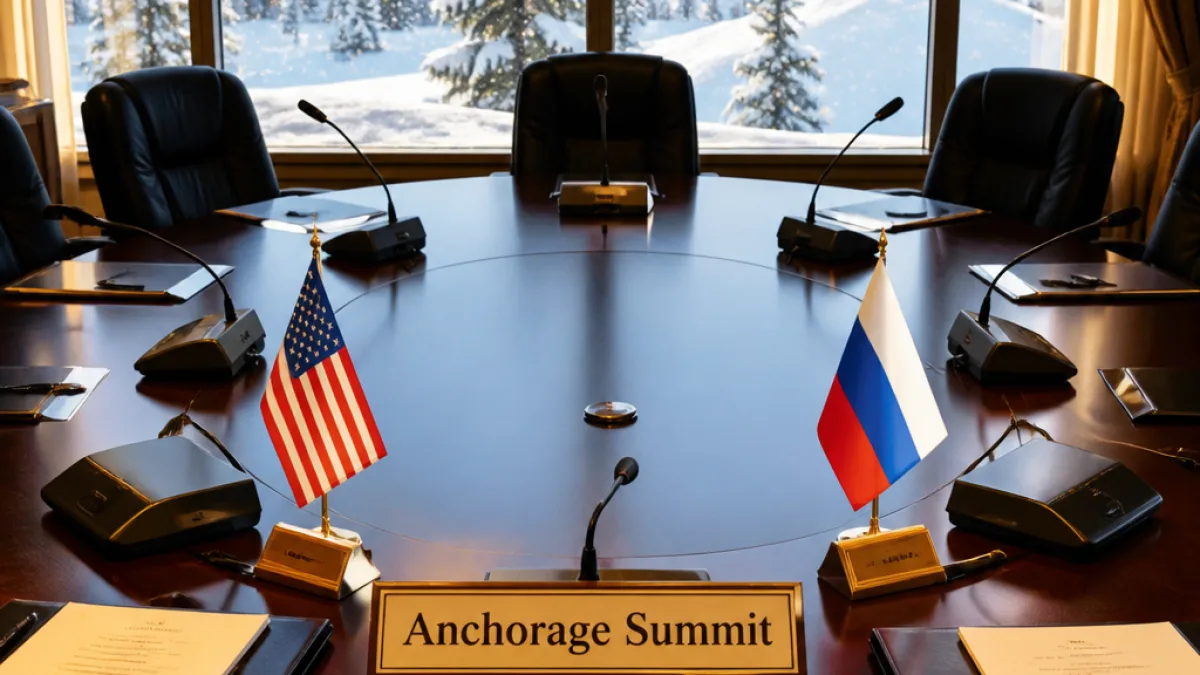
Lavrov’s account reopens debate over Anchorage meeting
Russian Foreign Minister Sergey Lavrov has restated a version of events that places agreements reached in Anchorage in August 2025 at the center of his country’s argument for why the war in Ukraine might not have continued. Speaking at a roundtable on the Russia‑Ukraine war, Lavrov said that had the United States not "backed away" from those Anchorage agreements and if Europe had not delayed them, Russia "would have been living without war for a year."
"If the Americans had not backed away from the Anchorage agreements, if Europe had not dragged those agreements out, we would have already been living without war for a year. That is a clear fact, so draw your own conclusions." – Sergey Lavrov
The comments, carried by Russian state‑linked outlets, revive competing narratives about what was discussed during the high‑profile meeting in Anchorage between then‑U.S. and Russian representatives in August 2025. Lavrov framed his remarks as a defense of Moscow’s posture, reiterating claims that Russia has not refused negotiations and that past negotiation pauses were not initiated by Moscow.
Claims and counterclaims
Lavrov said Moscow remained open to talks in either bilateral or trilateral formats and that Russia has "something to say" if counterparts are willing to resume dialogue. He also repeated long‑standing Kremlin demands cited in state reporting: security guarantees to prevent NATO expansion to Russia’s borders and protections for Russian and Russian‑speaking populations.
At the same time, Lavrov stated that Russia would not pause military actions in Ukraine for the duration of any talks. His account portrays Russia as ready for negotiations while maintaining that its strategic goals and security demands remain unchanged since the onset of the full‑scale invasion.
What this means for Anchorage and public record
The Anchorage meeting has become a focal point for competing international narratives. Observers tracking diplomatic channels say the differing accounts underline how the same event can be described in fundamentally different ways by the participants and their governments.
- Timing: Lavrov tied the alleged Anchorage agreements to the calendar year‑long continuation of war.
- Negotiation stance: He reiterated that Moscow claims not to have refused talks and is amenable to both bilateral and trilateral formats.
- Operational stance: Despite the stated readiness to negotiate, Lavrov said Russia would not suspend military operations while discussions continue.
The resurfacing of this account will likely prompt further scrutiny of what was actually agreed in Anchorage, who authorized any understandings, and how those understandings were communicated among the parties involved. Anchorage served as the venue for the August 2025 meeting referenced by Lavrov, and that fact repeatedly ties the city into an international debate over diplomacy and wartime decisions.
Statements and sources cited
Lavrov’s remarks were reported by outlets including TASS, RIA Novosti and RBC and were summarized by international outlets. The coverage quotes Lavrov asserting that negotiations were halted "not on our initiative" and claiming consistency in Moscow’s objectives since the start of the full‑scale invasion.
| Item | Lavrov’s Claim |
|---|---|
| Anchorage agreements | U.S. backed away; Europe delayed implementation |
| Negotiations | Russia ready; never refused talks |
| Military posture | No suspension of operations during talks |
Descriptions in Russian state media frame the Anchorage meeting’s outcomes as pivotal; other governments and independent analysts have offered differing reconstructions of the same events. Those discrepancies have created an evidentiary gap that observers say makes it difficult for the public and policymakers to assess the exact nature and enforceability of any understandings said to have been reached.
Local context and possible impacts
For Anchorage, a city that hosted a summit described in competing accounts, the renewed attention highlights how local venues can be thrust into global headlines and diplomatic contestation. The debate over what was agreed in Anchorage feeds broader international discourse on accountability, transparency and the mechanics of diplomacy during conflict.
How policymakers in Washington, European capitals and Moscow respond to Lavrov’s restated account could affect future diplomatic engagement and the historical record of the Anchorage meeting. For Anchorage residents, the episode underscores how events held in the city can have reverberations far beyond Alaska.
Further reporting will be needed to reconcile divergent accounts and to document any official records or corroborations of the alleged Anchorage agreements referenced by Lavrov.

















