
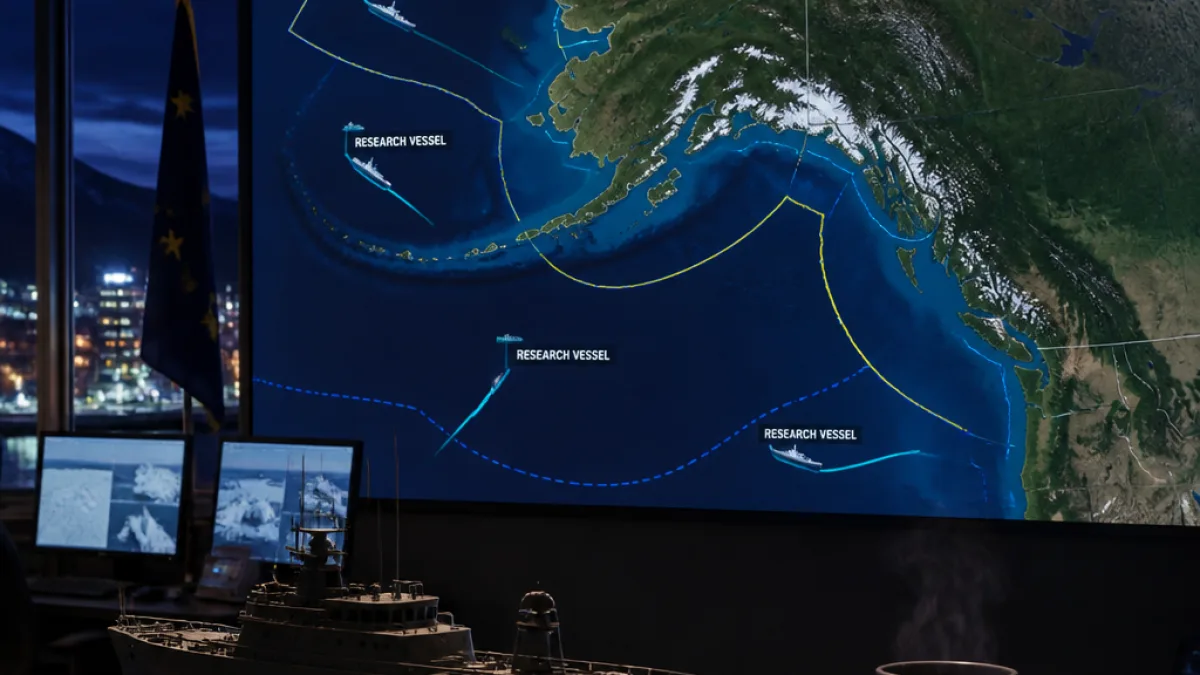
WASHINGTON — The U.S. Coast Guard is monitoring Chinese research vessel activity near Alaska closely after multiple ships conducted operations in maritime zones off the state in 2026, the service’s Arctic District commander told Reuters on Monday.
Increased activity in U.S. Arctic waters
Rear Adm. Bob Little, who commands the Coast Guard’s Arctic District, said four Chinese research vessels have worked offshore in the U.S. Arctic so far this year — nearly matching the total for all of 2025. Their movements reached from the Aleutian Islands and the Bering Strait to areas as far north as the North Pole, Little said during a trip to Oslo where he spoke on Arctic security.
Although the vessels remained in international waters, Little emphasized the concern when operations occur “in and around U.S. sovereign space,” including the exclusive economic zone and the nation’s extended continental shelf.
"Where I have responsibility, interest and concern is when they are operating in and around U.S. sovereign space,"
The ships did not notify the United States in advance through diplomatic channels, the customary practice for research missions, Little said. When queried, the Chinese crews typically described their work as being conducted in international waters or as scientific research.
Two main concerns: resources and security
Little laid out two core worries. One is that scientific activities could be tied to preparatory work for mineral exploitation of the seabed in areas that the U.S. considers its own. The second is the potential for routine research operations to collect information that could yield a military advantage or otherwise pose a security risk.
"Those are the types of activities that we see that we're watching very closely," Little said, reflecting both operational and strategic unease about persistent foreign presence near U.S. maritime boundaries.
Context and regional implications
China has expanded its Arctic presence in recent years and labels itself a "near-Arctic state," promoting a so-called "Polar Silk Road" and undertaking scientific missions in polar waters. Some of these missions are carried out jointly with Russia; others are independent. The trend has prompted coordinated attention from Arctic nations and allied partners, who are increasingly discussing how to respond to research and survey activity that may have dual-use implications.
Little said that during his visit to Norway he and international colleagues compared notes on how their countries are addressing similar operations by Russian research ships in the Barents Sea and elsewhere.
Numbers at a glance
| Year | Reported Chinese research vessels near U.S. Arctic |
|---|---|
| 2025 | 5 |
| 2026 (to date) | 4 |
The Arctic District’s area of operations covers a vast swath of ocean and coastline — an operational footprint roughly comparable in size to Europe — and includes critical chokepoints such as the Aleutians and the Bering Strait.
What this means for Alaska
For Alaska, the activity highlights enduring tensions over maritime sovereignty, resource access and military posture in the high north. Local authorities and federally managed agencies monitor vessel traffic for safety, environmental protection and compliance with U.S. regulations, but the presence of foreign research missions raises additional diplomatic and security questions.
- Maritime surveillance: U.S. agencies are stepping up observation and inquiries when vessels operate near or over areas the U.S. claims.
- Diplomatic channels: Officials expect formal notification for research in or near U.S. zones; that did not occur in these instances.
- Potential follow-up: The Coast Guard and other federal partners may increase patrols and intelligence collection in response.
Little did not specify vessel names, research institutions or detailed activities aboard the Chinese ships. Nor did he describe any direct, immediate incident of hostile behavior. His comments reflect a cautious posture: acknowledging scientific collaboration and research but insisting on vigilance when those missions approach U.S. maritime claims.
As the Arctic becomes more navigable and strategically contested, officials say they expect continued attention from foreign actors and corresponding monitoring by U.S. services to ensure that operations do not infringe on sovereignty or threaten national security.
Local Alaskans, indigenous communities and maritime industries watch closely: changes in Arctic access and activity can have consequences for fisheries, shipping routes and coastal safety, making transparency and clear rules of engagement all the more important.


















