
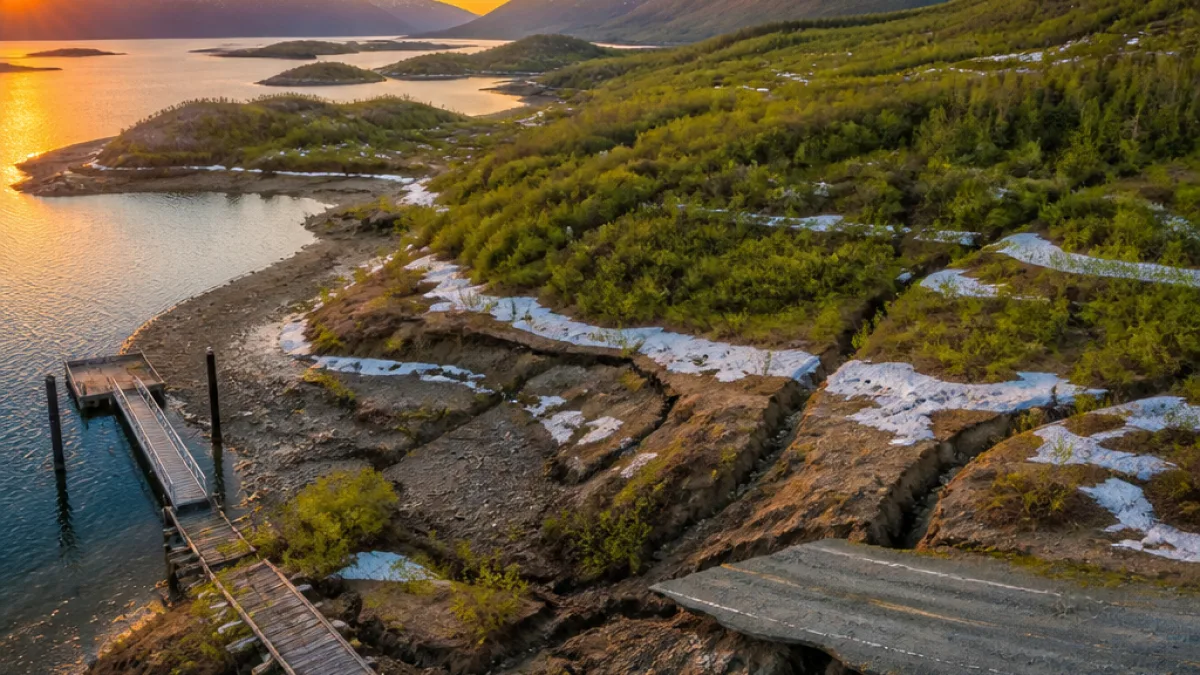
Alaska is experiencing a rapidly changing climate that experts say is part of a larger Arctic transformation documented in the American Meteorological Society’s State of the Climate in 2025. The report, which incorporated contributions from several Alaska researchers, finds the region warming at a rate far above the global average and describes multiple, interconnected changes in air and ocean temperatures, precipitation and vegetation patterns.
Arctic warming outpaces the rest of the planet
The report’s analysis of the satellite-era period from 1979 to 2025 shows the Arctic’s annual surface air temperature has increased at about three times the rate observed for the rest of the globe. That accelerated warming is driven by human emissions of greenhouse gases and amplified in the Arctic by regional feedbacks, the report says.
“The value of the Arctic Report Card is that it helps to put what we’re seeing here in Alaska in the broader context,” said Rick Thoman, a climate specialist at the University of Alaska Fairbanks Alaska Center for Climate Assessment and Preparedness. “The Arctic is 20 times as big as Alaska, so these kinds of reports help to put our experience in that pan-Arctic view. In Alaska, our little piece of the Arctic was cold this winter, but on the Arctic scale, warmth dominated.”
The statewide effects do not occur uniformly: some Alaskans experienced a colder winter locally even as the broader pan-Arctic picture showed strong warming. Still, the report places the state’s recent conditions within a larger trend of regional warming and amplified climate impacts.
Key findings that matter to Alaskans
- Second-highest recorded ocean and air temperatures across the Arctic in 2025 since 1900.
- Precipitation trends are increasing across the Arctic; 2025 recorded the third-highest overall precipitation on record, with record-setting spring rain and snow in some areas.
- Vegetation is shifting: shrubs and trees are expanding northward into areas historically dominated by tundra; 2025 ranked as the third-greenest year since 2000.
Those changes are not merely statistical. Warmer temperatures and more rain or snow alter permafrost stability, influence wildfire risk, change freshwater and ocean ecosystems, and affect subsistence resources that many Alaska Native and rural communities rely upon.
What this means for ecosystems and communities
Increased surface warmth in autumn and winter, noted by the report, can hasten permafrost thaw and complicate travel and infrastructure maintenance in regions built on frozen ground. As vegetation moves north and tundra gives way to shrubs and trees, habitat for caribou and other tundra-adapted species can be altered, with cascading effects on hunting, traditional practices and wildlife management.
Coastal communities also face combined threats from warming seas and changing weather patterns. Higher ocean temperatures affect marine species distribution and can change the timing and availability of fish and marine mammals. Meanwhile, more frequent or intense precipitation events can worsen flooding and erosion in vulnerable areas.
How scientists view the drivers
The report attributes the Arctic’s rapid warming to global emissions of heat-trapping gases coupled with Arctic-specific amplification mechanisms. Those include reduced summer sea ice, alterations in snow cover and shifts in atmospheric circulation that can reinforce warming locally. Though local year-to-year variability still occurs, the long-term signal points to sustained warming and ecological change.
| Indicator | 2025 Ranking / Note |
|---|---|
| Ocean and air temperatures | Second highest since 1900 |
| Precipitation | Third highest overall; spring rain/snow record highs |
| Vegetation greenness | Third greenest year since 2000; northward shrub/tree expansion |
Alaska researchers’ participation in the report provides state-specific context, but the document’s scope is pan-Arctic. That broader vantage helps place localized cold spells or anomalous seasons — like portions of Alaska’s winter that were colder than average — within a region that overall trended warmer.
Practical considerations for policymakers and residents
Officials and local planners rely on this kind of synthesis to make decisions about infrastructure investments, emergency preparedness and natural resource management. For communities built on permafrost, adapting building codes and prioritizing monitoring can reduce risks from thaw-related damage. Fisheries managers and subsistence stakeholders may need to adjust timing and expectations as marine and terrestrial species respond to warming and altered precipitation patterns.
For residents, the report underscores the interconnected nature of climate impacts: warming doesn’t only mean higher summer temperatures but also changing seasons, shifts in vegetation and altered precipitation that can affect livelihoods, travel and cultural practices.
The American Meteorological Society’s State of the Climate in 2025 adds to a consistent record: the Arctic is heating faster than most of the world, and the consequences are unfolding across Alaska’s landscapes and communities.
Reporting contributed from the Juneau Empire staff and Alaska researchers cited in the report.
















