
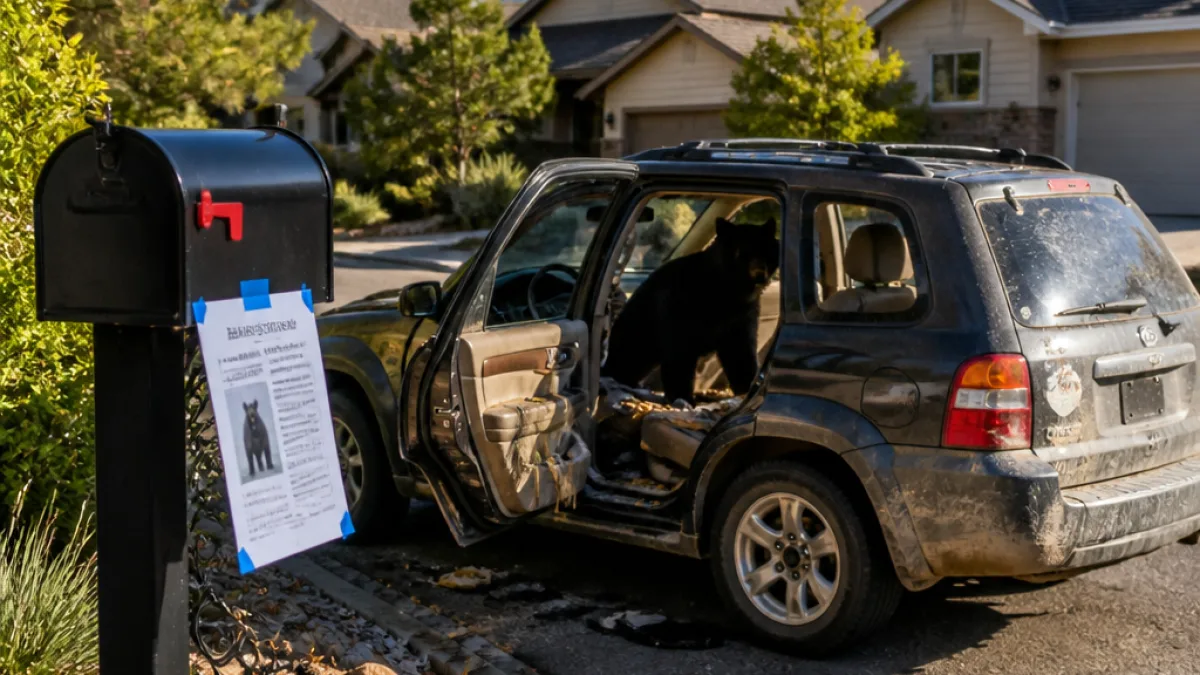
A black bear that climbed into an unlocked vehicle in central Colorado Springs died after becoming trapped inside and remaining undiscovered for days, Colorado Parks and Wildlife said. The animal, estimated to weigh about 250 pounds, destroyed the interior of the car and was found dead when the vehicle was finally checked.
Authorities warn residents to secure vehicles and remove attractants
Colorado Parks and Wildlife (CPW) used the incident to reiterate safety guidance for residents living near bear habitat or in urban areas where bears have been reported. Officials urged drivers to take simple steps to reduce the likelihood of encounters, including locking doors, closing windows and removing food and trash from vehicles.
"Keep their car doors locked, remove all trash and food from vehicles, and keep their windows rolled up."
The agency also published a Living with Bears section on its website to help Coloradans understand bear behavior and how to coexist safely. The guidance comes as CPW has recorded more than 6,000 reports of bear sightings so far this year — roughly double the number logged during the same period last year.
Why bears are coming into communities
Wildlife officials attribute the uptick in sightings — and in some cases, property damage — largely to environmental conditions. Recent drought across parts of Colorado has reduced natural food sources in the mountains and pushed some bears down into lower elevations and communities in search of calories.
That pattern increases the risk of people and pets encountering bears and can lead to property damage if animals find food or attractants in vehicles, trash containers or unsecured structures.
- Bear: black bear, ~250 pounds
- Incident: entered unlocked car, destroyed interior, became trapped, died; undiscovered for days
- CPW reports: more than 6,000 bear sightings this year — about double last year’s count for the same period
- Public advice: lock car doors, remove food/trash, keep windows closed
Local consequences and next steps
For Colorado Springs residents, the incident is a reminder that even vehicles parked in neighborhoods can be a hazard for wildlife. The death of the bear also underscores the potential for nonfatal encounters to become lethal when animals become trapped or injured while trying to access human-related attractants.
CPW’s online resources are aimed at preventing future incidents by educating residents about simple deterrents and secure storage of food and trash. The agency did not release additional details about the exact location within central Colorado Springs where the vehicle was found, nor details about whether the car’s owner was in the area when the bear entered the vehicle.
| Metric | Figure |
|---|---|
| Bear weight (approx.) | 250 lbs |
| CPW bear reports this year | 6,000+ |
| Increase vs. same period last year | ~2x |
Officials emphasize residents can play an immediate role in reducing the chances of wildlife coming into neighborhoods by removing things that attract bears. In addition to securing vehicles, wildlife officers advise:
- Keeping outdoor garbage in bear-resistant containers or inside garages until pickup;
- Bringing bird feeders in at night during bear season or removing them entirely if bears are active nearby;
- Managing compost and pet food so they are not accessible to wildlife.
As drought conditions persist in parts of the state, wildlife managers expect human-bear interactions to remain a concern. CPW’s publicly available resources and tips are designed to reduce conflict and safeguard both residents and animals as they navigate an environment where food scarcity is altering animal behavior.















