
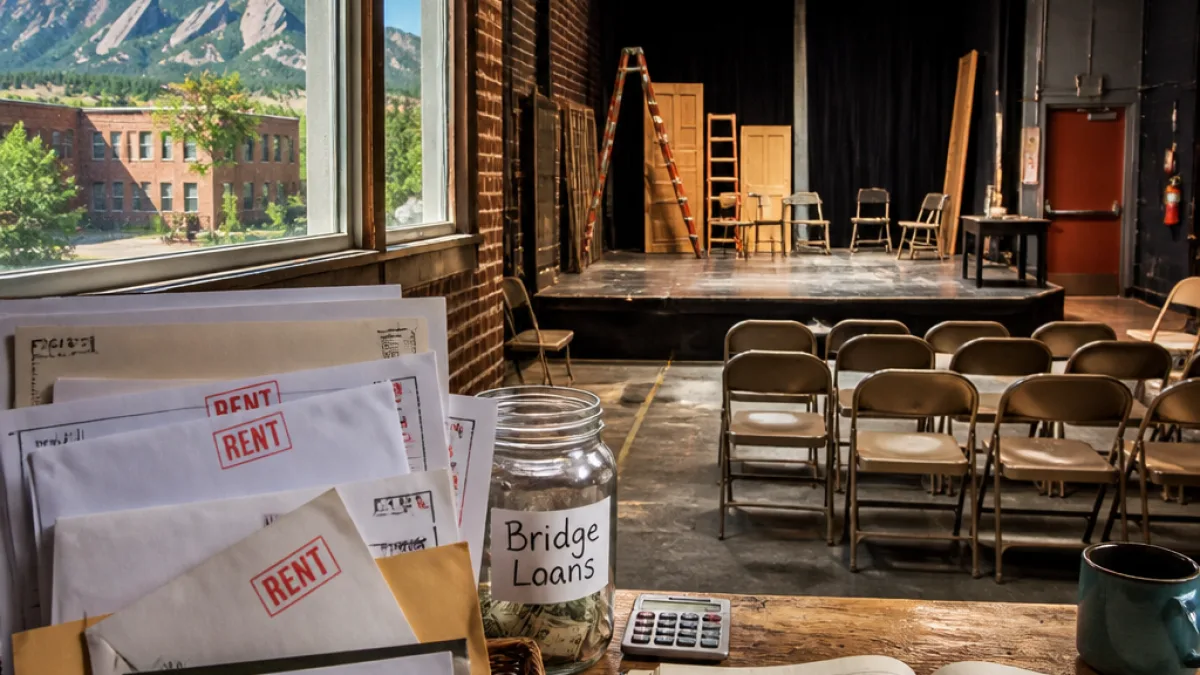
BOULDER — A local arts operator says she paid more than $1.1 million in commercial rent over the last five years to keep music lessons, theater rehearsals and youth performances running — a sum that underscores pressure on small cultural businesses attempting to survive in a city with rising lease costs.
In an essay published this week, the owner described sold-out shows, standing ovations and long waitlists for programs while also laying out the financial strain behind the scenes: late rent checks, monthly bridge loans covering 40%–50% during slow periods and the constant juggling of bills.
"Not for a shopping mall."
What the numbers mean for a small arts provider
The essay’s central figure — $1.1 million over five years — illustrates how recurring commercial rent can outpace the narrow margins of many arts businesses. Although performances and enrollments may indicate a thriving operation, the owner said profits often vanish once fixed costs are paid.
Small arts organizations and privately run instruction centers frequently face seasonal revenue swings: summer enrollment, holiday performances and occasional touring events punctuate quieter months. According to the owner’s account, those quieter stretches required sizeable short-term loans to cover payroll, utilities and rent.
- Consistent revenue does not always equal sustainable profit.
- Bridge loans of 40%–50% were used during slow months, adding interest and repayment pressure.
- Even sold-out shows may be necessary merely to reduce an existing shortfall.
Local context and community impact
Boulder’s commercial corridor and cultural life depend on small venues and arts educators who use rented space for classes, rehearsals and performances. When such operators struggle, the effects ripple outward: fewer affordable arts opportunities for children, the potential loss of local jobs and the disappearance of long-established neighborhood institutions.
The essay recounts the disappearance of a longtime restaurant on Pearl Street replaced by a bank, a scene that resonated with the author and with many residents who watch familiar businesses yield to more profitable uses of pricey storefronts. That anecdote points to a broader dynamic: commercial rents that reflect high demand and limited supply often favor national chains and high-revenue retail uses over smaller, lower-margin operators.
Practical perspective for other small businesses
For entrepreneurs operating in Boulder and similar Colorado cities, the account offers practical warnings and considerations. Lease negotiations, contingency reserves and diversified revenue streams can help, but they may not fully offset the structural pressure of high rents. The essay’s author described dividing bills into those that could be paid immediately and those that would have to wait — a reality that many local small-business owners say they know well.
| Metric | Value |
|---|---|
| Total rent (5 years) | $1,100,000 |
| Average per year | $220,000 |
| Average per month | $18,333 |
Those averages are derived from the total cited in the essay and provide context for business owners budgeting for long-term leases in Boulder’s commercial districts.
Policy and community responses
City policies, zoning decisions and available subsidized space influence where artists and small operators can locate and whether they can remain viable. Local officials and advocacy groups have for years discussed incentives and programs to preserve affordable commercial spaces for arts and small businesses, but the essay suggests more immediate and concrete supports may be needed to keep those operations afloat.
Residents and customers who value neighborhood culture should understand that visible success — sold-out performances or bustling classes — does not necessarily mean financial stability. The story in the essay is a reminder that cultural vitality depends not just on audience support but on structural economic conditions.
As Boulder continues to evolve, the fate of small arts organizations that rent space rather than own it will remain a bellwether for the city’s broader economic and cultural health.
— Hannah Sorensen, State Correspondent
















