
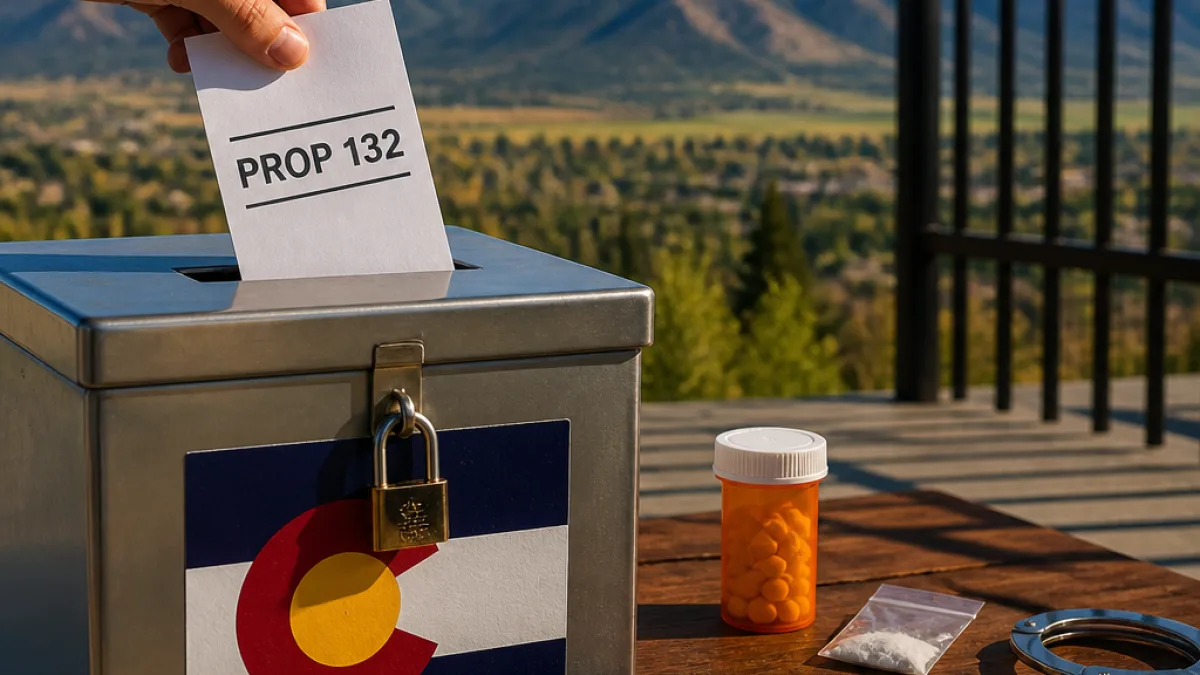
Colorado voters will decide in November whether possession of any amount of fentanyl should be treated as a felony, marking a significant potential shift in how the state handles a drug that officials say is killing hundreds of people statewide.
What Prop 132 would change
The measure, known as Proposition 132, was placed on the ballot by Advance Colorado, a conservative-leaning policy group that sponsored the language. Backers say the initiative tightens penalties for fentanyl possession and distribution and eliminates many current routes for reducing sentences.
- Possession: Any amount of fentanyl would be a felony offense.
- Distribution: The proposal would require a mandatory minimum sentence of eight years for anyone convicted of distributing any quantity of fentanyl.
- Treatment provision: Someone convicted of possessing less than a gram would have to complete court-ordered treatment to potentially lower charges in certain cases.
- Sentence reductions: The measure would generally eliminate possibilities for reducing penalties in most cases.
Kristi Brown, vice president at Advance Colorado, described the proposal as aiming to "balance accountability with compassion," and said the measure targets dealers while reflecting the concerns of families affected by overdoses.
"There's just a big coalition behind this in Colorado, specifically of families who've been affected," Brown said.
Opposition and concerns
The Colorado Criminal Justice Reform Coalition and other critics argue the ballot measure will do more harm than good. They contend it would expand incarceration without improving access to addiction treatment or reducing deaths.
Kyle Giddings, deputy director at the coalition, called the proposal "a private prison cash grab" and warned that locking people up will not solve addiction.
"Incarceration does not fix addiction," Giddings said.
Opponents also point to research that favors harm-reduction strategies — such as needle exchanges and medication-assisted treatment — as more effective ways to save lives than increased criminal penalties. They note the measure does not directly allocate funding for treatment programs.
Budget and system impacts
A nonpartisan legislative staff analysis cited by proponents and critics estimates the fiscal impact would be modest in the first year but grow quickly as more people enter the criminal justice system under tougher penalties.
| Year | Estimated additional state spending |
|---|---|
| First year | $900,000 |
| Fifth year | $68.2 million |
The analysis projects increased costs tied to courts, public defenders and prisons. Advocates for the measure say the expense is justified to curb distribution and hold traffickers accountable; critics say it will shift money away from treatment and harm-reduction services that could reduce overdose deaths.
Broader context and stakes
Fentanyl has driven a surge in overdose deaths nationwide and in Colorado. Supporters of stricter penalties say harsher criminal consequences will deter dealers and reduce the lethal supply. Opponents counter that criminalization historically has not reduced addiction and may discourage people from seeking lifesaving care.
With the November ballot approaching, the debate over Proposition 132 pits calls for tougher enforcement against advocates for public-health approaches. The measure has mobilized both statewide anti-drug groups and criminal-justice reform organizations, setting up a high-stakes public referendum on how Colorado responds to a persistent and deadly drug problem.
Voters will weigh the balance between increased penalties and potential budget and social consequences when they cast ballots this fall.

















