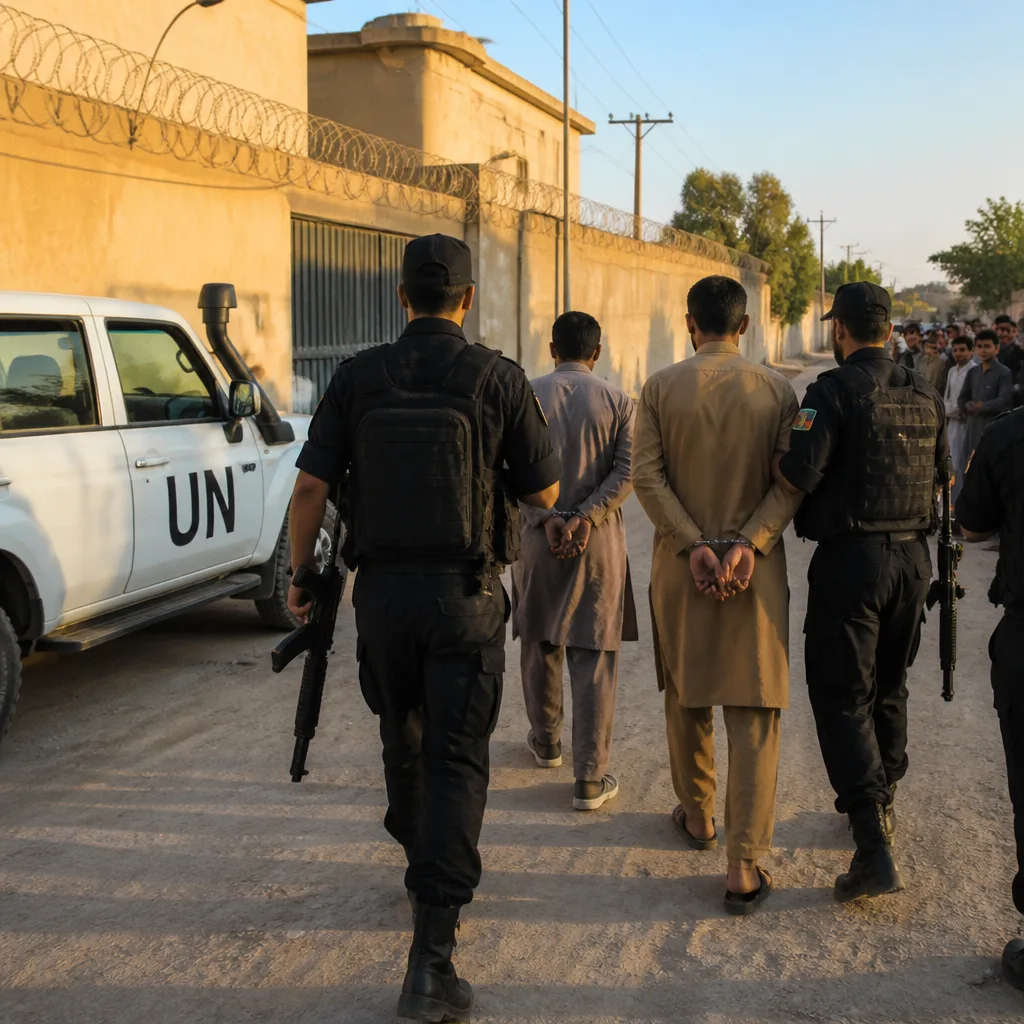
The United Nations said on Wednesday that two Afghan nationals working for the U.N. political mission in Afghanistan were detained over the weekend by the Taliban's General Directorate of Intelligence in the western city of Herat. The mission has not been informed of any charges and has been unable to visit the detained staffers, the U.N. deputy spokesman reported.
U.N. privileges and access under strain
The detentions prompted the mission to call on Taliban authorities to ensure compliance with the privileges and immunities afforded to U.N. personnel. The U.N. mission in Kabul, which has a mandate from the U.N. Security Council, is responsible for supporting humanitarian relief, promoting human rights, advancing equality for women and girls and encouraging inclusive governance and economic stability.
U.N. deputy spokesman Farhan Haq told U.N. reporters that the two men were detained on Sunday and that the mission has not been told the reason for their detention. The lack of transparency has raised immediate concerns about the safety of U.N. staff and the organisation’s capacity to operate freely across Afghanistan.
“The mission has not been informed of the charges against the two men or been able to visit them,” the U.N. deputy spokesman said.
Humanitarian and regional consequences
Humanitarian groups and rights monitors warned that the incident could hamper delivery of lifesaving assistance in a country facing a deepening humanitarian crisis. Afghanistan remains one of the poorest nations in Asia, with millions dependent on international aid. The detention of U.N. staff risks creating a chilling effect on humanitarian operations and undermines efforts to engage with authorities to protect vulnerable populations.
Fereshta Abbasi, an Afghanistan researcher at Human Rights Watch, said the detentions “seriously threaten the U.N.’s work throughout Afghanistan and its ability to deliver lifesaving aid.” She urged Taliban authorities to release those held and to allow aid agencies to operate without intimidation or interference.
- Detained: Two Afghan members of the U.N. political mission.
- Location: Herat, western Afghanistan.
- Detaining agency: Taliban's General Directorate of Intelligence.
- U.N. response: Mission seeks compliance with U.N. privileges and immunities and access to the detained staffers.
Context: governance, rights and cross-border tensions
The detentions come amid continuing restrictions imposed by Taliban authorities since they returned to power in August 2021. The administration has curbed girls' and women's access to education and employment in many sectors and imposed other measures that have effectively excluded women from public life. Those policies have repeatedly drawn criticism from the U.N. and international rights bodies.
Separately, Taliban forces have also been involved in periodic cross-border tensions with Pakistan. Clashes escalated markedly in February when Afghan forces launched a raid into Pakistan following Pakistani airstrikes inside Afghanistan, a confrontation Islamabad later described as putting the countries in an "open war" posture. Such security dynamics add complications to the U.N.’s ability to manage humanitarian and political engagement across the country.
| Issue | Implication |
|---|---|
| Detention of U.N. staff | Disruption of U.N. operations, reduced humanitarian access, reputational risk |
| Restrictions on women | Hinders delivery of inclusive aid and rights monitoring |
| Cross-border clashes with Pakistan | Heightened regional security risks and operational constraints |
India and regional angle
The developments bear relevance for regional policymakers, including in India, which has engaged with Afghanistan on humanitarian and developmental grounds and hosts a significant Afghan diaspora and refugee contingents in the neighbourhood. Any erosion of U.N. access and capacity to coordinate aid could complicate regional efforts to stabilise humanitarian flows and monitor rights protections, particularly for women and children.
Diplomatic sources and rights analysts say ensuring predictable, safe operations for the U.N. and other aid agencies is essential to prevent further deterioration of humanitarian conditions and to reduce the risk of cross-border spillovers that could affect neighbouring countries.
The U.N. mission's appeal for access and the immediate call for transparency underline international concerns about accountability and the safety of aid workers. Until the detainees are produced before an independent authority or the mission is granted access, the incident will remain a focal point for debate over how the international community engages with the Taliban-led administration.