
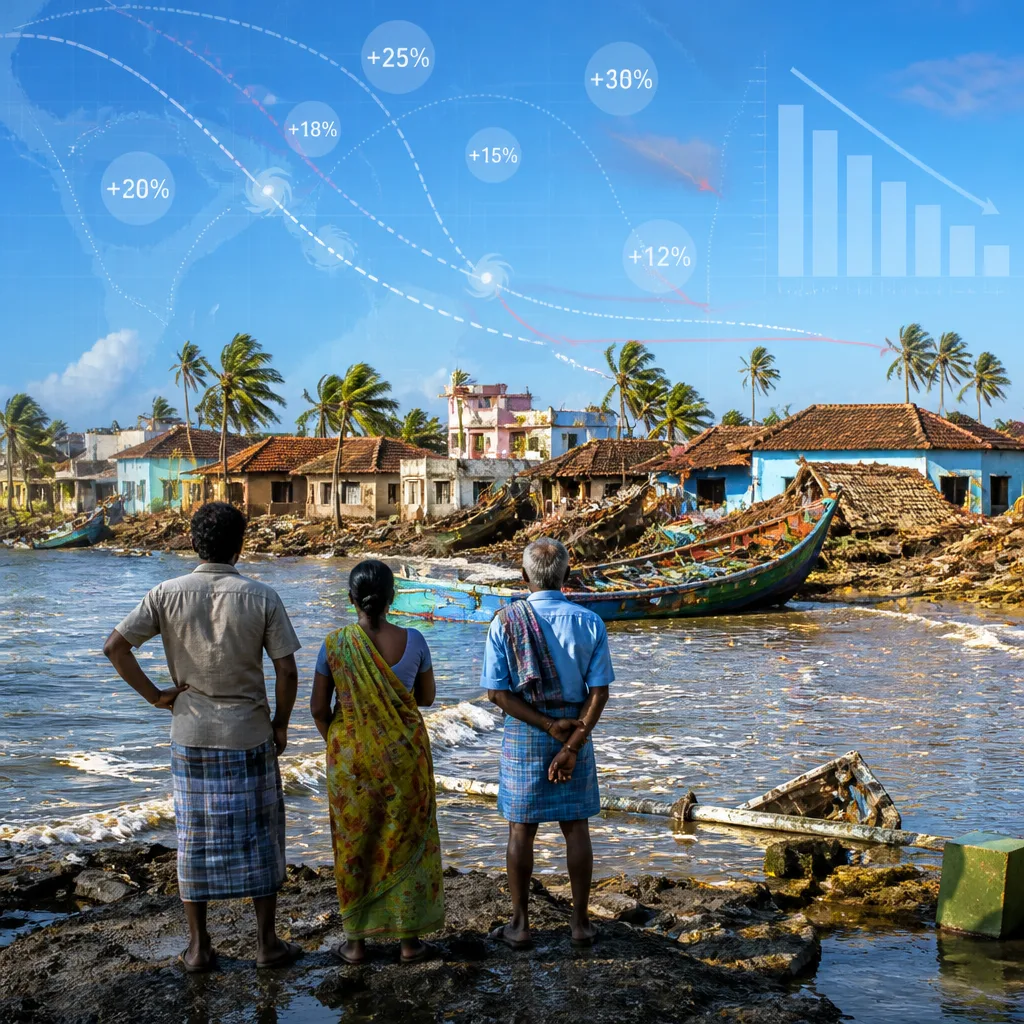
Super Typhoon Ragasa’s passage in September 2025 and a string of storms a year earlier have drawn renewed attention to how warming oceans and the changing climate are altering tropical cyclone behaviour across Asia, and to the challenge of funding adaptation measures in vulnerable coastal communities.
Attribution science links storms to human-driven warming
Research cited by international groups found Ragasa carried roughly 10% more rainfall and about 4% stronger winds than a comparable cyclone would have a few decades ago. Analyses attributed the higher sea-surface temperatures that fed the storm to human-driven warming, estimating those conditions were made between 10 and 40 times more likely, according to Climate Central and the research network ClimaMeter.
A separate assessment of an exceptional episode in the Philippines a year earlier — when the country endured six tropical storms in less than a month, including three major typhoons — concluded the clustering was unprecedented. World Weather Attribution linked this pattern to a climate in which the Philippines’ waters can now generate storms about seven times more easily than before widespread industrialisation.
“Slowly, people are becoming more aware of climate change impacts,” said Architesh Panda, a research fellow with the Inclusive Climate Finance for Vulnerable Communities in the Asia‑Pacific project at the Stockholm Environment Institute.
Images of damaged fishing villages in the Bicol region, stranded flights across the Pearl River Delta and flooded districts in Manila have been widely shared across Asian media, signalling to policymakers and the public that weather shocks are increasingly interrupting economic activity and livelihoods.
From mitigation battles to adaptation finance
The reporting also recalled the diplomatic contest at COP26 five years earlier, when language in the Glasgow Climate Pact was altered from a commitment to “phase out” coal to a softer pledge to “phase down”. India and China, as the world’s largest coal consumers at the time, were pivotal in that change. Bhupender Yadav, India’s chief negotiator then, defended the revision by emphasising development and poverty‑eradication priorities.
The shift in emphasis at the global negotiations has been followed by a quieter but consequential struggle over funding for adaptation. Activists and researchers say the debate over how to support measures that reduce vulnerability in countries and communities most exposed to extreme weather is now central — and urgent — because climate impacts are already intensifying.
- Immediate impacts documented: higher rainfall and winds in Ragasa; increased likelihood of storm formation in the Philippines.
- Human consequences: at least 25 deaths reported in the Ragasa event across northern Luzon, Taiwan, Hong Kong and Guangdong province.
- Policy dimension: adaptation finance remains contested even as harms mount.
Experts working on inclusive climate finance argue that many locally effective adaptation options remain “unbankable” — that is, they struggle to attract commercial investment because benefits are diffuse, long‑term or difficult to monetise. Making such solutions financeable requires new instruments, public commitments and stronger risk‑sharing arrangements between international donors, multilateral banks and national governments.
| Finding | Reported magnitude |
|---|---|
| Extra rainfall in Ragasa | ~10% |
| Stronger winds in Ragasa | ~4% |
| Sea surface warmth likelihood | 10–40 times more likely |
| Increased storm formation (Philippines) | ~7 times easier |
For India, which faces its own coastal vulnerabilities and monsoon variability, the findings underline both the need to accelerate adaptation planning and the difficulty of financing it at scale. Coastal protection, resilient infrastructure, early‑warning systems and livelihood diversification are among the measures that require sustained investment and institutional coordination.
As scientific attribution strengthens the causal link between human‑driven warming and intensified storms, the policy conversation is shifting from debating future emissions pathways to resolving practical questions about who pays for adaptation, how funds are delivered, and how to ensure the most exposed communities receive effective support.
Without clearer mechanisms to render locally appropriate adaptation projects bankable, analysts warn that damages and losses will continue to rise even as negotiating language and commitments evolve at international fora.












