
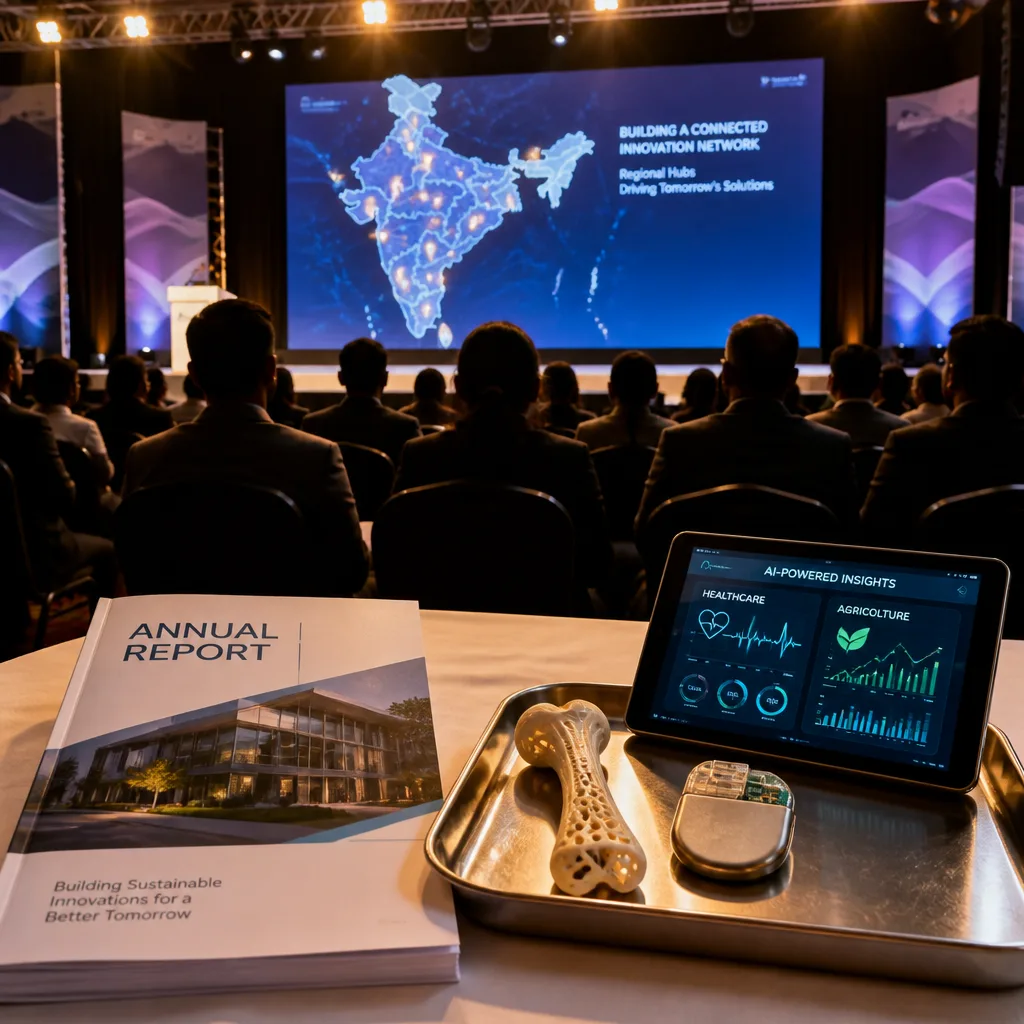
The Office of the Principal Scientific Adviser to the Government of India on 13 August published the Science and Technology Clusters Annual Report 2025–26, signalling a sharpened national effort to move research from laboratories into real-world use. The launch was chaired by Principal Scientific Adviser Prof. Ajay Kumar Sood and brought together leaders from eight clusters operating across major innovation centres.
Regional hubs acting as accelerators
The report highlights that Science and Technology Clusters — situated in innovation ecosystems such as Bengaluru, Delhi, Hyderabad, Pune, Visakhapatnam and Bhubaneswar — are maturing beyond research nodes into coordinated platforms that connect researchers, industry, startups and government resources.
"National Technology Accelerators"
Describing the clusters as "National Technology Accelerators", the report emphasises clearer pathways for promising ideas to progress through technology readiness levels to validation and commercialisation, with measurable social and economic benefits.
Projects moving closer to deployment
The annual review lists multiple initiatives now at advanced stages of development or scale-up. These include healthcare-oriented innovations, agriculture and weather intelligence tools, and manufacturing components aimed at import substitution.
- AI-enabled Digital Podiatry Clinics — developed through Bengaluru’s cluster and expanding to other regions such as PI-RAHI.
- AI tools for agriculture and weather intelligence — aimed at improving decision-making for farmers and resilience to climate variability.
- Indigenous pacemaker components — work that could reduce reliance on imported parts for cardiac devices.
- Patient-specific 3D-printed implants — personalised medical devices being prototyped and validated.
- E-Yantram and One Health initiatives — platform and cross-sectoral approaches highlighted for wider impact.
- National platforms such as Kalaanubhav.in and i-Passport, which exemplify how cluster-developed solutions can be adapted for broader use.
The report also underscores the importance of deeper engagement with industry partners so technologies can complete the journey from laboratory validation to market adoption.
Scaling regionally, with measurable milestones
Several cluster projects have begun expanding beyond their origin cities, demonstrating cross-regional scaling. The report notes the Digital Podiatry Clinic’s move from the Bengaluru cluster to PI-RAHI, and the scaling of Kalaanubhav.in from Jodhpur to other locations. Officials emphasise progress should be tracked by concrete metrics: technology readiness levels, real-world validation and commercial traction.
| Cluster focus | Examples |
|---|---|
| Healthcare | Digital podiatry clinics, pacemaker components, 3D-printed implants |
| Agriculture & climate | AI tools for farm decision-support, weather intelligence |
| Manufacturing & platforms | E-Yantram, Kalaanubhav.in, i-Passport |
Prof. Sood, who chaired the launch, urged stronger collaboration between clusters and more intensive industry engagement so that the fruits of research deliver visible social and economic benefits. The report positions the clusters as regional ecosystems that can accelerate technological solutions while retaining the flexibility to adapt local innovations for national use.
For readers interested in the lived impact of these efforts, the initiatives named in the report target everyday needs — from better diabetic foot care through tele-enabled podiatry clinics to more resilient agriculture advisory systems that could help smallholder farmers adapt to shifting weather patterns. The emphasis on indigenous components and 3D-printed implants also points to potential cost efficiencies and supply-chain resilience, which could make medical care more accessible in tier-2 and tier-3 towns.
While the report stops short of prescribing timelines for commercial roll-out of specific innovations, its core message is clear: by knitting laboratories, shared infrastructure and industry together, the S&T Cluster network aims to shorten the route from prototype to practice, ensuring scientific advances translate into tangible benefits across the country.