Scientists from the Zoological Survey of India (ZSI) have recorded the rare solitary Himalayan bee Colletes bhutanicus in the Tawang district of Arunachal Pradesh, the first confirmed report of the species from India. The finding extends the known distribution of the bee beyond previously documented populations in Bhutan and China and draws attention to pollinator diversity in remote eastern Himalayan habitats.
Where and how it was recorded
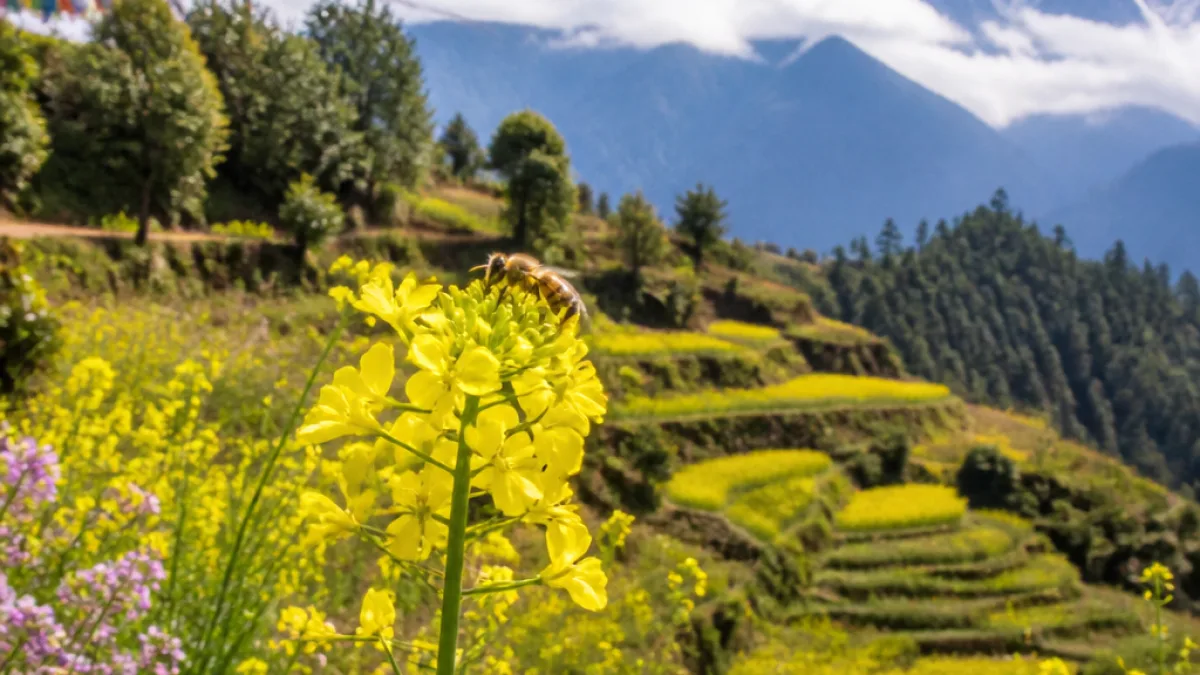
ZSI researchers Dibyajyoti Ghosh, K A Subramanian and Dhriti Banerjee documented the species at elevations between 1,500 and 3,800 metres during a recent survey in the Tawang area. Observations recorded the bee visiting a total of 25 species of flowering plants, a mix of wild flora and cultivated crops.
The bee’s recorded floral associations include several crops commonly grown in mountain landscapes: mustard, buckwheat, coriander, beans, chilli and eggplant. These interactions indicate that C. bhutanicus is not restricted to wild plants and may contribute to the pollination of local agricultural produce.
“Kudos to the researchers for their valuable contribution to biodiversity documentation.” — tweet by MyGov Arunachal Pradesh
Why the discovery matters
Colletes species are solitary — unlike the social honeybee — with individual females nesting and provisioning their own brood cells. Despite their solitary habit, they can be effective pollinators. The first Indian record of C. bhutanicus is significant for several reasons:
- Range extension: Confirms the presence of the species beyond Bhutan and China, adding India to its known distribution.
- Pollination services: Observation on 25 plant species, including crops, suggests a role in local agricultural productivity and ecosystem functioning.
- Conservation and research priorities: Highlights the eastern Himalaya as under-surveyed for pollinators and underscores the need for systematic inventories in remote mountain habitats.
Implications for farmers and biodiversity managers
Because the recorded floral hosts include crops important to hill agriculture, the presence of this solitary bee could have practical value for rural communities that rely on these crops. While social bees like Apis cerana and Apis mellifera are widely recognised pollinators, solitary bees often contribute substantially to fruit set and seed production, especially in diverse montane agro-ecosystems.
For biodiversity managers and local administrations, this finding suggests the following priorities:
- Strengthen pollinator surveys across elevation gradients to map species distributions and seasonal activity.
- Document nesting habitats of solitary bees to protect breeding sites from disturbance.
- Engage with hill farmers on pollinator-friendly practices, such as conserving wildflower patches and reducing indiscriminate pesticide use.
What scientists say and next steps
The ZSI team’s documentation adds to growing evidence that the eastern Himalaya harbours a rich but incompletely known bee fauna. The researchers reported the species’ presence and its floral associations, but further work is needed to establish population status, seasonal dynamics and nesting ecology.
| Detail | Reported information |
|---|---|
| Species | Colletes bhutanicus |
| Survey agency | Zoological Survey of India (ZSI) |
| Researchers | Dibyajyoti Ghosh, K A Subramanian, Dhriti Banerjee |
| Location | Tawang district, Arunachal Pradesh |
| Elevation range | 1,500–3,800 metres |
| Number of flowering plants visited | 25 species (includes mustard, buckwheat, coriander, beans, chilli, eggplant) |
Looking ahead
The ZSI finding reinforces calls from conservationists and pollination biologists for deeper, geographically targeted surveys in mountain regions. Better baseline data will help assess how climate change, land-use change and agrochemical use affect pollinators that underpin both wild ecosystems and local agriculture.
For now, the record of Colletes bhutanicus in Tawang is a timely reminder of the eastern Himalaya’s biological richness and of the gaps that remain in our understanding of pollinator diversity in these high-altitude landscapes.