
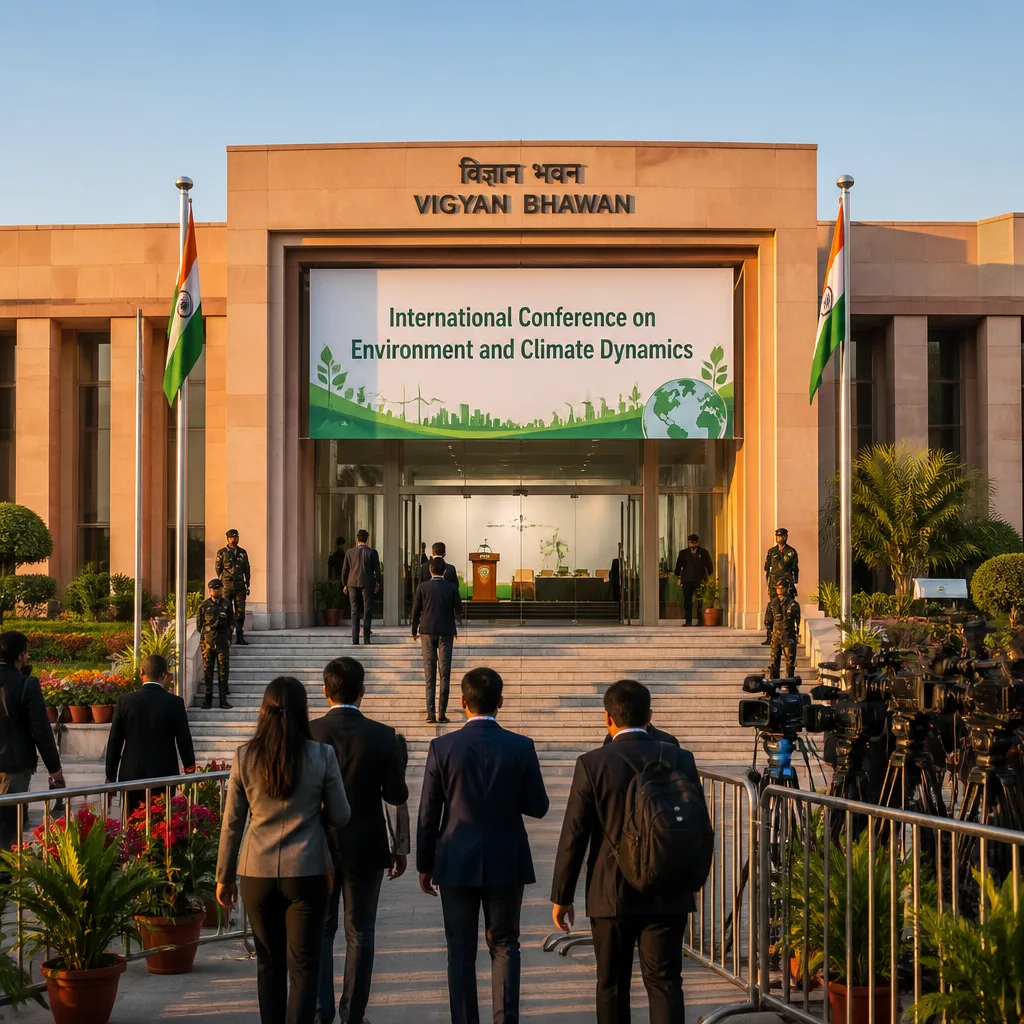
New Delhi: Prime Minister Narendra Modi will inaugurate the International Conference on “The Future of Environment and Climate Dynamics” at around 10 AM on September 19 at Vigyan Bhawan, New Delhi, the Union government said. The two-day event, being organised by the National Green Tribunal (NGT), will run on September 19 and 20 and bring together judicial and administrative stakeholders to discuss environmental governance challenges.
Participants and purpose
The conference will include Judges of the Supreme Court of India and various High Courts, District Court Judges, Secretaries of central Ministries and senior government officials. Representatives of State Judicial Academies, State Legal Services Authorities, State Expert Appraisal Committees (SEACs), State Environment Impact Assessment Authorities (SEIAAs) and State Wetland Authorities will also attend.
In addition to Indian participants, the event will be joined by eminent judges and judicial representatives from 17 countries, providing a platform for exchange of judicial approaches and institutional experiences across jurisdictions. The stated aims include identifying gaps in policy formulation, implementation and enforcement, and exploring mechanisms to strengthen environmental governance and inter-institutional cooperation.
Focus areas and expected deliberations
Organisers say the conference will facilitate dialogue on critical environmental and climate challenges, drawing on legal, administrative and technical perspectives. Sessions are expected to centre on:
- Gaps in policy formulation and statutory frameworks that impede effective environmental protection.
- Implementation and enforcement challenges faced by courts, regulatory bodies and state authorities.
- Institutional cooperation between judiciary, executive agencies and scientific bodies to improve compliance and accountability.
The conference format is intended to encourage comparative discussions of judicial practice and governance mechanisms so that lessons from other jurisdictions can inform Indian approaches to climate and environment litigation, impact assessment, wetland protection and related processes.
Why the gathering matters
The participation of senior judges together with secretaries and regulatory bodies underscores the conference's emphasis on bridging legal remedies and administrative action. Environmental governance in India frequently spans multiple authorities and layers of government; organisers say the conference aims to surface practical approaches to co-ordination, capacity-building and timely enforcement.
Bringing judicial perspectives into conversation with technical regulators such as SEACs and SEIAAs is designed to reduce delay and friction in case handling, and to make enforcement outcomes more predictable for stakeholders while safeguarding environmental standards.
Format and outcomes
While the official release does not list a formal outcome document, the stated objectives include enhanced institutional cooperation and exchange of best practice. Delegates from 17 countries and high-level Indian judicial and administrative figures will share experiences on:
| Area | Participants |
|---|---|
| Judicial perspectives | Supreme Court, High Courts, District Judges, foreign judges |
| Regulatory & technical inputs | SEACs, SEIAAs, State Wetland Authorities |
| Policy & administration | Secretaries of Ministries, senior government officials |
By convening judicial and administrative actors together, the conference seeks to narrow the gap between legal adjudication and policy implementation—a recurring challenge in environmental governance.
The NGT has in recent years sought to position itself not only as an adjudicatory body but also as a convener of cross-disciplinary dialogue on environmental law and governance. The two-day conference is the latest example of that approach, aiming to foster operational cooperation and to draw on comparative judicial experience from other countries.
Organisers say the interaction between judges, regulators and technical committees is intended to advance more coherent, enforceable and implementable approaches to environmental protection—especially in areas such as impact assessment, wetland conservation and pollution control, where administrative capacity and legal clarity are often decisive.












