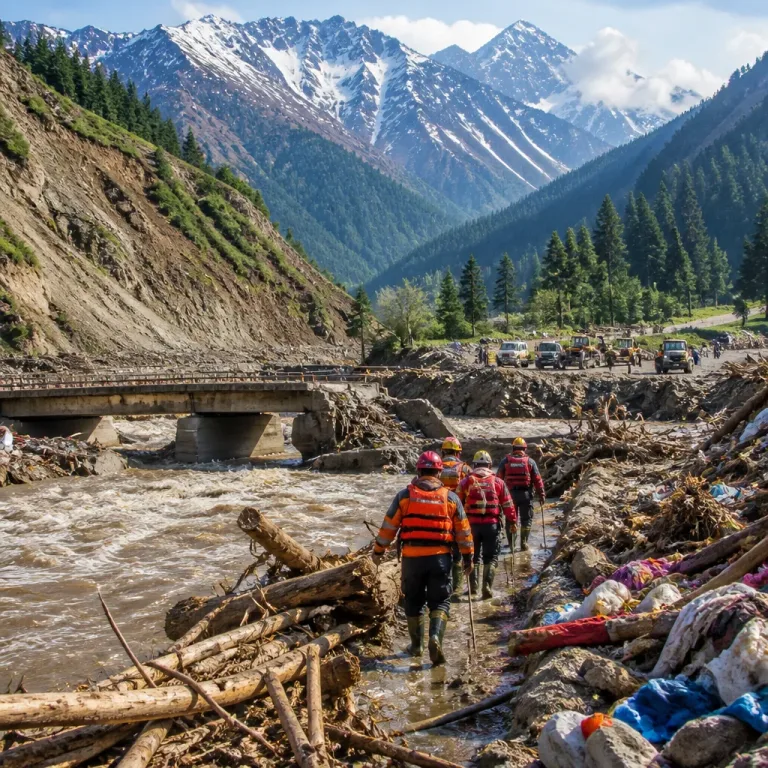
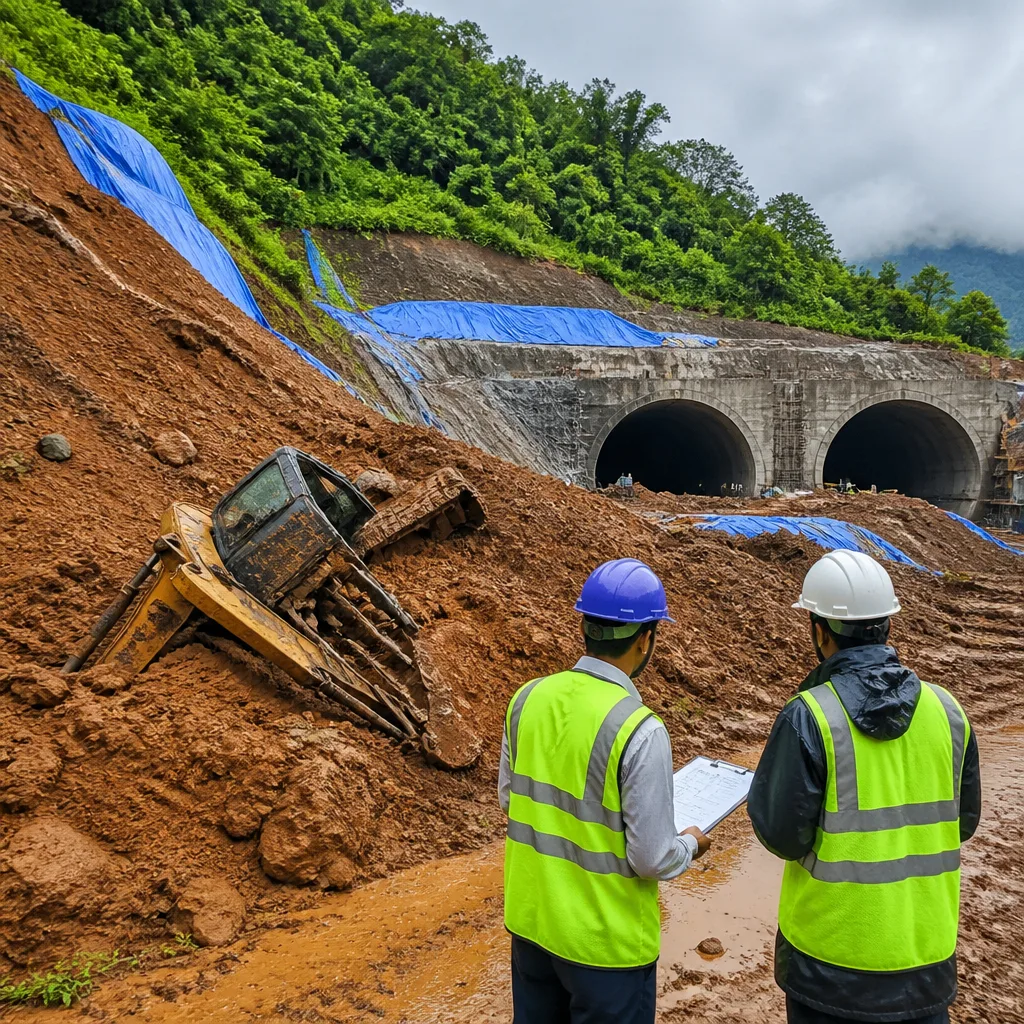
An August landslide at the construction site of the Anakkampoyil–Kalladi–Meppadi twin tunnel project in Wayanad, Kerala, has revived debate on whether India’s Environmental Impact Assessment (EIA) process is equipped for a warming climate. The collapse on July 7 killed at least eight workers and injured ten, and followed an environmental clearance granted for the project in June 2025.
Historic incidents and regulatory context
The site is in the Western Ghats, a region that has seen significant rainfall‑induced disasters in recent years. Two major landslides previously recorded along the same stretch were Puthumala (2019) and the Mundakkai–Chooralmala landslides (July 2024), the latter of which claimed more than 300 lives. After the July 2026 incident, the Kerala government launched investigations into allegations that the contractor had failed to remove excavated soil and may not have complied with conditions attached to the environmental clearance. Those questions are under scrutiny by authorities.
India’s EIA regime is governed primarily by the EIA Notification, 2006. The framework was designed to anticipate and evaluate environmental impacts of major infrastructure projects before approvals are granted. But the EIA process historically relies on the assumption that past conditions provide an adequate basis for predicting future environmental impacts—an assumption that climate change is increasingly eroding as rainfall patterns, hydrology and slope stability change.
Calls for climate considerations in scoping
Experts and observers argue that climate variables should become routine components of EIA scoping. This would mean explicit examination of how projected changes in rainfall intensity, temperature and other climate factors could alter a project’s environmental footprint and the risks it poses to local communities and workers. Such an approach would also assess risks to projects themselves, including the stability of cut slopes, drainage systems and other civil works under future climate scenarios.
- Investigations into compliance at the Wayanad construction site include alleged failure to remove excavated soil and non‑adherence to clearance conditions.
- Climate‑sensitive scoping would require use of downscaled projections for rainfall, temperature and extreme events during impact assessment and monitoring.
- Regulatory reform would need to reconcile procedural gaps in the EIA Notification, 2006, with evolving scientific evidence on climate risks.
Consequences for policy and practice
The Wayanad incident underlines potential consequences when infrastructure planning does not fully account for changing climatic hazards. In ecologically sensitive areas such as the Western Ghats, increased rainfall intensity can magnify landslide susceptibility, particularly where earthworks, tunnelling and hill cutting are involved. Integrating climate projections into EIA scoping could affect project design, timelines and consent conditions, and strengthen monitoring and contingency planning for extreme weather.
Policy discussions on the EIA Notification, 2006, have long highlighted issues of procedure and successive dilutions that critics say have weakened the regulation’s effectiveness. Now, in addition to those procedural critiques, the need to factor in climate uncertainty is gaining prominence as a substantive shortcoming that could have direct implications for lives and livelihoods.
| Event | Year | Reported fatalities |
|---|---|---|
| Puthumala landslide | 2019 | Not specified in report |
| Mundakkai–Chooralmala landslides | July 2024 | Over 300 |
| Anakkampoyil–Kalladi–Meppadi tunnel slope collapse | 7 July 2026 | 8 killed, 10 injured |
Any reform to make EIAs climate‑aware would need to be practical: scalable methods for incorporating climate projections, clear guidance on the metrics to be assessed (for example, extreme rainfall return periods), and enforceable conditions during construction and post‑construction monitoring. It would also require capacity building at state and central agencies to interpret climate data and enforce conditions on the ground.
The Wayanad collapse has prompted state investigations into compliance and has sharpened the policy question: can India’s principal pre‑project environmental tool, conceived in a different climatic era, be adapted quickly enough to reduce risk to people and projects as extreme weather events become more frequent and intense?